VISIT THE TTG SUSTAINABLE TRAVEL HEROES HOMEPAGE
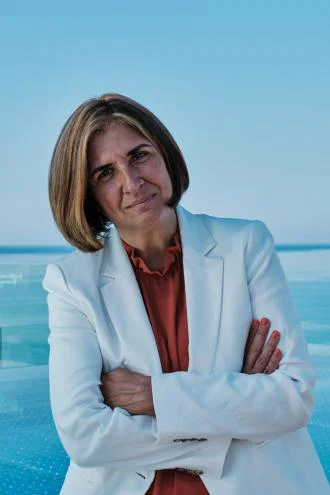
Erika Harms, global director of sustainability, Iberostar
What does responsible tourism mean to Iberostar and its brand?
Responsible tourism sits at the heart of how we run the business. Our purpose is to champion positive change through positive tourism. We want tourism to be a force for good, generating prosperity, improving people’s lives and preserving destinations for future generations.
In practice, that means sustainability must be embedded within the other core measures we track as a company, business performance, guest satisfaction and employee satisfaction. That balance matters, because it ensures we look at every decision through two lenses: how we improve our own operations, and how we show up in the places where we operate.
This means there’s an “inward” dimension, reducing impact, increasing efficiency and raising standards across the organization and an “outward” one, which refers to being better stewards and better neighbours in our coastal destinations, working with local partners to help strengthen resilience and long-term wellbeing.
What sustainable initiatives do you have in place currently?
Our sustainability strategy is delivered through Iberostar Wave of Change, which is structured around seven pillars (Circular Economy, Nature-based solutions, Blue Foods, Climate Action, Destination Stewardship, Caring for Our People and Responsible Growth). Together, they cover environmental, social and governance priorities and they guide everything from hotel operations to how we collaborate in destinations.
Across these pillars, we focus on initiatives that are tangible and scalable. Under Caring for our People, for example, we invest in youth empowerment and pathways into hospitality helping young people learn on the job while building skills that support their communities, too.
We also work to connect communities, destinations and our employees, because many sustainability challenges can’t be solved hotel by hotel. Working at destination level helps create economic impact locally while addressing issues like waste management or sustainable food systems.
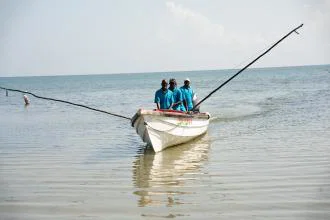
That approach is already visible in specific initiatives: for example, in Brazil and Tunisia, as well as Morocco, we’re working on blue foods in collaboration with communities, and in Mexico and the Dominican Republic we’ve advanced work around organic waste management.
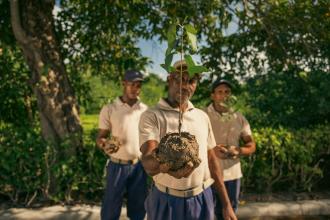
On the nature side, we’ve continued to develop nature-based solutions for risk reduction, and we’re now moving further towards the nature-positive movement. For example, in several beachfront destinations we’re restoring dunes and native vegetation to help protect coastlines and biodiversity, maintaining mangrove nurseries that act as natural coastal buffers, and operating coral nurseries to support reef recovery. We’ve also developed a Water Quality Protocol to monitor and safeguard coastal ecosystems and recreational waters, with clear standards and action plans that are being implemented from 2025 onwards.
On climate action, we continue to invest heavily and strengthen the business case for decarbonisation. A major internal focus last year was Scope 3.
Then there’s circularity. We’ve been very successful in reducing waste, having reached more than 80% waste to landfill in 2025, and we’re now accelerating a more circular approach, looking upstream at the source of waste: packaging, reuse, and reducing the amount of material we consume. We’ve also just launched a circular economy white paper, which is part of how we share learning beyond our own operations.
Finally, one area that excites me most is responsible growth: working with our different properties and with third-party owners to manage risk to implement real and meaningful changes that not only reduce climate risk, but also make business sense. That includes how we work with commercial partners on shared objectives, and how we develop our infrastructure, which means that we must understand the impact we’re creating, and build carbon, nature and water considerations into development. That’s forward-thinking, and it’s where we believe we can continue to drive momentum.
Can you share more on how Iberostar supports local communities?
We see a hotel as part of a destination system, linked to local jobs, suppliers and services. So the first impact is simply how we operate day to day: employing local people and working with local providers, including on sustainability priorities like blue foods and waste solutions.
Then there are more specialist, community-led partnerships, where we work with local stakeholders on specific projects designed to strengthen resilience and create shared value.
And finally there’s community tourism, supported by the Foundation. With partners like Planeterra, we help bring guests into community experiences — and we also bring elements of local culture into the hotel so more people can take part. In the Dominican Republic, for example, we host chocolate-making and workshops with wood artisans, where guests can participate and buy directly from local makers — reaching far more people than an off-property excursion would.
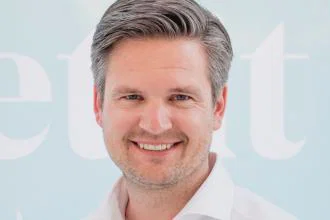
Finn Ackermann, chief commercial officer, Iberostar
As part of our TTG Sustainable Travel Heroes initiative we’re seeking agent Ambassadors to champion promoting and selling responsible tourism. How are you planning on supporting these agents in their journey?
We are fully committed to supporting travel agents in this journey, ensuring they are always up-to-date on our latest initiatives related to responsible tourism.
One of the best options to get information first hand is to stay in an Iberostar resort to experience what sustainability in our hotels looks and feels like. We have various initiatives to make sure as many travel agents as possible can do this, such as Star Agents, which offers points that can then be redeemed for free stays and special rates.
We host many training events – both virtual and face to face – across the UK, highlighting not just our brand and product but also our sustainability initiatives in action at our resorts worldwide that we encourage travel agents to join. We will also ensure our agent partners have access to all our content focused on sustainability, such as videos and images that they can in turn share with their customers.
These TTG Sustainable Travel Ambassadors will have the opportunity to join a sustainability-focused Iberostar fam trip. What can they hope to experience and learn?
The agents participating will experience first hand how our sustainability movement is implemented in our hotels, and how it not only enriches the local environment and communities but also enhances the guest experience.
WATCH AGENTS' SELLING TIPS FROM THE 2025 IBEROSTAR FAM
Our aim is that all those participating will come back with a different perspective on what responsible travel should be, and they can then share their experience with friends, families and customers.
And what about behind the scenes of its hotels – can you share insight into how Iberostar operates more sustainably?
A big part of our approach is making sustainability an intrinsic part of the guest experience, not an add-on, in a way that adds value, comfort and quality.
That can be very practical. For example, water refill points that reduce reliance on single-use plastic bottles. It also includes decisions that guests may never see, such as reducing the footprint of food, a significant part of a hotel’s overall carbon impact, by working behind the scenes with suppliers, expanding lower-impact menu choices, and improving traceability and standards across key ingredients.
How is Iberostar championing sustainability in 2026 and beyond?
We’ve led on major commitments, such as eliminating single-use plastics in the customer experience in 2020 and reaching over 90% responsible seafood served in our hotels. But it’s not enough to do it alone.
The focus for 2026 is scale: creating a bigger impact on the destinations where we operate. And scaling is only possible through pre-competitive collaboration: with governments, commercial stakeholders and even hotel competitors, so we can implement what we’ve tested and know works.
We already have strong examples. The dunes project in Riviera Maya, developed with 20 other hotels, shows how restoration can deliver far greater impact when it’s tackled through a landscape approach, in collaboration with public and private entities. That’s exactly the kind of model we want to expand.
We also scale through knowledge-sharing. For instance, through the white papers we’re publishing. Our recent circular economy white paper brought together more than 100 people to help others think through how to do it themselves, including the procurement dimension and how hotels can work with suppliers. It’s about sharing our experience so others can learn or replicate it, and asking as an industry: how do we take the lessons we all have and scale them?
What should our industry focus on in 2026?
This year, our industry could focus on three things. First, circularity, because it’s both an environmental and a social approach: it reduces waste and pollution, but it also strengthens local systems and resilience.
Second, water: both fresh water and the ocean. Freshwater availability is increasingly a business risk in many destinations, and for beachfront tourism in particular, the ocean is the destination: healthy marine ecosystems, clean water and thriving coastlines underpin the guest experience and the local economy.
Third, talent. We need to make hospitality a more attractive sector to work in with clearer career paths, better training and a stronger sense of purpose because none of this progress happens without skilled people.