Greener pastures
When he’s not guiding people to Boiling Lake, botanical expert Marcel can be found tending the gardens at Papillote Wilderness Resort by Trafalgar Falls in the forested interior of the island.
A garden tour with a dip in Papillote’s hot spring spa baths is a popular excursion for non-guests and for cruise-ship passengers. As Marcel shows me round the sprawling grounds, I suggest that Dominica, with its outrageously fertile soil and up to five metres of rainfall per year must be a gardener’s dream.
“More of a nightmare!” he replies. Weeds grow as rampantly as the good stuff, he points out. It’s no surprise that an island of such lush, varied fauna is also a birdwatching paradise.
I spend a morning with Dr Birdy, the island’s top ornithologist and self-confessed bird addict.
“It’s a disease!” he tells me gleefully as he strides off into Syndicate national park ahead of me, stopping every so often to strike up a conversation with a hidden bird, using the shrieks and whistles he’s perfected during years of study.
As many as 180 species can be seen in Dominica, including 64 year-round resident species. While some of the regional species can be seen on neighbouring islands such as Guadeloupe, Dr Birdy says the quality and accessibility of Dominica’s forests make them easier to find here. The island is proud of its two endemic parrots – the red-necked Amazon parrot, of which there are around 3,500, and the critically endangered Imperial or Sisserou parrot, of which perhaps only 300 remain.
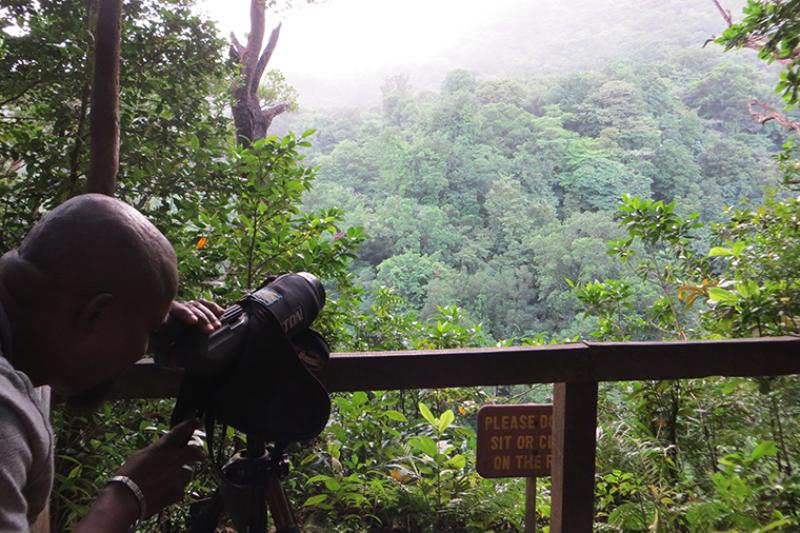
Syndicate is an excellent place to see both and Dr Birdy sets up his telescope at a lookout point, training it on the forested slopes across the valley. He can hear both species are hiding in the trees, but only the
red-necked Amazon variety makes himself visible during our hour of intent observation.
Dr Birdy stops the car on our way back to show how much you can see even from the side of the road: purple-throated Carib, blue-headed, and lesser-Antillean crested hummingbirds are all feeding on a pink justicia shrub by the roadside and flit around me happily, taking our total species spotted over two hours to more than 25.
Whale-watching capital
Much larger creatures can also be found in Dominica, with the island recognised as the whale-watching capital of the Caribbean.
Humpback whales come here in droves from January to April to mate and give birth, but it’s Dominica’s resident population of sperm whales for which it is best known.
The island’s topography, with deep water close to shore, is perfect for sperm whales; the second-deepest divers of all whales, they spend most of their time 4,000-6,000ft down. In other places, you’d need to spend several hours on a boat getting far enough out to find them, but in Dominica you can be out and back in three and a half hours, with an 80-90% chance of success.
I book a trip with Anchorage Hotel, which has been operating whale-watching tours for 30 years from its base a few minutes south of the capital Roseau. The captain slows the catamaran so a hydrophone can be dipped into the water to listen for the whales’ clicking sounds. Sperm whales can hold their breath for up to an hour and only surface for a few minutes at a time, so there’s a real knack to being in the right place at the right time.
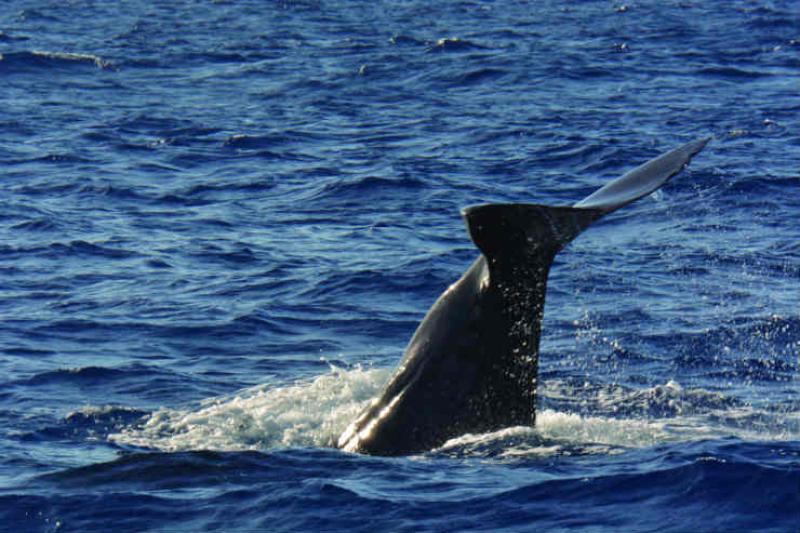
After about an hour, we finally see one. First, there’s a blast as it expels water from its blowhole, not straight up into the air but out to the side. Seconds later, its tail flicks out of the water, pauses, then slips away.
With every whale’s fluke as individual as a fingerprint, the Anchorage team is able to use a photograph taken by one of my cruise companions to identify that this is Fingers, an adult female.
Scuba diving is another popular marine activity in Dominica, with dramatic walls and underwater hot springs creating a wealth of interesting dive sites. The fizzing water at Champagne Reef is a top-attraction for snorkellers and divers.
A recent tropical storm means the visibility is poor when I head out diving, but we still see a riotous collection of corals and sponges, brightly coloured parrotfish, puffer-fish, lobster, moray eels, and even
a turtle.
Aftermath of disaster
The light storm the island experienced prior to my arrival was a mere rain shower compared with tropical storm Erika, which hit the island last August.
The deadliest natural disaster on the island since hurricane David in 1979, Erika dumped more than 30cm of rain almost overnight, creating devastating landslides and flooding.
At least 30 people were killed and hundreds of homes were destroyed.
It’s five months later when I visit, but the physical wounds are still clear to see: bridges ripped from their foundations by the force of the water are still adrift in the middle of the river, and raw, naked slopes are left where entire hillsides fell away.
The cost of the damage has been estimated at $482 million – almost as much as the island’s annual GDP.
Tourism has suffered too: “We got so much publicity after Erika, but it was the wrong kind of publicity – the wrong kind of images to be lasting on people’s minds,” says Colin Piper, chief executive of the Discover Dominica Authority.
He’s keen to reassure visitors that apart from one or two hotels on the island, almost everything is now functioning normally.
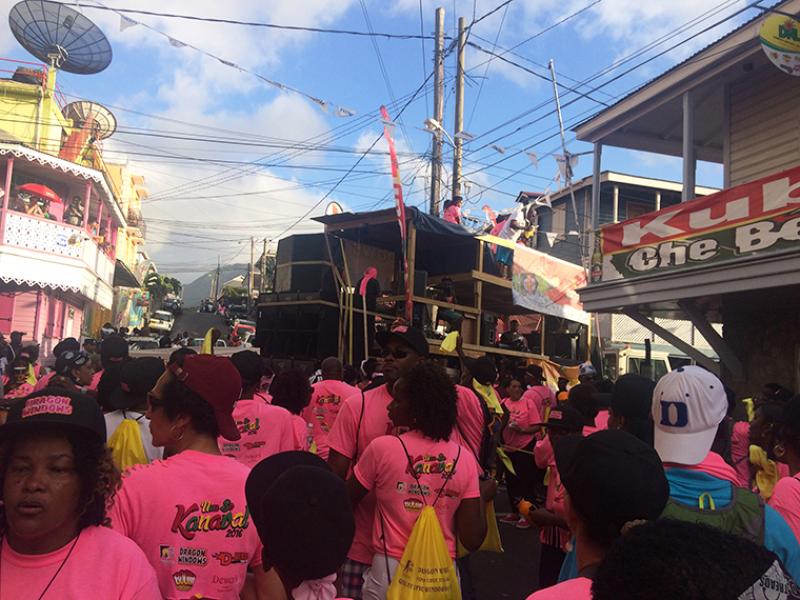
The World Creole Festival, which takes place each November, was cancelled last year while the island mourned the tragedy. But I’m lucky to be in Dominica during carnival week in February and the whole island is determined to have fun.
I miss J’Ouvert itself (the 4am street party that kicks off Carnival Monday) but head into Roseau late morning with my driver-guide Beno to see the streets thronged with traditional costumes.
Later that afternoon, I join Beno and his wife and son in one of the many “T-shirt bands”. For about £15, I get a neon-pink T-shirt and unlimited beer refills from the beer truck and join around a hundred other pink-shirted revellers in my band. For five hours we shuffle slowly round the carnival circuit, with throbbing soca and Dominican-born bouyon music pumping out from the truck in front.
Despite all the booze and suggestive dancing, carnival is a family-friendly environment and Beno’s 10-year-old son is out with us until we admit defeat at 9pm. There has occasionally been trouble at previous carnivals, but plenty of military personnel and plain-clothes police officers hidden on the floats mean I feel pretty safe.
Land for explorers
With very few beaches, and no mass-market tourism, Dominica is not a destination for clients who simply want to sit on a sun-lounger all week. But clients with a love of wildlife and a desire to explore will certainly fall in love with it. And as Dominica continues to recover from the impact of Erika, visitors will feel an even warmer welcome than normal right now.
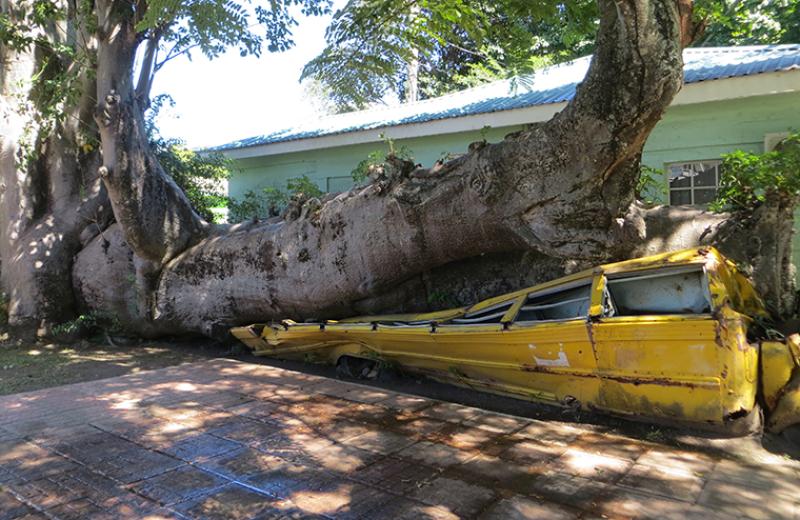
A gigantic baobab tree that I see in the botanical gardens in Roseau seems an apt metaphor for the island. Knocked flat by hurricane David, and crushing a bus in the process, the baobab tree refused to be beaten, and started growing straight back up at a right angle to its fallen trunk. And now, just like Dominica’s topography, and like its rampant vegetation and the indomitable spirit of its people – it’s standing tall once more.
For more destination information, see the tourist board (Discover Dominica Authority) website: dominica.dm Mot Mot Travel is a nature and bird-watching specialist happy to work with agents, and offers a 12-day Dominica Nature Holiday with whale-watching, birdwatching, snorkeling at Champagne Reef, a Papillote garden tour and more from £2,675pp, motmottravel.com. |