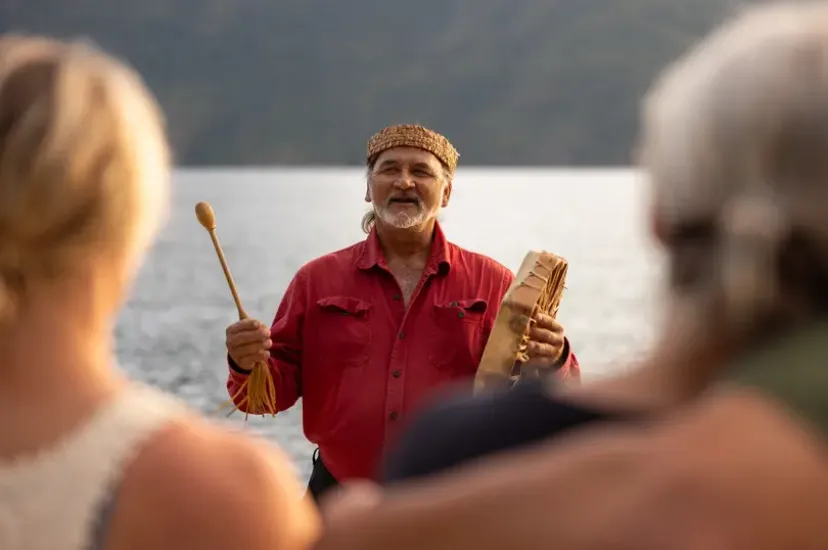
Indigenous-led tourism experiences are on the rise and in-demand. That was one of the key messages at the 2025 International Indigenous Tourism Conference (IITC) in Montreal, the world’s largest Indigenous tourism conference earlier this year.
The Indigenous Tourism Association of Canada (ITAC) gathered tourism businesses and leaders from Nations and communities across Canada. During three days of learning and networking, featuring speakers from Indigenous tourism businesses across the world, discussions focused on the shared responsibility to grow tourism as an important way of sharing – and protecting – culture.
But for agents, how easy is it to explain that to customers? TTG caught up with a number of Indigenous operators to find out about the benefits for travellers and communities alike, and how best to sell them. This is what Indigenous tourism operators want travel agents to know.
1. Communicate the unforgettable experiences
“Indigenous-led experiences offer some of the most authentic, immersive, and unforgettable travel opportunities – ‘the best of the best’,” says Chris Tait, tourism manager at Klahoose Wilderness Resort. Based in Desolation Sound, British Columbia and owned by the Klahoose First Nation, the eco-resort uses cultural interpreters and guides during activities such as bear and whale watching to share stories handed down through generations.
“It’s important to avoid romanticising Indigenous tourism or portraying Indigenous cultures as something from history books. Indigenous peoples are living, evolving communities, and our traditions, knowledge, and ways of life are very much part of the present. Indigenous tourism is about experiencing Indigenous cultures as they are today, shaped by generations of knowledge and resilience.
“Every travel agent should be aware of how to communicate this to clients. Using respectful language is key – terms like ‘Indigenous-led’, ‘immersive cultural experience’ and ‘authentic Indigenous storytelling’ help frame these experiences in a meaningful way that reflects respect and partnership,” adds Tait.
2. Don’t assume all operators – or experiences – are the same
“We encourage agents to make this distinction clear to their clients; not all operators are the same, even if they’re offering similar experiences in the same regions,” says Mike Willie, owner and operator of Sea Wolf Adventures. The company offers cultural experiences and wilderness safaris through Musgamakw Dzawada’enuxw Territory, in the Great Bear Rainforest, British Columbia.
“All of our wildlife tours, especially grizzly bear viewing and marine wildlife expeditions take place entirely within our traditional territory. This is not just where we operate, it’s our home. Our ancestors have stewarded these lands and waters since time immemorial, and our business is a way to continue that legacy through education, conservation, and responsible tourism.
“One of the most important things travel agents and tour operators should understand is that nearly all tourism experiences in Canada take place on First Nations territories. When guests are out on the land, water, or rivers, they are in Indigenous territories, whether they know it or not.
“By choosing Indigenous-owned operators, travellers are not just booking a tour, they’re supporting local communities, capacity building and meaningful employment for Indigenous people. They’re choosing a deeper connection to place and culture,” concludes Willie.
3. Your clients will get to know Canada through its diverse people
“The lands of this place called Canada are vast, diverse and beautiful. And so too are her people, the First Nations, the Metis and the Inuit. There is no separation between the land and the various cultures she gave birth to,” says Joseph Urie, owner and guide at Jasper Tour Company in Jasper National Park, and proud member of the Otipemisiwak Metis Nation within Alberta.
“For a time, there had been an attempt to separate. And while it wasn’t pretty and there is still some work to be done in terms of reconciliation, that is behind us now. Many of us have found our way home, back to our place on the lands that provided for us since time immemorial. We want to celebrate that with you.
“This land has a lot of stories to tell and as we are the original translators of the languages she speaks, if you truly want to come to know Canada, you’ll want to come to know us. We are still here. Come walk with us,” urges Urie.
4. By pushing Indigenous tourism, you are supporting remote communities
“British Columbia is vast and for some parts untouched, pristine and precious. These parts of BC are home to many First Nations. The business of tourism helps First Nations support community initiatives, build safe homes, provide training and education and so much more,” says Ron Sturgess, director of economic development for the Xeni Gwet’in First Nation Government, which owns Nemiah Valley Lodge, an off-grid lodge in BC’s Chilcotin Country. Alongside hiking and lake excursions, it runs an equine wellness programme.
“Indigenous tourism now helps First Nations communities build economies of scale that are appropriate. We have a lot to share, we have worked hard, and we are ready to host people from all walks and worlds beyond ours,” adds Sturgess.
5. Avoid cultural appropriation like the plague
“First and foremost, it’s important to recognise the difference between authentic Indigenous-owned businesses and those that engage in cultural appropriation,” says Andrew Germain Gros-Louis, marketing advisor at Indigenous Tourism Quebec.
“Authentic Indigenous experiences are rooted in the community, identity, and respect for the land. Seeing Quebec — or any part of Canada — through the eyes of its original Peoples can change how you understand the land and its history.
“Whether it’s listening to stories in a traditional longhouse in Wendake, tasting Indigenous cuisine rooted in the land (like maple syrup, harvested for thousands of years before European contact) or eating at the gastronomic Restaurant La Traite, or heading out on a whale-watching tour with guides in Essipit (near Tadoussac), every encounter is meaningful, authentic and, often, intergenerational.
“Indigenous tourism is also sustainable tourism. Many Nations have lost parts of their cultures due to colonialism, but tourism has become a powerful tool to reclaim and revitalise languages, stories, songs, dances, and ceremonies. When travellers participate, they’re contributing to that revitalisation.”