“A lady sailed with us the other week,” says Jordan, our guide, as we cross Lake Minnewanka. “She was in her 70s. She cried. She told me it was because she’d never before heard silence.”
In the middle, we kill the engines. Around me, the bald peaks of mountains are turning purple, appearing to loom closer over the turquoise water in the fading light. Newly golden, the larch trees catch the last of the autumn sun, painting a yellow patchwork across the shoreline. Jordan urges us to “Shhhhhhhhh”.
Instinctively, I look around. The lake laps the boat with a gentle splosh, and I feel the occasional whisp of wind against my ears. That’s it. Silence. That’s how easy it is to be in the middle of nothing.
“That’s the thing about this lake,” he adds. “It’s really rare to have the backcountry so accessible. Usually, you have to really hike to get out into nothingness. But here we are.” Even here, a 10-minute drive from one of Canada’s most well-known and popular tourist hubs we’re alone in nature. Isolation has never been so easy.
Settled in the 1880s, the Rocky Mountain town of Banff was built for tourism. When natural hot springs were discovered as the railway cut a swathe through the wilderness, it delivered for the first time, visitors. Banff National Park – Canada’s first – was created in 1885, still overlooked by the famous Fairmont Banff Springs hotel. Known for its snow-topped peaks, and impossibly blue glacier-fed rivers and lakes, today the park is visited by more than four million each year, with numbers peaking during the summer.
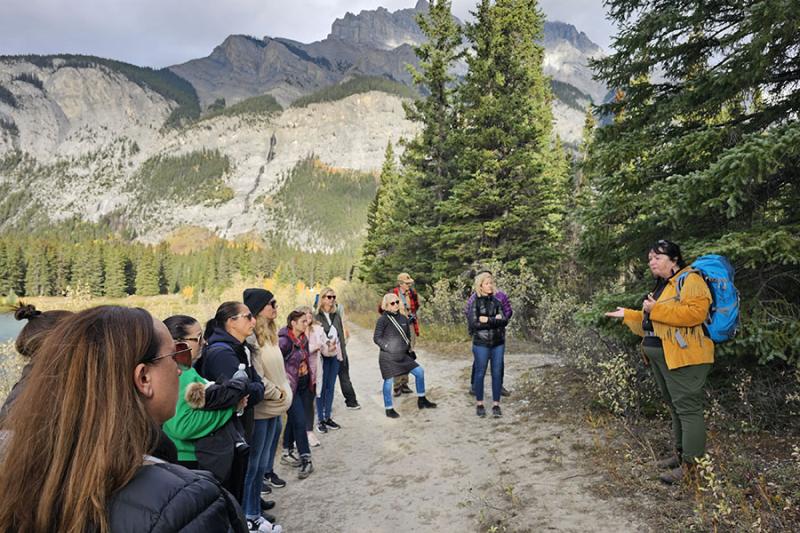
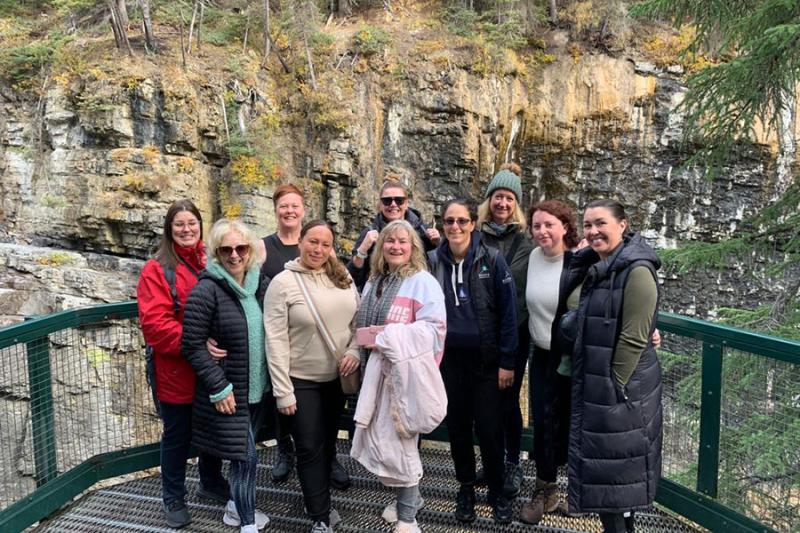
In autumn though, things are a little calmer. “It’s the best time of year,” says Mitch Bessette, guide at Radventures. From canoeing and hiking to hot springs in the summer and autumn, and skating and snowshoeing in the winter, the company’s aim is to avoid the crowds. Today we’re hiking Johnston Canyon, following a twisting path high above cascading waters to a 30m waterfall. Come winter, the canyon is packed with ice climbers. Even though we started early, there are plenty of hikers already on the path. But compared to summer, this is quiet.
“There’s a lot less people after the first weekend of September,” adds Mitch. “It’s not overly hot, not overly cold. You don’t have to get up early to see the sunrise. Our early bird sunrise tours to Moraine Lake, on the longest days, we’re picking up at 3.30am. You have a better chance of seeing the northern lights. There’s fall colours too. You get to do everything, but with a lot less people around.”
With the agents in our group already aware of the highlights the winter and summer seasons bring in the mountains, experiencing the quieter shoulder season – with its great but varied weather, lower visitor numbers, and still fully operational attractions – is a revelation.
Busy Louise
One place there’s always people though, is the famed Lake Louise. Even in fall, it’s a photo hotspot. Guests of the hotel have it to themselves once the evenings draw in. A room revamp is due to be completed by May 2024, with the construction of a mega-spa and wellness centre overlooking the lake slated to open by summer 2025.
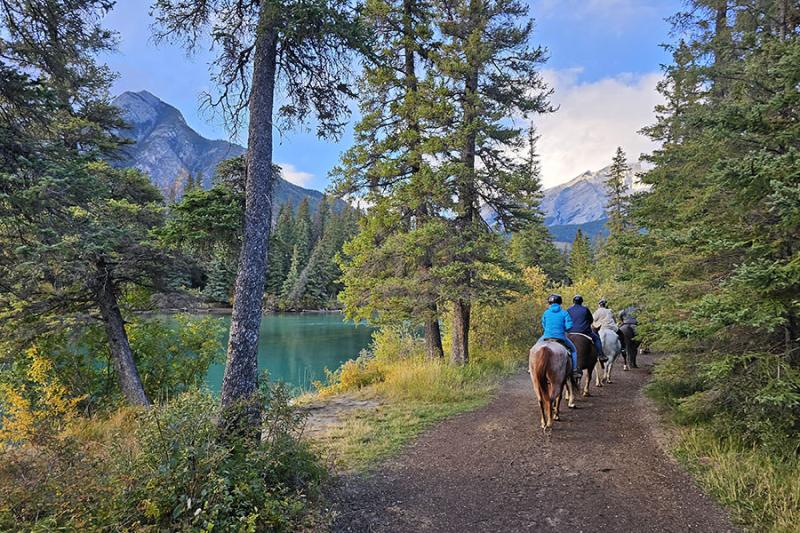
With a “summer” season that extends mid-May to mid-October, most activities remain open. In Banff, tapping into Western nostalgia, horse-drawn wagons take visitors into the forest for a Cowboy Cookout. I opt to ride, and forget to be nervous, distracted by the mountains and the glowing blue of the Bow river beside the trail. Nostalgic too, are the brand new Open Top Tours. Operating in Banff and Jasper, the modern vehicles are inspired by the touring buses of the 1930s. We listen to jazz as we drive through the mountains and stop for hot chocolate in a high alpine meadow.
But, there’s no forgetting who was here first. Immersing myself in the forest again, I take a medicine walk with Indigenous-owned Mahikan Trails. Cree knowledge keeper Brenda Holder lights some tobacco as an offering before we start. “All of these plants are family to us,” she says.
Both Banff, and Jasper National Park – which attracts two million visitors a year – still feel wild, despite their volume of visitors. We take the Icefields Parkway, a 232km stretch connecting Banff with Jasper, routinely named one of the most scenic drives in the world, lined by 100 glaciers, and countless mountains. Today, with fresh snow falling, the peaks are hiding. ‘Bear!’ comes the shout from our SunDog tour driver. In autumn, bears are fattening up to make it through winter. Right here on the roadside, our new friend has hit the berry jackpot.
We break the journey with a stop at the Athabasca Glacier, where tank-like vehicles take us up to walk on 10,000-year-old ice. It’s a sobering moment when our guide says in 30 years, it will be gone.
Jasper bubble
Jasper itself feels like more of a community than Banff. “People don’t lock their doors, lots don’t lock their cars, kids still ride bikes across town. We call it the Jasper bubble,” says Sue, our SunDog driver. Known for its 11,000 sq km of preserved dark sky this year it has extended its Dark Skies Festival (held each October) from two, to three weekends.
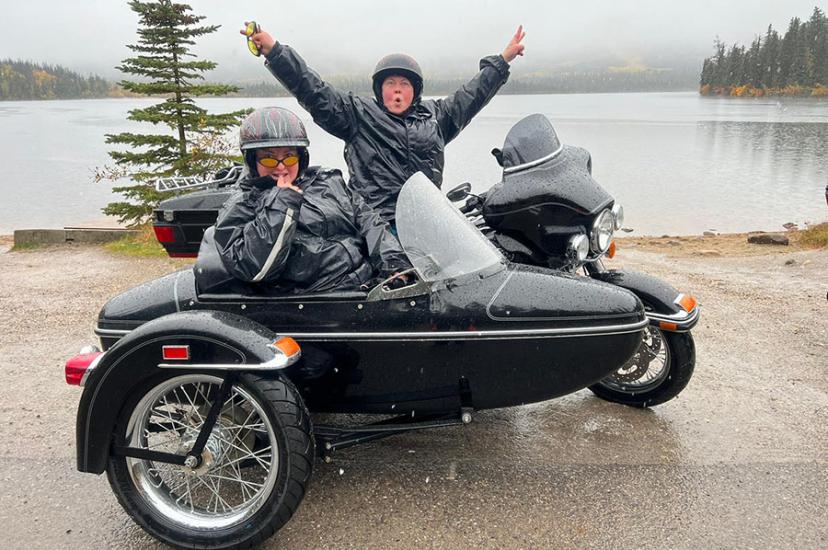
After an hour of riding vintage Harley’s and sidecars into the surrounding mountains with Jasper Motorcycle Tours – getting dressed in mandatory leather jacket, chaps, and bandana to ride, might be one of the funniest moments of my life – we’re wildlife spotting.
Sadly, with the early seasons snow still falling, our Lake Maligne cruise to one of Canada’s most famous beauty spots, Spirit Island, is cancelled. Moose have been spotted further down the road, so on we go.
Nothing prepares you for the moment you look into a wild animal’s eyes, especially one as enthralling as a baby moose. Continuing down the road, my jaw is on the floor when we spot mum, and eventually with towering antlers, the dad. We pause as long as he lets us, watching him pace through the wet snow. How lucky I feel. Our time is up. As the snow continues to fall down, all three reunite, and suddenly dash off together, into the forest.
Book it: Premier Holidays offer tailor-made self-drive holidays to Canada including ‘Lakes & Mountains of Alberta’ from £1,859 per person which includes flights, nine nights’ hotel accommodation and car hire. Book by 31 October 2023 for travel in October 2024; premierholidays.co.uk
Resources: Radventures radventurescanada.com; Mahikan Trails mahikan.ca; Sundog sundogtours.com; Travel Alberta travelalberta.com; and find more Canada tour operators in TTG’s Travel Suppliers Directory.