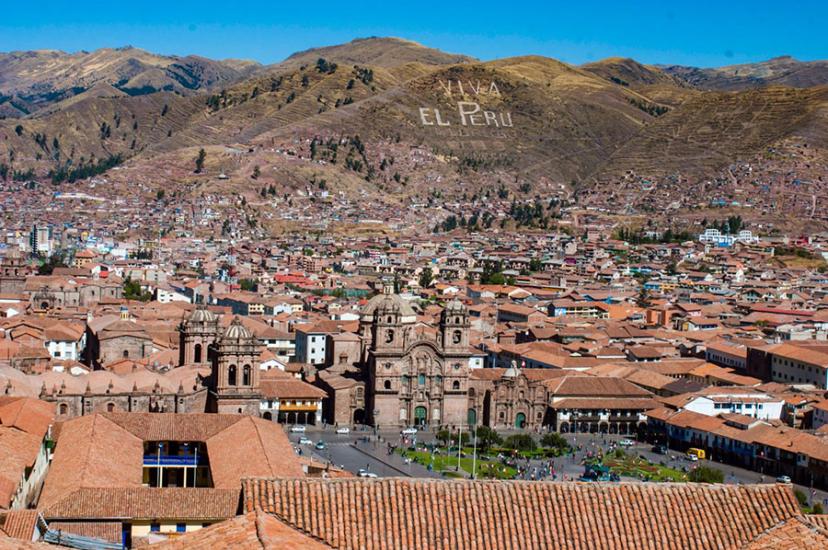
Don’t get me wrong. Nothing beats seeing Machu Picchu for the first time, but I’m also a firm believer that nearby Cusco is a destination in its own right. It’s even got its own archaeological site – Sacsayhuamán, perched above Cusco’s centre. This former citadel’s brilliantly preserved walls are a fantastic example of Incan stonework.
For clients travelling independently and not tied to a tour schedule, it’s worth pointing out that Sacsayhuamán is best explored on their second or third day in Cusco. The 20-minute walk from the city centre is along steep, cobbled streets. At 3,399 metres above sea level, Cusco is higher than Machu Picchu, and altitude sickness is likely (chewing coca leaves, sold throughout Cusco, can help). There’s plenty to keep them entertained in the centre for the first 48 hours, where highlights include the Plaza de Armas, with its baroque Iglesia de la Compañía de Jesús, a church built in the 1500s (head to the choir loft for stunning city views). Alternatively, there’s the Cusco 180 Bus for guided tours led by various characters from the region’s past.
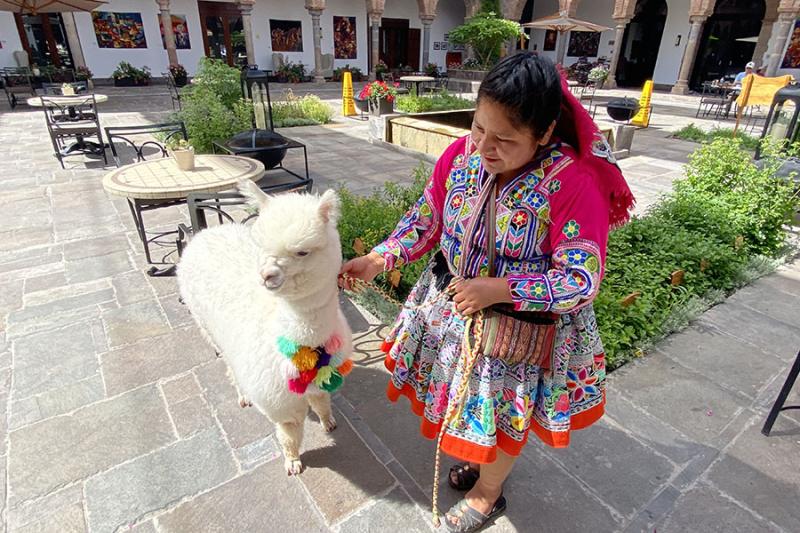
In the Plaza de Armas, women in local dress clutching baby alpacas will pose with tourists for a few Peruvian soles. A better, more responsible alternative to these begging-type requests takes place at JW Marriott El Convento Cusco – most mornings around 8.30am, a beautiful fully-grown alpaca known as Panchita hosts meet and greets, not just for guests but anyone who fancies a selfie with this gorgeous creature. There is no pressure to tip – Panchita and her handler just chill out in the hotel’s courtyard and if anyone wants to pet her and take a photo they can.
A former monastery, the hotel is one of many with a rich history. The Novotel Cusco, for example, is in a mansion built in the sixteenth century, and its beautiful courtyard is an ideal spot for an energy-restoring afternoon tea. Then there are Cusco’s fantastic museums, which include Museo Inka, where thousands of artefacts, including the world’s largest collection of queros (Incan drinking vessels), fill a sixteenth-century mansion.
For souvenir shopping, venture beyond the Plaza de Armas, home to Cusco’s priciest gift shops. I’d suggest the Mercado de San Pedro, a market where I pick up beautifully woven placemats for around £2 apiece. It’s a great place for an insight into local life; my favourite area is the fresh food section – although the aisle reserved for butchers isn’t for the squeamish. I spot more types of potato than I knew existed, alongside beautifully arranged pyramids of spices and grains. When energy levels start to flag, you can sample some street food, such as lomo saltado – stir-fried beef.
For something truly local, there’s only one option. “If there’s one dish which encapsulates the essence of Cusco, it’s cuy al horno – roasted guinea pig,” says Eduardo Ortiz, JW Marriott El Convento Cusco’s general manager. “It’s marinated with spices then slow-roasted to perfection. It reflects the region’s historical significance and our connection to the land.”
And to drink? That all-important pisco sour, of course. Cheers, Cusco.
Book it: Incredible Journeys offers a five-night Discover Cusco tour including two nights at the Novotel Cusco. From £2,169pp based on two adults travelling in March 2024 and including return flights from Heathrow with LATAM; goldmedal.co.uk/incredible-journeys