









Gone are the days when kids’ clubs were little more than an afterthought.
With family travel booming, luxury hotels around the world are investing heavily in curated experiences for children. From elaborate mini villages to bespoke play palaces, the standard for entertaining younger guests has never been higher.
But while the options are more impressive than ever, agents should never assume all kids’ clubs are created equal.
We spoke with Claire Masse, founder of Frangipani Holidays and winner of New Luxury Travel Designer of the Year at the TTG Luxury Travel Awards 2025, to learn how to spot the exceptional from the subpar. A specialist in upscale family travel and a mother of two young boys, Claire has tested kids’ clubs all around the world and is now sharing her biggest red flags – as well as the hotels that left her truly impressed.

1. Untrained Staff
For parents, the idea of leaving their children in the care of strangers is naturally a sensitive subject.
That’s why trained, qualified staff should be non-negotiable – especially when younger children or those with additional needs are involved. Claire advises agents to always ask about staff qualifications, child-to-caregiver ratios, and club accreditations.
Some hotel groups, like Ikos Resorts, employ childcare professionals who meet UK Ofsted standards. Others partner with reputable training providers like Worldwide Kids, which works with top-tier names including Domes Resorts and One&Only.
2. Screentime overload
With children in the UK now spending an average of 6.5 hours a day on screens, many parents want a break from digital distractions during their holiday. Claire warns against clubs where screens take centre stage: “If there’s a giant TV in the middle of the room, you can guess what the kids will be doing – watching TV or playing video games.”
While screens can have a place when used sparingly – such as for educational videos – they should never be the focus. Claire encourages parents to speak up if they’re concerned: “Ask the staff not to allow screen time. But be aware, there’s no guarantee your request will be honoured.”
3. Just one room
The kids’ clubs of today’s luxury hotels are more than four walls and a babysitter; they are highly curated experiences.
“The best clubs are the ones where children aren’t in the room the entire time,” says Claire. “They should be out exploring the resort, not stuck indoors.”
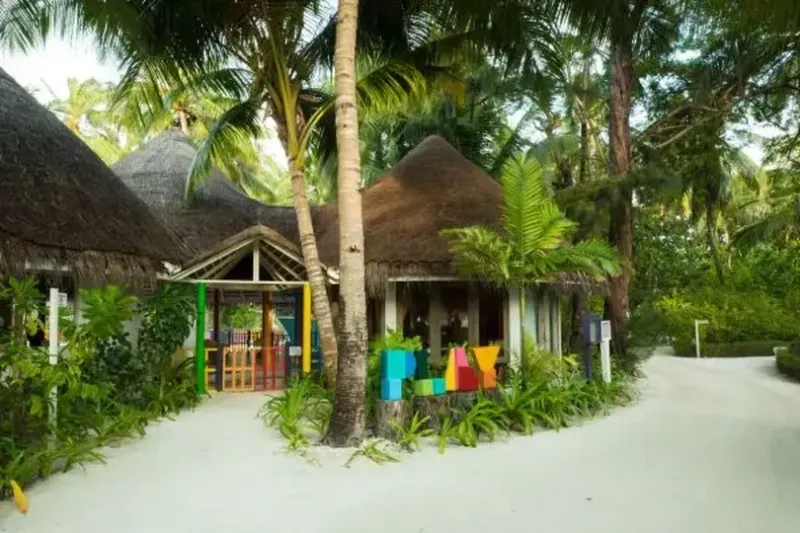
She points to the kids’ club at Lux South Ari Atoll in the Maldives as a prime example: “My boys were hardly ever in the club itself. They were at the library, playing giant chess, riding golf carts, and taking part in upcycling workshops.”
Claire says the caregivers even gave her sons farewell gifts, adding, “It felt like they had their own little life, their own holiday, during the trip.”

4. For all ages?
If a hotel employs a ‘one size fits all’ approach to its kids’ club, it’s unlikely to be suitable. Children of different ages typically require very different types of recreation, and luxury resorts should cater to this.
“This sounds obvious, but many hotels overlook it,” Claire says. Agents should confirm not only that the club accepts children of all ages, but also that it provides age-appropriate activities and spaces.
In destinations like Dubai, for instance, it’s common for clubs to restrict access to children over four or only accept those who are potty trained.
“Does the club have separate areas or programming for different age groups? An 11-year-old doesn’t want to be lumped in with toddlers. Some clubs are more like playrooms – they’re not built to cater to a range of ages.”