




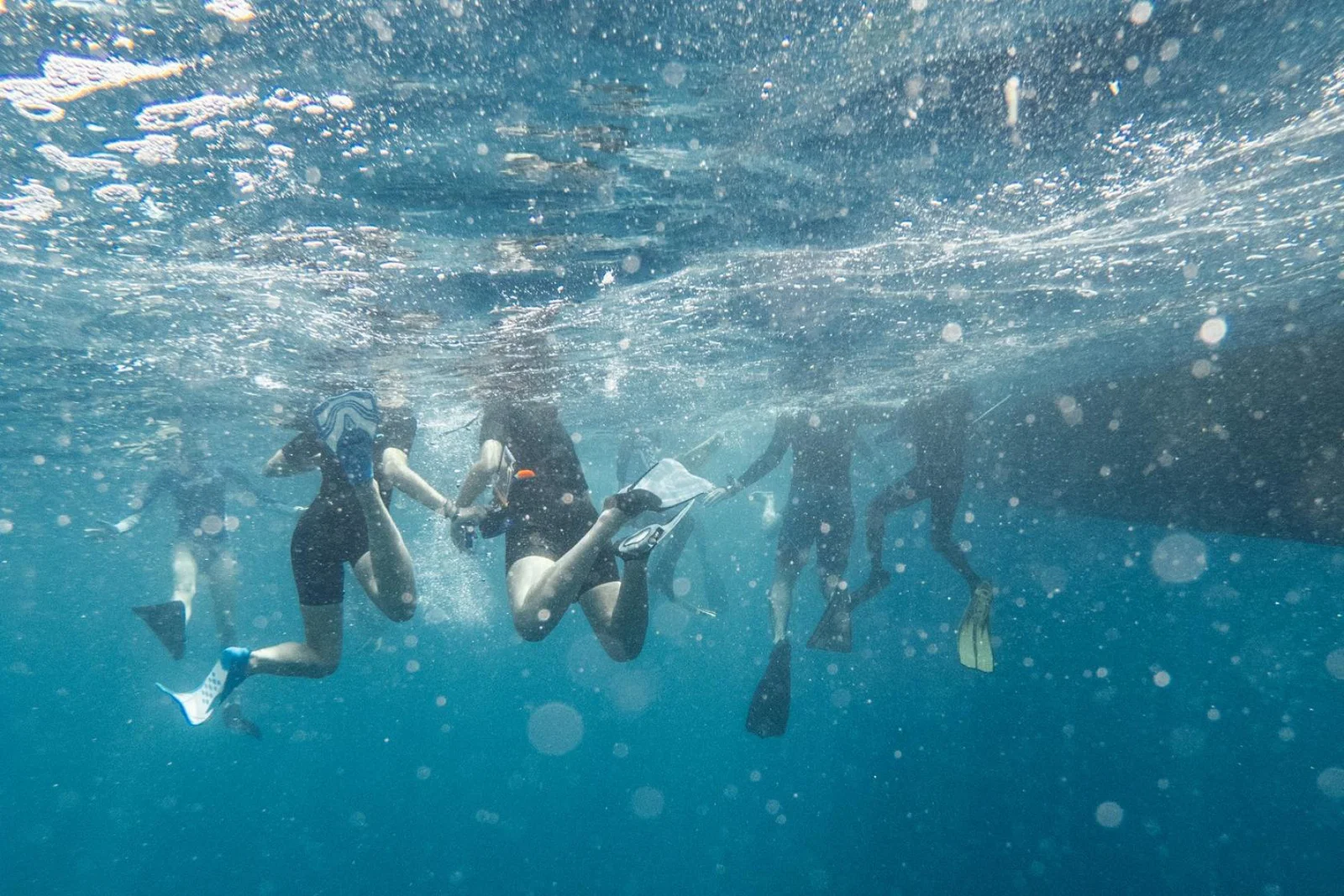
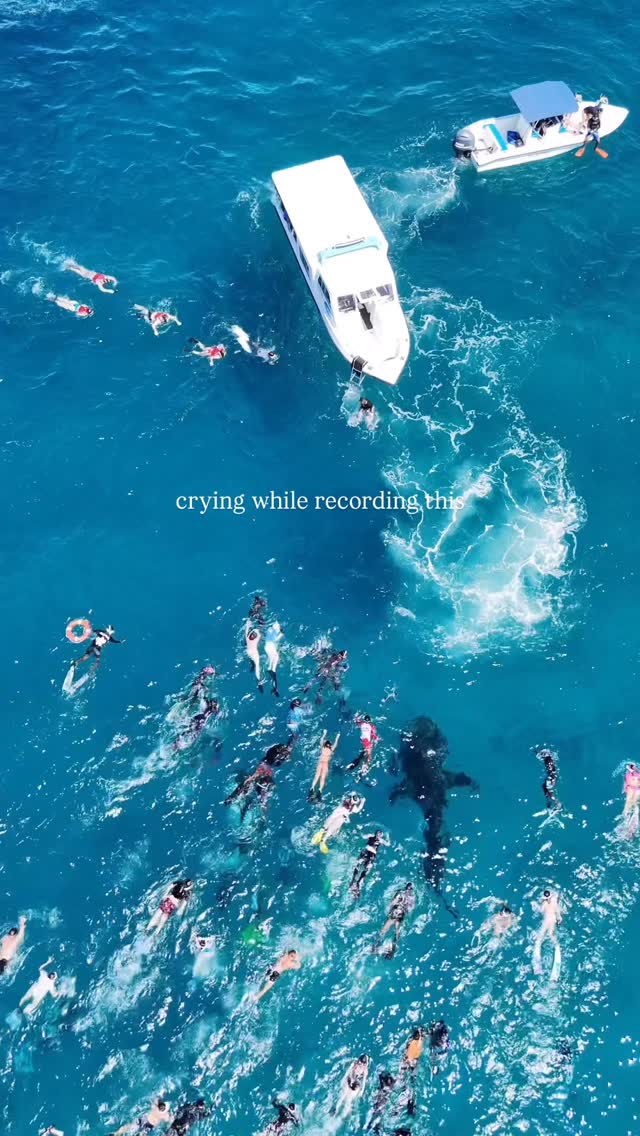
I’m treading water in the Indian Ocean surrounded by an 80-strong swarm of snorkellers. We’re in the South Ari Atoll, at the site of a manta ray “cleaning station”. Alongside me, anxious swimmers thrash about in lifejackets, as numerous boats – I count 17 – idle nearby. Feeling uneasy, I dive down briefly, just in time to watch a lone manta escape the chaos of flailing limbs and GoPros. An unruly free-for-all, it’s a far cry from the magical encounter I’d dreamed of. Resurfacing with a sinking feeling, I head back to the boat. I’ve seen enough.
Sadly, my experience was not a one-off and infractions are commonly shared on social media platforms.
Renowned for its marine megafauna, the Maldives is one of the best places on the planet to spot manta rays, whale sharks, dolphins, turtles, and more.
All these species are protected by law, but determining precisely what that means in practice is far from straightforward. For starters, there is no definitive piece of legislation or one government ministry that covers all protected species. Rays and whale sharks, for example, fall under the recently renamed Environmental Regulatory Authority’s remit; other shark species come under the Ministry of Fisheries. Meanwhile, the Ministry of Tourism and Environment (MoTE) oversees legislation prohibiting feeding sharks. Additionally, while legal documents are understandably in Maldivian Dhivehi, official translations are largely unavailable.
To complicate matters further, regulations – especially regarding boat and swimmer numbers – vary by species and location, and are often more guidelines than actual policies. For example, according to an Environmental Regulatory Authority spokesperson, nationwide guidelines for manta rays specify that no more than “20 people can dive or snorkel at a given time on a cleaning or feeding ground”. However, as I witnessed firsthand, best practices and reality don’t always align. Even where laws exist, enforcement remains a challenge: with 35,000 square miles of ocean to patrol, violations easily go unnoticed.
Of the Maldives’ 93 protected areas, just six are actively managed. Of these, Hanifaru Bay in the Baa Atoll Biosphere Reserve and South Ari Marine Protected Area (SAMPA) are the only two marine protected areas (MPAs) where there is an actively enforced limit on the number of boats and swimmers. By choosing resorts with excursions in these areas, agents can increase clients’ chances of ethical encounters.
Best for manta rays
Hanifaru Bay is one of the planet’s top spots for gatherings of reef manta rays (during manta ray season, which lasts from May to November) – upwards of 200 have been sighted in one day. Due to intense demand, up to 80 snorkellers and five boats are permitted in the bay at a time, with no more than 10 guests per guide. Visits are limited to 45 minutes, and strict rules for snorkellers apply: flash photography, selfie-sticks and free-diving are all banned, and swimmers must keep at least three metres from a manta’s side and four from its tail.
That said, Hanifaru’s main snorkelling area is about the size of a football pitch, so the quality of any encounter depends heavily on that day’s ratio of mantas to swimmers. While sightings ultimately rely on luck, recent feedback – which ranges from “beautiful” to “horrible” – suggests the visitor cap needs tightening.
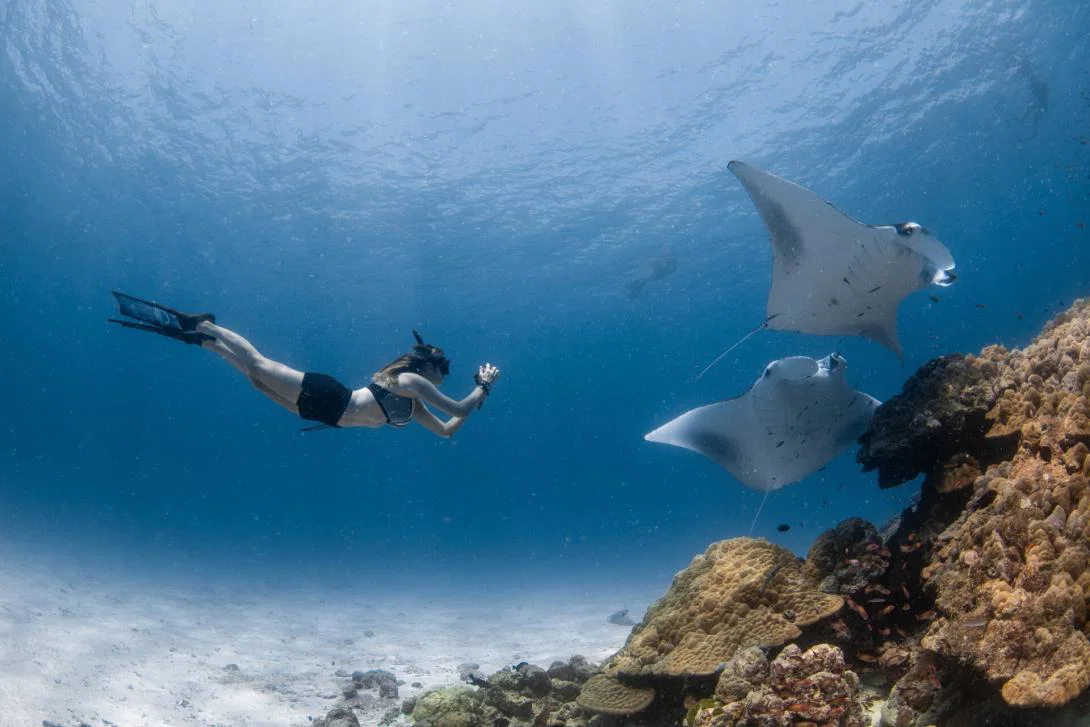
Four Seasons Landaa Giraavaru offers a Manta-on-Call service
To improve clients’ odds of avoiding the crowds, agents should recommend nearby resorts that can respond quickly to sightings outside of peak visiting times. For example, Four Seasons Landaa Giraavaru’s Manta-On-Call service supplies guests with a ‘manta mobile’ and alerts them the minute rays are spotted. Alternatively, Hummingbird Travel recommends Soneva Fushi, Vakkaru, Amilla, Anantara Kihavah, Dusit Thani, or Milaidhoo.
Best for whale sharks
Extending along the South Ari Atoll’s fringes, South Ari Marine Protected Area (SAMPA) has been protected ‘on paper’ since 2009. One of the world’s most significant whale shark aggregation sites, whale sharks are present year-round. To date, 726 individuals – mainly juvenile males – and more than 8,000 encounters have been recorded.
Despite this, an enforceable management plan has only been active since February 2025, according to the Ministry of Tourism. This new legislation caps encounters at six licensed boats (including a ranger vessel) and 60 snorkellers (including accredited guides) within a 250-metre contact zone of a whale shark. Swimmers must keep three metres from a shark’s side and four from its tail; flash photography is banned, and swim time is limited to 15 minutes if other boats are waiting.
SAMPA is monitored by ranger patrols, community guardians, and drones. However, given its size – at 16.2 square miles, it’s the country’s largest MPA – voluntary compliance will be key to its success.
Hummingbird Travel’s pick of South Ari hotels are LUX* South Ari, Conrad Maldives Rangali Island, and Constance Moofushi.
Beyond protected areas
Elsewhere, excursion operators and clients are supposed to follow Protected Species Regulations. These include best practice guidelines for snorkellers, similar to those in place in SAMPA and Hanifaru. However, numerous social media posts suggest that overcrowded, unethical encounters remain an issue, with both operators and guests to blame. Given the considerable costs of excursions (my trip was USD $195, before service charge and taxes), guests expect value for their money. Consequently, boat crews can feel pressured to prioritise sightings and customer satisfaction over animal welfare. It’s time that changed.
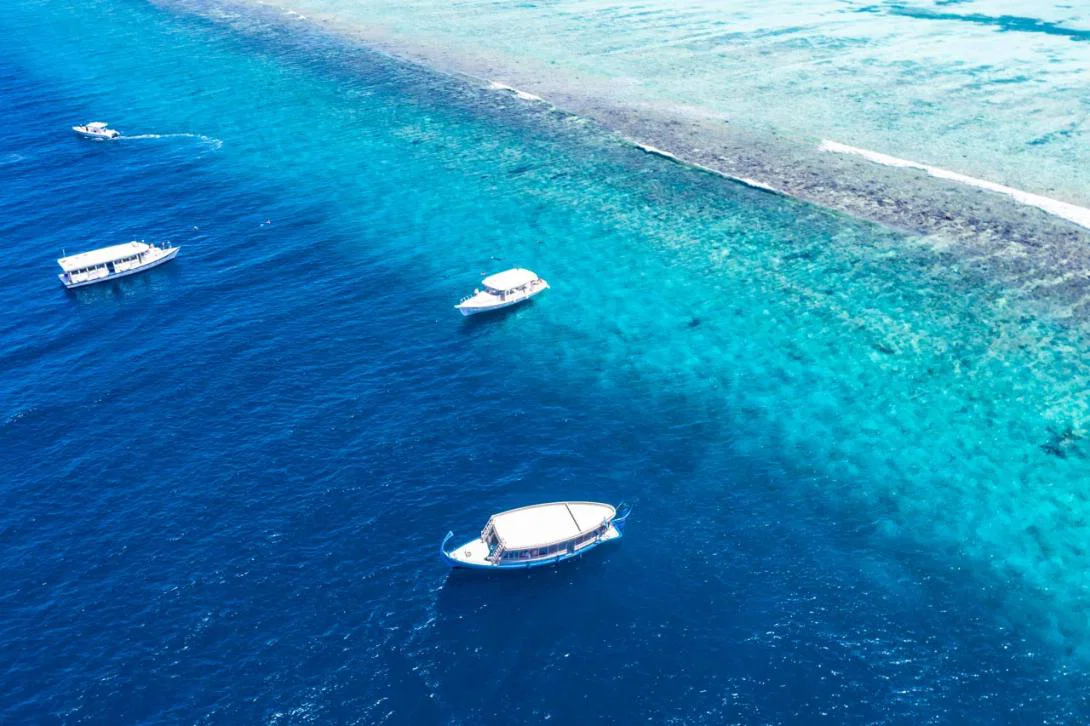
Lux South Ari Atoll is located in a marine protected area
Responsible marine tourism here is not only a moral obligation, it’s also a national asset to be safeguarded. Along with its whale sharks, the Maldives hosts the world’s largest known population of reef manta rays and the third largest of oceanic manta rays. Manta Trust coordinates manta research and conservation globally.
“We estimate the current population to be between 4,000 and 5,000, but since the late 1980s, we’ve recorded nearly 7,000 individuals,” says the trust’s Maldives project leader, Tam Sawers.
“Over that time, tourism has developed far quicker than the country can keep up with. And that presents problems. Our code of conduct for manta encounters is used nationwide, but outside of Hanifaru there’s no penalty for non-compliance. Essentially, there needs to be more rangers, education, and training.”
The trust operates the Swim with Mantas initiative, which includes a pre-trip educational video and a 10-step code of conduct. Operators that commit to these standards are listed on the organisation’s Wall of Fame, offering a practical starting point for agents seeking responsible resorts.
“Additionally, the trust has three resort bases, which all follow our guidelines – Six Senses Laamu, InterContinental Maldives Maamunagau, and Four Seasons Landaa Giraavaru – plus our Manta Expeditions liveaboard programme,” Sawers adds.
“Guests at our bases must complete a snorkel training experience before they’re allowed on our excursions. Worryingly, I often see guests from other resorts out in the ocean in ripping currents who haven’t a clue how to even put on a mask.”
Sawers also recommends that any trip be accompanied by both a marine biologist and at least one guide. “You want people familiar with the species and sites being visited, who’ll ensure that guests are properly monitored and briefed. Guests need to know the rules from the start, and that if they don’t follow them, they’ll have to leave the water. That said, saying ‘No’ to guests here – especially those from high-end resorts where anything a guest wants goes – isn’t always easy.”
But what if, like me, a client has a bad experience?
“It’s essential they report it to their resort’s management. It’s only by going high up that things will improve. Public pressure definitely helps, so call it out on social media, and contact us, and we’ll inform the relevant authorities.”
On the upside, Sawers believes that positive change is increasingly being driven from within: “Encouragingly, we’re seeing local operators ‘ratting out’ operators they’ve seen behaving irresponsibly.”
Be an agent for change
Abta’s Animal Welfare Guidelines specifically prohibit feeding wild animals or causing them fear, injury, or distress. So, for agents and operators, the message is simple: don’t book or promote excursions that cross these lines. This includes nurse shark excursions. Fuelled by social media, snorkelling with large gatherings of these sharks has become increasingly popular – but these encounters are far from ethical.
Nurse sharks are nocturnal, shy, bottom feeders that usually rest by day and hunt alone by night. When they gather around boats in large numbers, it’s invariably due to illegal feeding (or scented bait box lures). This causes these usually docile sharks to associate humans with food, thereby raising the risk of attack, and several snorkelers have been bitten in the past year. Even tossing scraps to reef fish from a resort’s shore can destabilise ecosystems and harm coral reefs.
“Tourists often don’t realise how easily their behaviour can negatively impact marine life,” explains Chloe Winn, in-field coordinator for the Maldives Whale Shark Research Programme (MWSRP).
“Whale sharks are deep-diving cold-blooded creatures that spend most of their time in the cold depths of the ocean. When a whale shark is spotted here, it’s because it’s come up to the warm surface waters to thermoregulate (warm up) and rest. This recovery time near the surface is vital for juveniles’ development. However, if harassed, they’ll dive back down before they’ve had time to recuperate, and over time, this can negatively impact their health, growth, and reproductive capacity.
“We have some excellent guides here who are great at briefing guests on how to behave. The problem is that some tourists ignore that advice, while others are so in awe of the shark that they don’t even notice they’ve got too close. Alarmingly, we’re seeing fewer whale sharks in South Ari now, and those we do see are becoming more evasive.
Hopefully, SAMPA’s new regulations will go some way to help. Personally, I’d love to see encounters capped at eight people per shark – but at this stage, I can’t see that happening.”
Radisson Blu Maldives hosts two MWSRP researchers on-site and actively supports the NGO’s independent research efforts, while resorts including LUX* South Ari and Conrad Maldives Rangali Island contribute to the MWSRP’s Big Fish Network database.
Call it out when you see it
Private excursions may be the dream solution, but for many, they’re prohibitively expensive. For clients focused on scuba or snorkelling, an ethical liveaboard cruise offers a more cost-conscious route to conscientious encounters. MWSRP, The Manta Trust, and Olive Ridley Project, a sea turtle-focused NGO, all run conservation cruises in partnership with the Maldives’ leading responsible tour operator, Secret Paradise, co-founded by British expat Ruth Franklin in 2011.
“Problems surrounding marine excursions have increased for several reasons,” explains Franklin. “Firstly, the boom in local island tourism means there are far more local excursion operators to regulate, but outside of Hanifaru and now SAMPA, there’s no legal requirement for guides to have any form of training. Excursions provide a vital source of income for many Maldivians, but what’s lacking are the resources and training opportunities they need to help them establish a sustainable, quality product. Then you have resorts that take the view that they’re just giving guests what they want, regardless of how that impacts marine life.
“Ultimately, when it comes to policies and regulations, the tourism dollar often leads decision-making – that’s why so much gets pushed under the surface. To drive change, tourists and stakeholders in the B2B space almost need to become activists – their voices matter, because they’re the ones bringing money into the Maldives. By speaking out and highlighting concerns [about overcrowded excursions], they can help push regulations higher up the agenda and encourage local stakeholders to be more ethically aware.
“The more negative feedback from tourists and agents that resorts and the Environmental Regulatory Authority receive, the greater the chances are that something will be done.”
Resources
Snorkelling and diving best practice guides:
Green Fins provides the only globally recognised environmental standards for marine tourism. Free, simple guides, including best practices for snorkelling and diving, as well as why feeding fish is a no-no, can be downloaded and shared with clients; greenfins.net
Swimming with mantas:
Manta Trust has a video and simple 10-step guide, together with a Wall of Fame listing base partners and responsible operators; swimwithmantas.org
Swimming with whale sharks:
Maldives Whale Shark Research Programme has downloadable code of conduct posters available; maldiveswhalesharkresearch.org
Advice for agents to promote better animal welfare in travel:
Animondial’s Daniel Turner shares five pledges agents and operators can embed in their operations to promote an animal-friendly, nature-positive future.