



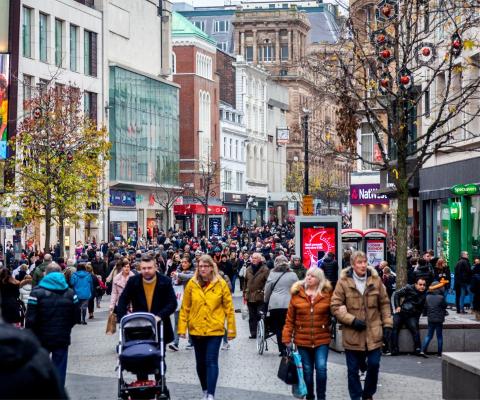

Abta chief executive Mark Tanzer described the move to support high street businesses, including travel agencies, through a lower level of business rates, as “very welcome”. However, Tanzer said Abta was concerned about the cumulative impact of taxes.
"The introduction of a wide range of new taxes and tax increases, largely targeted at middle and higher-income earners, is something that will need to be monitored carefully,” he said.
"Similarly, changes to employment and business taxes, including further increases in the National Living Wage, especially for younger workers, will increase the cost of employment.
"The government must be careful not to deter businesses from hiring staff, especially those younger people who are looking to start their careers in travel. However, there were also some positive moves in this area, including enhanced access to apprenticeships for SMEs.”
'Shortage of future leaders'
Rises in the minimum wage have caused concern, including with Springboard, a charity that helps people from all backgrounds start careers in the hospitality, leisure and tourism industries.
Chief executive Chris Gamm said the Budget was "deeply concerning”. “With the minimum wage set to increase and a freeze on income tax and NI thresholds extended, we expect entry-level hospitality roles to decrease and further job losses to follow.
“We also predict the long-term effects of this will mean in time, there will be a shortage of future managers and leaders.”
Alan Glen, vice-president of the Scottish Passenger Agents' Association, said: “Every time the cost of employing someone rises, it becomes harder for travel businesses to take on new staff, to invest in apprenticeships or to grow. It’s sucking profit out of the sector — and then taxing what’s left.”
The association said SMEs, particularly on the high street, were “being hit hardest”. “There’s no support to help people into work, and no assistance for gaining the qualifications and training needed to grow skills in the travel trade,” Glen continues.
“Meanwhile, high street businesses that provide local jobs and personal service are being decimated by global online giants that are not taxed in the same way.”
Consumer confidence boost...
On the agency side, Steve Witt, co-founder of Not Just Travel described Reeves’ statement as “neutral”. "Today’s budget has been one of the most anticipated in modern history,” he said. “As a result, many consumers have been putting off buying decisions until after the budget. They wanted to know what disposable income they would have.
"The Budget shows there is no big immediate impact on consumers' income. Consumer confidence will increase as they realise there are no big immediate changes. As a result, we can expect an influx of bookings for both last-minute and 2026 and beyond.
"Overall, Labour needed to be strategic in their budget. They couldn’t create too many divisive changes; otherwise, they’d alienate the population. Therefore, this has been a neutral budget."
...or spending squeeze?
Julia Lo Bue-Said, spokesperson for the UK Outbound Travel Group, said: "While it is undoubtedly a relief not to see any significant changes to the taxes on our sector specifically, this Budget follows a series of measures that are squeezing the small- and medium-sized businesses that make up the bulk of the outbound travel sector.
"The cumulative impact of increased national insurance contributions, set to increase even further due to the chancellor freezing thresholds today, and mounting tax burdens, means that independent travel business are struggling to invest, create and protect jobs, and grow.”
She added some announcements were “likely to leave households facing more financial constraints, prompting them to delay major purchases and reduce discretionary spending”.
Local tourism levy
Others believe the introduction of a local tourism levy and changes to tax rates on property income will hit the domestic sector.
Ben Spier, Sykes Holiday Cottages head of policy and regulation, said: “While the chancellor’s proposal to increase property income tax rates from 2027 will understandably raise concerns for some holiday-let owners, the prospect of a reduction in business rates in 2026 provides a slight counterbalance.
"However, this business rates change is only replacing the 40% relief that retail, hospitality and leisure businesses received on the back of Covid.”
He added a tourism levy “threatens to deter people from choosing holidays in the UK” while providing “a relatively small extra return”. “The focus should be on ensuring that the substantial tax income already generated is properly directed to the local communities where it's generated,” he said.
Paul Callingham, chair of Starboard Hotels, called the levy “a disastrous tax on hotels”. “This is a direct tax on hotels," he said. "We will need to include the levy in our published room rates to comply with the Digital Markets, Competition and Consumers Act 2024 and guests will not pay extra as our rates are market driven.”
He said different rates across the country “will be hard to manage”, adding: “I suspect it will be impossible for the local authorities to collect this levy from holiday let businesses, especially individual Airbnb landlords.”