






It’s not often you hear an acclaimed Irish poet and Nobel literature prize winner quoted on stage at a business breakfast analysing the state of the market.
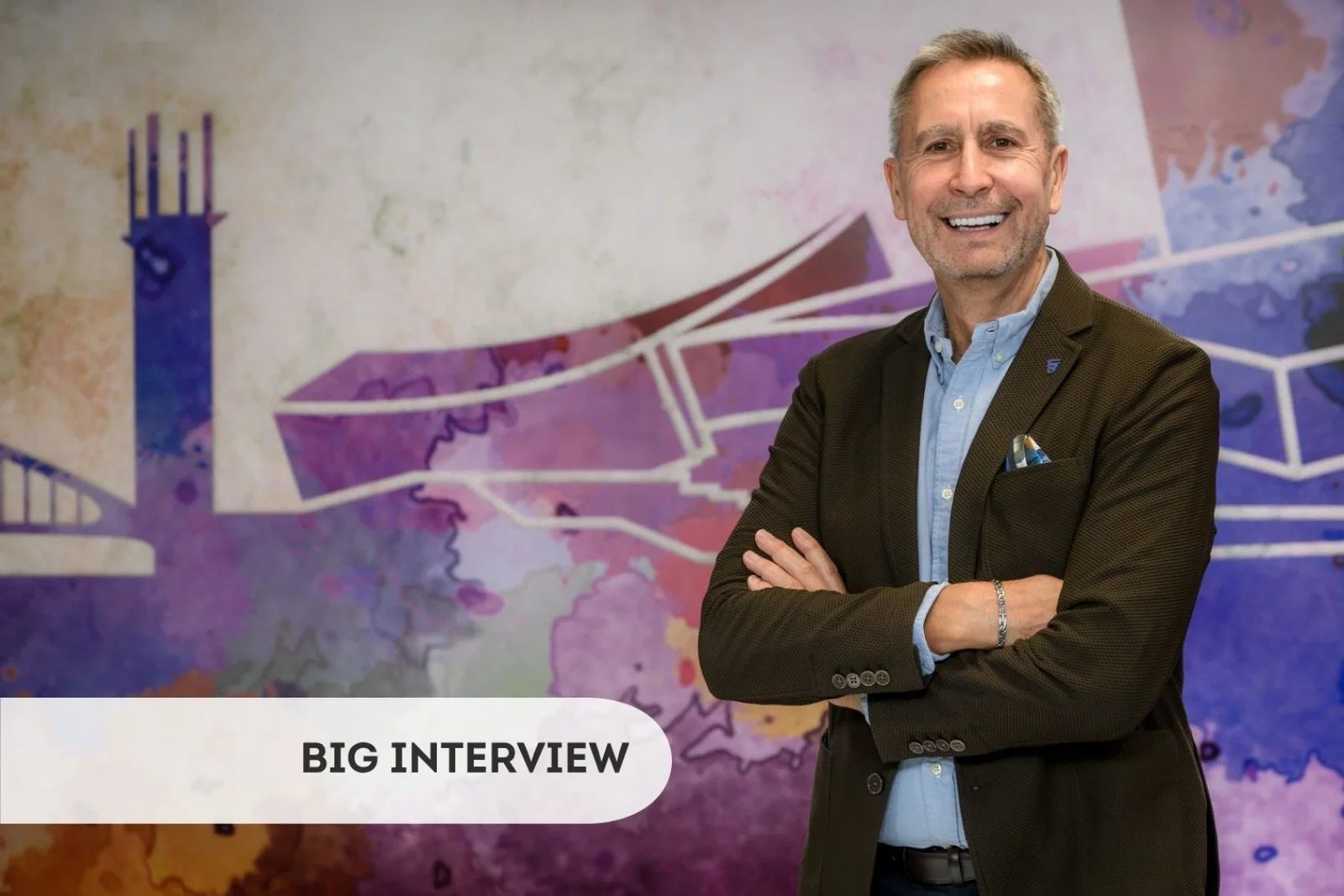
But then, Travel Counsellors Chief Executive Steve Byrne is not your average travel leader.
We are at TTG's biannual Agenda 2026 breakfast briefing, held in partnership with PwC, where Byrne – as keynote speaker – is frank about the current challenges facing the travel industry.
“If you’re sitting there leading a business and it’s tough, you’re not on your own,” he tells the audience of senior leaders.
“It is a tough market… but someone sent me a lovely Seamus Heaney quote during Covid: 'If we can winter this one out, we can summer any time'. And I think that’s right.
"This is a moment in time to stay true to your values. Look after your customers, and you’ll bounce back stronger.”
I meet with Byrne straight after his session on stage, and he is equally sanguine. Yes, it’s a “tough market” out there.
He acknowledges the immense pressure the Middle East crisis has placed the sector, in addition to the wider economic turbulence, political instability and inexorable rise of artificial intelligence (AI).
But as a former accountant, he’s braced to weather such storms. And his advice is simple – "prepare for the worst” while trying to stay positive.
"You have to attend to the here and now, but you cannot let it dictate your medium-term strategy,” he explains. “You want your financial planning to look at the absolute worst-case scenario – manage your cash ruthlessly based on that worst case.
"But gear your aspiration, team motivation, and consumer-facing language toward the absolute best scenario to win market share."
Weathering the political storm
It’s not just economic instability businesses are grappling with at the moment. There is, of course, the small matter of the political turmoil the UK once again finds itself mired in.
We meet while Keir Starmer is still (just about) holding onto his post as prime minister, but I’m intrigued to hear how far Byrne believes this current government has helped – or hampered – business.
While Byrne is reticent to share his personal political views, he appears frustrated with the current government’s failure to deliver on its promises to drive growth. "You want a regime that is encouraging business, encouraging investment, encouraging growth," he says.
"They [the Labour government] would argue they are...” he adds dryly. “[But] it doesn't seem to be the case."
He is equally as passionate – and and just as exasperated – about where he feels the government has let down a significant section of society, namely young people. “The data on youth unemployment is really sad,” he says. “It’s a tough market for graduates. My daughter has left university and she can't get a job.
“Business leaders have gone out there and said the increase in the cost of hiring has had a direct bearing [on hiring young people] in terms of National Insurance.”
It’s why Byrne says he is so passionate about ensuring Travel Counsellors is doing all it can to champion young people through its apprentice and scholarship programmes.
Travel Counsellors currently has 16 apprentices, with eight apprenticeships completed in the last two years. Meanwhile its Travel Academy, designed for those who have left full-time education within the last five years or have less than five years of work experience, is offering up to 20 places for free (check) (rather than charging its usual £5,000 fee), specifically targeting people with no industry experience who wish to launch their own Travel Counsellors franchise.
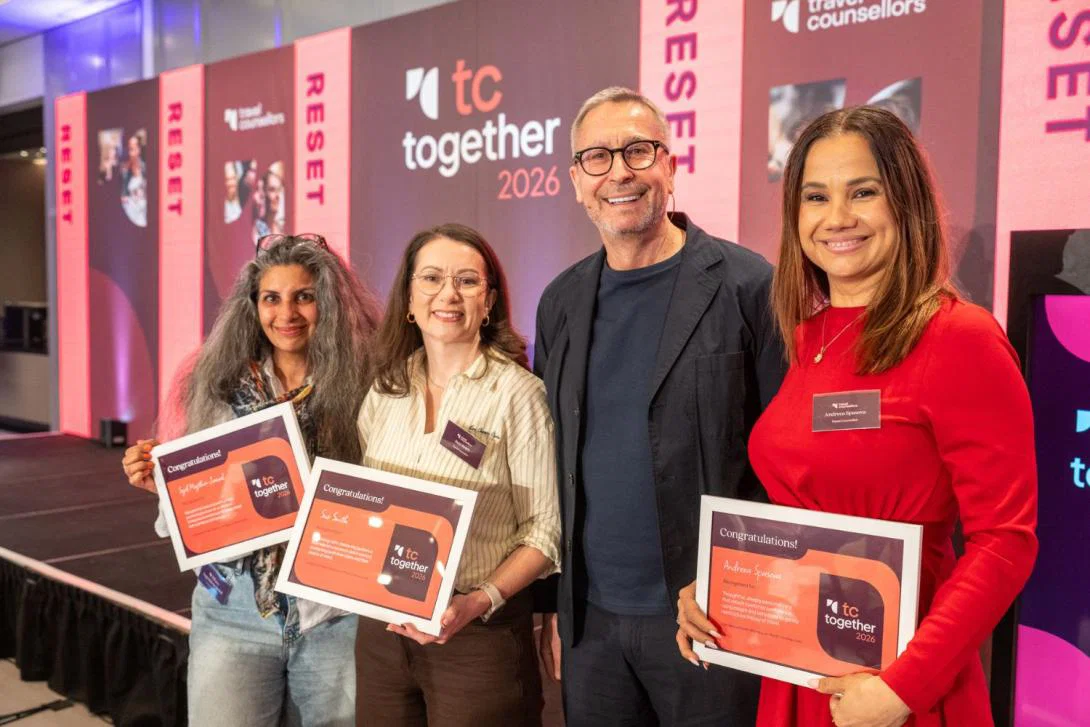
Travel Counsellors CEO Steve Byrne with individual Travel Counsellors Suzi Smith, Andreea Spasova and Sejal Majithia-Jaswal who were recognised at the company's mini conference TC Together.
What AI means for the future of travel agents
One big challenge facing young people – and travel as a whole – is, of course, is the rise of AI. It’s an area in which Travel Counsellors has been keen to stay on the front foot, launching its own AI-powered digital assistant TC Co-Pilot last November, which helps agents with itinerary building, social media planning, Phenix [Travel Counsellors’ in-house tour operator] and marketing content creation.
Recent data shows it’s now been adopted by more than 80% of Travel Counsellors worldwide. But while Byrne is firmly in favour of embracing AI technology, he also passionately believes AI will not replace travel agents, quite simply, because he believes its lack the human element.
"They [AI] can be proactive about data they hold, but that’s mainly going to be transactional data," Byrne asserts. "It’s very difficult for them to be personal about you. You can go into a coffee shop and they can capture your date of birth and send you a happy birthday email. That's nice, but that’s not real personalisation.
"If you’ve built a relationship with someone where you picked up from that conversation things about them which then enables you to provide something that's truly caring for that individual, that’s different. And I think only a human being can do that at the moment.
“I haven’t read anything that says AI will have the empathetic qualities of a human. Even if they put it on, it wouldn't be authentic. And it's that authenticity, that warmth, and I mean this metaphorically as well as the warmth of a human handshake. It’s the digital recognition of, 'I'm speaking to a human being' – you're not going to get that [with AI]."
So what of the younger generation, who are growing up alongside AI? What will this mean for the future of travel agents? “[People's] expectations and needs will change,” Byrne admits. “They’ll be tech-enabled. They’ll be tech native.
"But if you look at the way that generation are now engaging, they’re the most adoptive of social media, they’re the most digitally connected at an individual level. So the human connections are there. It’s just the forms that they’re using are very, very different."
The challenge, he points out, and the opportunity, is for travel brands to be constantly present wherever the consumers of tomorrow are searching for travel content and inspiration. "That’s in social platforms and LLMs [large language models, such as ChatGPT]. You need to make sure you are at the centre of those searches and choices."
Predictions for the rest of summer
For now, though, most travel firms are trying to ensure they’re front and centre of consumers' minds as the sector braces for what will hopefully be strong lates market, particularly now the Foreign Office has eased its travel advice for the UAE and Qatar.
For Travel Counsellors, it is cruise which is performing particularly well right now. “It’s very rare you see a product that’s booming so powerfully regardless of the external situation as is happening in cruise," Byrne remarks.
He doesn't buy into the prospect of a domestic boom this summer, despite some in the media suggesting Brits may swap their overseas breaks for staycations this year, put off by the Middle East crisis and fears of EU Entry-Exit System queues in European destinations.
"I spoke to someone who knows the domestic market intimately," he chuckles. "They suggested reports of a massive staycation surge are complete propaganda. The domestic market is flat. Consumers are saving their cash, but when they spend it, they want highly experiential, international travel.”
And it'll be trusted travel advisors – like Travel Counsellors – rather than AI chatbots who will be waiting to help them. After all, "if the industry can winter these tough few months out, they can summer any time".
You can find out more about Travel Counsellors' offering and why it's a good option for new to travel, new to homeworking, travel trade professionals and experienced homeworkers via TTG's Homeworking Hub.