In 1976, my parents went backpacking around Greece. When I was a child, they regaled me with tales of sleeping on kindly locals’ roofs and basking in rosy-hued sunsets at deserted beaches.
Kefalonia was an island they particularly enjoyed, so in June I set off for the Ionian island and its neighbour Ithaca, with my husband Ollie in tow, in search of the Greece my parents remembered so fondly, beyond the mass-market resorts.
The legends here date back far further than those of my own family, however. Ithaca is said to be the home of Greek hero Odysseus, whose 10-year voyage home after the Trojan War is recounted by the poet Homer in his saga The Odyssey.
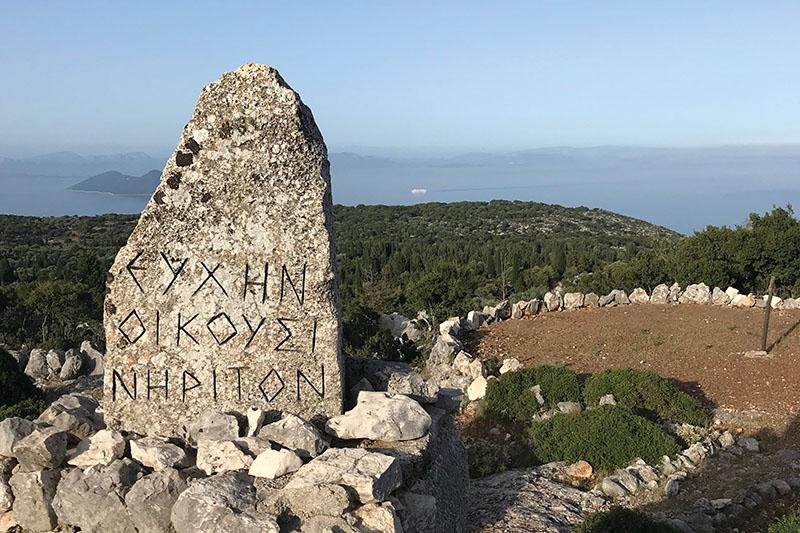
A highlight of our visit is a hike with Ester Van Zuylen of Island Walks (islandwalks.com) to the School of Homer, said to be Odysseus’s palace, where ruins date from 1200-1400BC.
As we walk, Ester fills us in on some of the local legends. “Many Ithacans firmly believe in Homer’s story. Odysseus was forced to leave his home to fight in the Trojan War, and it’s the same for many young locals today who have to leave the island for better job prospects,” she says.
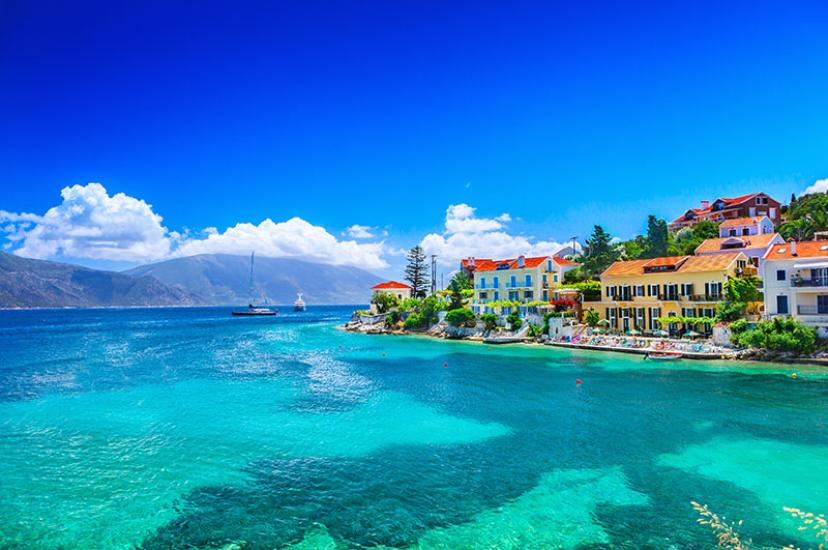
There is a mind-boggling amount of still-visible history to discover on both islands. We stumble across ruins of a Roman cemetery while strolling into the Kefalonian harbourside village of Fiscardo, but those happy to set out on a longer hike will earn greater rewards. Paths of Greece, a social enterprise, has marked a series of three footpaths from Fiscardo with signposts and little blue and white flags guiding the way.
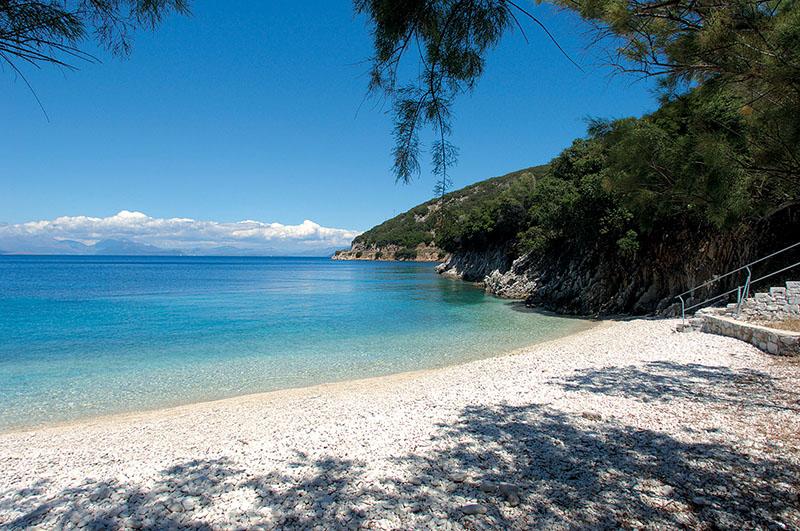
We take The Battery Trail – around six miles – our efforts repaid with sweeping coastal views and sites including a former Second World War battery, blown up by the Germans at the end of their occupation of the island. And just as we’re starting to tire of the heat, the path leads us to the tiny cove of Kimilia, where the water is a piercing turquoise and the beach itself is almost deserted.