










A travel advisor has shared the essential questions every agent should ask when booking a luxury holiday for a client with a disability.
Jasmine West of World Accessible Holidays specialises in planning trips for people with mobility and/or intellectual impairments, using her own experience of living with spinal muscular atrophy (SMA) to create seamless journeys.
Having visited more than 10 countries and 20 hotels, the Somerset native knows all too well the challenges that come with travelling with a disability.
From wheelchairs being damaged to limited accessible rooms, the barriers that face the community are vast.
Despite the Purple Pound – the collective spending power of disabled consumers and their families – estimated to be worth £274 billion annually, the industry has yet to fully embrace this market. Some of the most popular holiday destinations for UK travellers are still falling short, with only 10% of Greece’s hotels offering wheelchair accessible rooms, and just 9% of Rome’s.
Jasmine also knows luxury doesn’t guarantee accessibility, adding that some of the least inclusive properties she’s visited have been five-star hotels.
“From my experience, three and four-star hotels often have more accessibility for wheelchair users,” Jasmine told TTG.
“Sometimes accessibility takes a backburner in luxury. They’re so focused on making everything else perfect that disabled people become a bit of an afterthought.”
Determined to never make a client feel this way, Jasmine follows five strict rules when booking luxury holidays for those with disabilities.
Check the non-negotiables
In an ideal world, all hotels and destinations would be 100% accessible.
However, Jasmine knows this isn’t the case – and that it’s her responsibility to manage the client’s expectations.
To ensure the traveller enjoys a stress-free stay, she always asks about their ‘non-negotiables’. These are the requirements that aren’t extra – they are fundamental to the client’s safety and comfort.
For example, a full-time wheelchair user may need a roll-in shower and a bed height that’s level with their mobility device. A visually impaired traveller, on the other hand, may need a guided tour of their suite and printed materials in Braille or large font.
“Once you’ve figured out what the client can’t negotiate on, you can then work on where they can be flexible,” Jasmine explained. “Nine times out of ten, we actually can tick all the boxes. But there will always be situations where you can’t.”
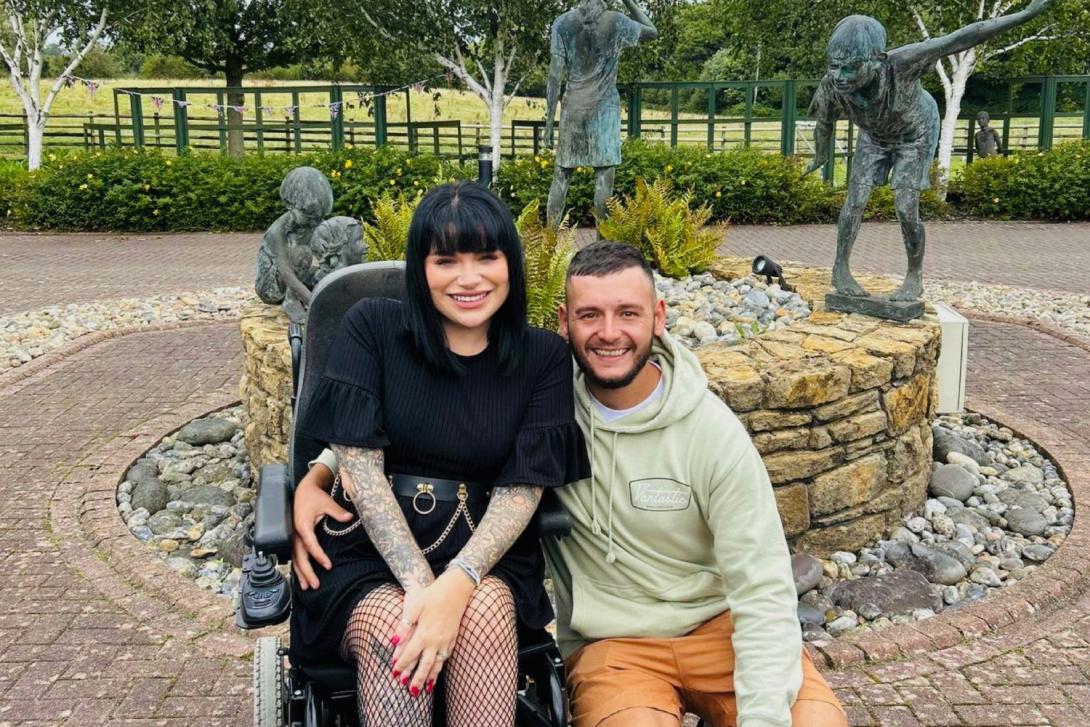
Jasmine West of World Accessible Holidays uses her personal experience of living with SMA to create dream holidays for travellers with disabilities
Request videos
If Jasmine hasn’t visited the property herself, she will ask its general manager or director of housekeeping for a full video tour.
This gives her the opportunity to measure the space visually, which in turn, enables her to identify potential red flags.
For example, the footage may reveal the shower has an obstructive lip, preventing the wheelchair user from navigating the stall safely. The room may also be cluttered by excess furniture or decorative pieces which pose hazards for a person with mobility issues.
Videos are also effective tools for showing textures which can impede the client’s movement – for example, plush carpets often cause friction on wheels, making it more difficult for the user to manoeuvre their chair. Floors with deeply grooved tiles or uneven wooden slabs, along with slippery high-gloss marble, are other common culprits.
For visually impaired clients, videos can showcase the contrast levels of the room.
For example, burgundy carpet against cream walls helps a person with limited vision to understand the perimeter of the room, while white grab bars are easier to find if they’re installed on a dark surface. If the person is completely blind, Jasmine will describe all the videos in an ‘alt text’ style to ensure they understand its layout and amenities.
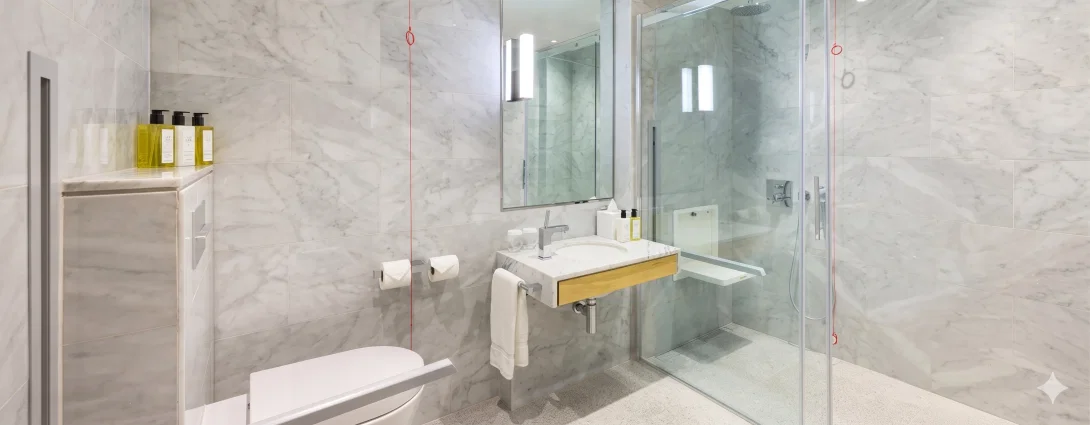
It's crucial to take videos of accessible rooms to share with the client, says West
Ask for facts and figures
‘Spacious’ isn’t a good enough word when it comes to vetting an accessible room – clients with disabilities need the hard figures.
If the dimensions of the suite are unsuitable, they can completely inhibit a wheelchair user from navigating the area comfortably. They may not be able to make a 360° turn, to close the bathroom door fully or reach essential amenities.
“We always request measurements, especially for things like the toilet, so we can check that a shower chair could fit correctly,” Jasmine explained.
Understanding these dimensions is also important for transfers; most wheelchair users will need a minimum of 90cm of clearance on the side of the bed, to allow them to park their chair parallel to the mattress. They may also require extra room for equipment like a rollator, or additional storage space for hoists and medical supplies.
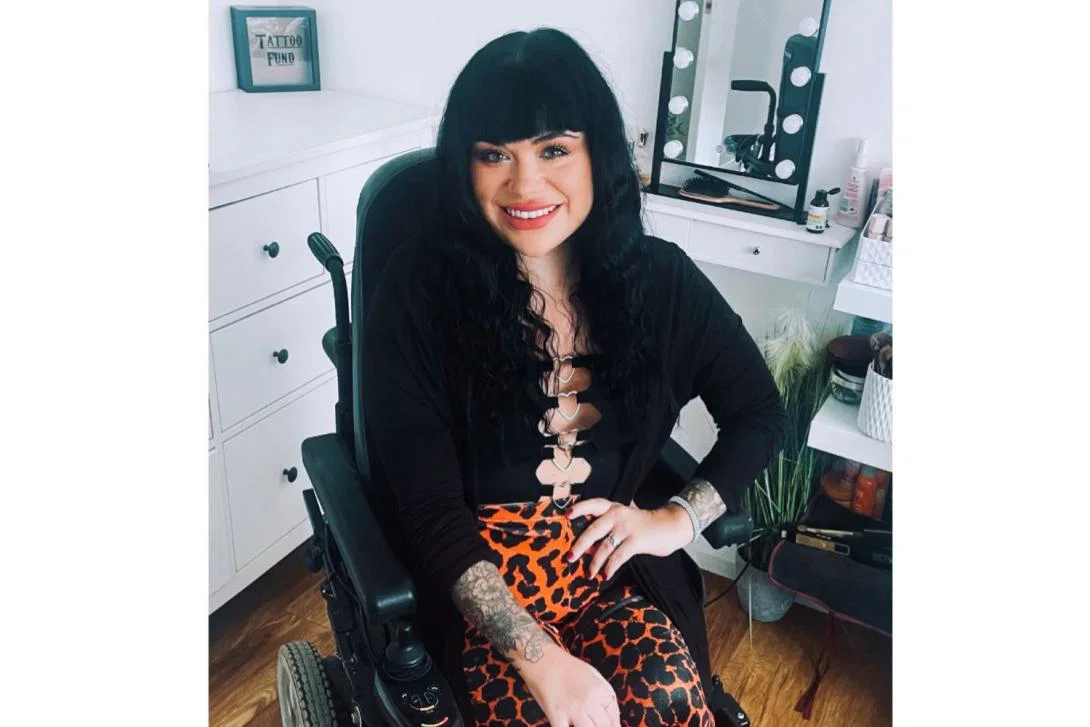
West always asks the hotel for hard facts and figures when booking an accessible room
Never assume
Assuming is the worst thing any advisor can do when working with a traveller with a disability.
Failure to confirm details like room layout, dimensions and available medical equipment could upend the entire holiday, disrupting the client’s safety and comfort.
“I think the majority of people within the disability community will agree with me on this: ‘Ask all the questions you can,’” said Jasmine. “It’s so risky to guess these things. Triple check everything.”
Taking the time to ask the ‘awkward questions’ is the only way to safeguard your client down the line, Jasmine added.
“It’s better to have that conversation and to be sure, rather than have your client travel 12 hours to find they’re stuck in an unsuitable room and there’s nothing you can do about it.”
Get everything in writing
Jasmine swears by a strict ‘paper trail’ policy when dealing with suppliers, insisting that every promise is inscribed in ink.
“If we request an accessible room directly with the hotel and they say, ‘Yeah that's all done’, we always have them confirm it in writing,” Jasmine said. “If they just say ‘It's booked,’ that's not good enough.”
The benefits of this practice are twofold; firstly, it lowers the risk of certain requirements being forgotten or overlooked. It also legally protects both the advisor and the client, providing evidence that the supplier had been made aware of its obligations and, under the Equality Act 2010, is now contracted to fulfil them.
“Heaven forbid it happens, but if the client arrives and their accessible room isn't available, you can show them the proof,” she said.
"Some of these holidays are once-in-a-lifetime trips. We can't control the weather and all the things going on in the world, but we can control they have an accessible holiday."