






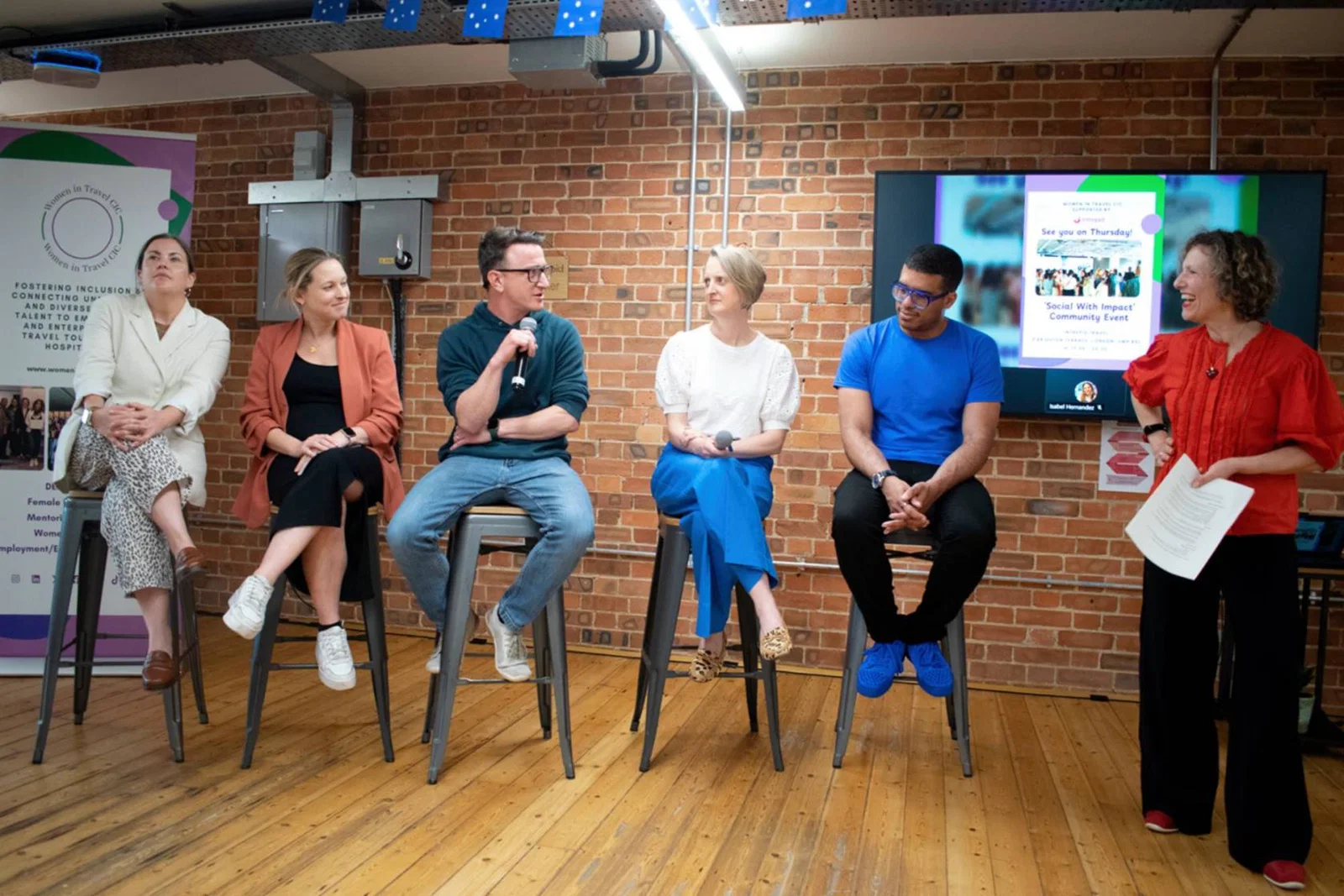
Speaking at a Women in Travel CIC event in London on Thursday (21 May), panellists said many men still feel hesitant about engaging in gender equity discussions, often due to fear of "getting it wrong", fear of damaging their reputations or fear of entering female-led spaces.
Lee Chambers, founder of Male Allies UK, said research conducted across multiple industries found fear remained the single biggest barrier preventing men from participating in inclusion work, which was a "major challenge" for the sector.
"Some men were scared of coming across as patronising or condescending, some were scared of looking stupid or incompetent," he said. "But allyship is a set of skills that can be learned."
Chambers argued those skills – listening, collaboration and working across difference – are becoming increasingly important for the travel sector in particular. "With an industry with so much cultural difference, that's creating those cultural experiences – these are increasingly valuable skills," he said.
TTG Fairer Travel Event – 30 June
Making travel more accessible for all will be a key theme at TTG's Fairer Travel Event on 30 June. Travel agents are invited to apply for a free ticket, while other travel professionals can purchase a ticket online.
Women in Travel Founder Alessandra LuTufo Alonso, who moderated the discussion, said she agreed. "If you look at the qualities of a good ally, they sound very much like the qualities of being a good leader," she said. "That's openness, vulnerability and good communication."
This challenge is beginning to be addressed across the industry. Earlier this year, Women in Travel CIC revamped its allyship programmes, introducing tiered packages designed to help individuals and businesses support inclusion initiatives through mentoring, DEI training and sponsorship opportunities.
Meanwhile, organisations such as the Association of Women Travel Executives (AWTE) are also expanding their male allyship programmes to create more structured routes for men to engage in inclusion work.
Women 'marginalised' in times of crisis
The discussion also highlighted concerns that geopolitical instability and economic pressures risk pushing diversity and inclusion efforts backwards. Hazel McGuire, Intrepid Travel's Chief Marketing Officer, warned that during periods of crisis, women’s voices can become marginalised more quickly.
"In times like this, women quite often become excluded, because men are often found at the top level of a company," she said. "We need diversity of thought, especially when businesses are navigating uncertainty."
McGuire said it was important travel companies continue protecting inclusive policies even during difficult trading conditions, citing measures such as childcare support for employees travelling for work and ensuring diverse representation in leadership decision-making.
Inclusion policies make 'commercial sense'
The commercial importance of inclusion was also a recurring theme, with speakers linking allyship directly to staff retention and progression.
Sophie Griffiths, TTG's editor-in-chief, referenced findings from the TTG Women In Travel survey, which found 60% of respondents who had taken maternity or adoption leave believed their careers had stalled as a result. Of that number, only 26% said they had access to enhanced maternity pay.
"I think those policies matter because they make people feel valued and they make people want to return," Griffiths said.
Panellists repeatedly stressed allyship needed to move beyond symbolic gestures and become embedded into company culture, leadership structures and operational policies.
Crees Manu founder Quinn Meyer described allyship as both "a space for self-improvement and a space of service". "Once you start, it’s addictive, because you can see all the places where you can get better," he added.
'Inclusivity lives and dies by middle management'
The event also explored how allyship is evolving within the travel sector itself, with speakers arguing the industry is uniquely dependent on inclusive leadership because of its global workforce and community impact.
Chambers said the conversation around allyship needed to shift away from corporate rhetoric and towards practical implementation.
"Allyship can’t just be the theme for one evening," he said. "This work lives and dies by middle management, and consistent accountability across an organisation is needed."