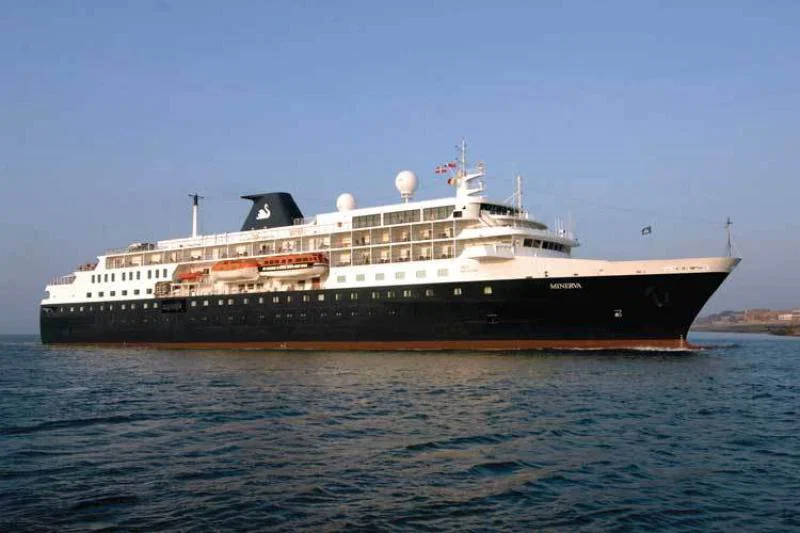
This isn’t a cruise line for American-style entertainment and onboard thrills. You won’t find casinos and waterslides here, but quietly competitive bridge games, craft classes and jigsaw-solving sessions in the 4,000-book library.
As I normally cruise on family-orientated ships specialising in more sybaritic pursuits, I wonder how I will fit in – and if I will enjoy my five days onboard before departing in Malta.
After all, I’ve heard that the large loyal band of repeat passengers – known as Swans and made up of distinguished types from the upper echelons of society and armed forces – can be rather cliquey.
I needn’t have worried. The gentle camaraderie and friendliness of everyone onboard is evident from the outset, and with a sizeable gaggle of solo travellers I don’t feel out on a limb.
The compact size of the 350-passenger ship means that I often bump into familiar faces from shared tables at lunch and dinner or from shore tours.
There’s a house-party ambience amid the quietly comfortable confines of Minerva that is more reminiscent of a floating country house hotel, albeit with a distinct air of studied contemplation and polite conversation.
And it is the conversations that I find most fascinating. Many of my fellow travellers are in their 60s and upwards, with interesting tales to tell of living in the distant reaches of the former British Empire or years spent on National Service.
They are an informed and experienced bunch, well read and well bred, and I find the most fascinating reminiscences come from the most unassuming characters. ?
Canal passage
But this is a cruise of shared experiences, and one of the highlights comes just a few hours after we leave the Greek port of Piraeus to transit the Corinth Canal, which connects the Gulf of Corinth in the Ionian Sea to the Saronic Gulf in the Aegean Sea.
The passage not only slices off the 131 nautical miles it would take to journey around the Peloponnese peninsula (which in effect became an island once the waterway opened in 1893) but gives regular cruisers another canal to stick under their proverbial belt along with those at Panama, Suez and Kiel.
At four miles, the Corinth Canal is the shortest of the four by a considerable margin and at a mere 75ft (24.6m) wide, the narrowest.
In fact, Minerva is one of the largest vessels to use this waterway, squeezing through with just a few feet to spare during our three-hour transit.
On approaching the canal entrance at dusk, I think everyone collectively holds their breath as we slip into the narrow channel slicing between sheer sandstone walls stretching up 260ft.
As we inch our way along its length at snail pace, I am convinced that Minerva’s protruding bridge wings will crunch into the side.
Amazingly they don’t, but a chorus of cracking branches from the overhanging trees signals that the lifeboats don’t escape quite so lightly.
Earlier in the day, I enjoy a bird’s eye view from one of the bridges spanning the canal, on an interesting excursion that takes us into the ruined city of ancient Corinth, Greece’s most important port before Piraeus rose in prominence from the 5th century BC.
It is hard to imagine that this collection of Greek and Roman ruins once housed a city 40,000 strong.
Two days later, I am in Taormina, sitting on the stone steps of the Italian town’s famous Greco-Roman amphitheatre.
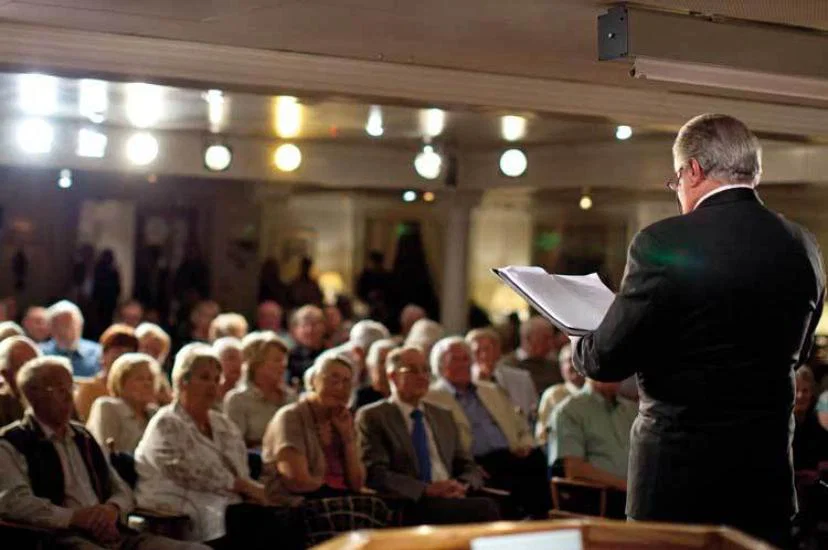
My appreciation of the view across to Mount Etna deepens as I recall Professor Hillenbrand’s explanation of how the Greeks positioned the amphitheatre to capitalise on its stunning setting.
Without such prior knowledge, I wouldn’t have given this much thought – which makes me even more pleased that I stayed in his talk until the end.
Book it: Swan Hellenic offers a 12-night Athens-to-Venice cruise, which transits the Corinth Canal and calls at Kotor, Dubrovnik, Split, Sibenik, Rijeka and Koper. It departs on November 27, 2016, and costs from £1,796pp, including flights and gratuities.
Speaker's Corner
As Swan Hellenic’s guest speaker manager, Rhys Davies has to ensure that the line’s lecture programme on Minerva engages its famously high-brow clientele.
“It’s like putting together a jigsaw,” he says. “The first thing I do is look at the itinerary and lead with this, so background knowledge of the destinations is useful.
“I decide on a guest speaker and someone usually comes to mind quite quickly. I then choose others to complement them. For instance, I would have a classicist and an ancient historian.”
At his disposal is Swan’s extensive database of speakers drawn mainly from academia, the Church and diplomatic corps.
Many have travelled with the company for the past 30 years and adapt their talks to different locations across the globe.
With an average of 24 cruises a year, each featuring three or four speakers, Davies has to juggle with more than 70 lecturers in each 12-month period.
Planning ahead is vital and he has booked speakers for Minerva’s sailings until October 2017.
However, not everyone can commit so far in advance, especially if they still work, so reserve speakers sometimes have to step in.
Customer questionnaires are a vital source of feedback, as are comments from the crew and passengers themselves.
Though Davies wryly points out that while guests are quick to speak out when they don’t like an element of the programme, they don’t tend to be quite so vociferous when they do.
“I like to introduce a wildcard from time to time,” he adds.
“This would be someone new and I would discuss the process with them beforehand.
“Some speakers can be excellent on paper, but their delivery can be a little dry. We like to avoid this and try people who can challenge old ideas and be engaging.
“The main thing to remember is that passengers don’t want to be lectured at; after all, it is their holiday.” |