






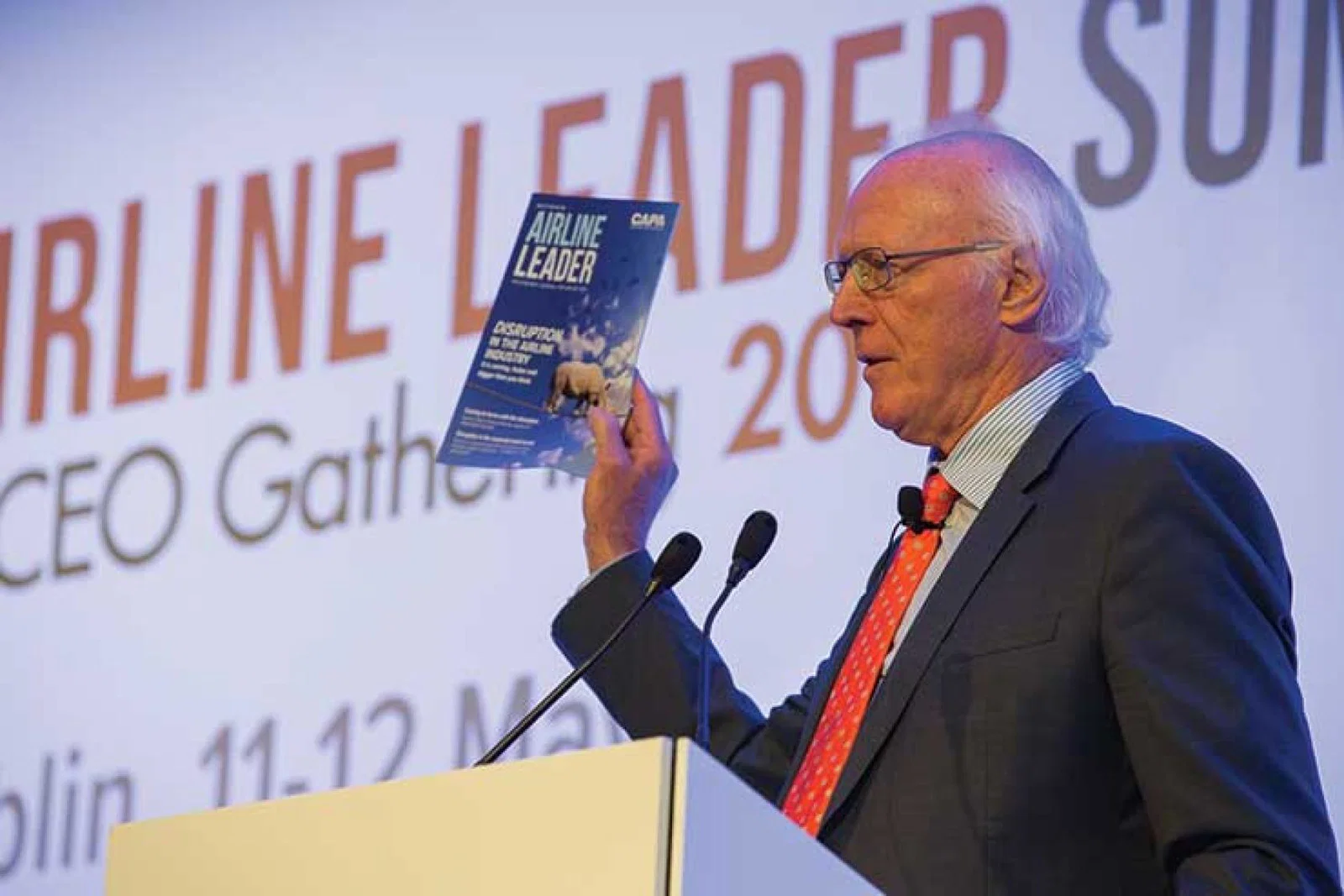
Whether it is the potential change to ownership and control rules or technology’s hold on all our lives, just a few changes could redefine the entire sector and how it operates as a result. Which is why Capa’s Airline Leader Summit held in Dublin this month focused largely on where the key threats lie and what the industry can do about them.
Setting the scene at the start of the event, Capa executive chairman Peter Harbison reminded delegates that the airline industry had already had to adapt to many changes in the past 50 years.
He said that during that time, the industry had seen the introduction of Sixth Freedom of the Air, the emergence and massive growth of the Gulf carriers and the arrival of the low-cost carriers.
He argued ownership rules and technology were the two key issues on the horizon which airlines must adapt to, even if they would prefer not to.
Harbison said: “Many governments do want the change [of ownership and control rules] at once, but the network carriers’ web of inertia is preventing it from happening.”
Meanwhile, he said tech companies were taking a long hard look at the sector to see how they could make more money. More importantly, he argued they were better resourced to do so.
Harbison said Amazon has a market capitalisation of $454 billion, having grown $75 billion in the past six months, Facebook has $433 billion and Google $648 billion. He then compared this to Delta Air Lines’ market capitalisation, which is the biggest for any airline globally, of $37 billion.
This has translated to the tech companies spending billions on research in preparation of moving further into territory that was traditionally occupied by the airlines.
He said: “There is a lot of squabbling in the industry about who is right and who is wrong. Meanwhile, outside the sector there are powerful forces just waiting to swoop.”