








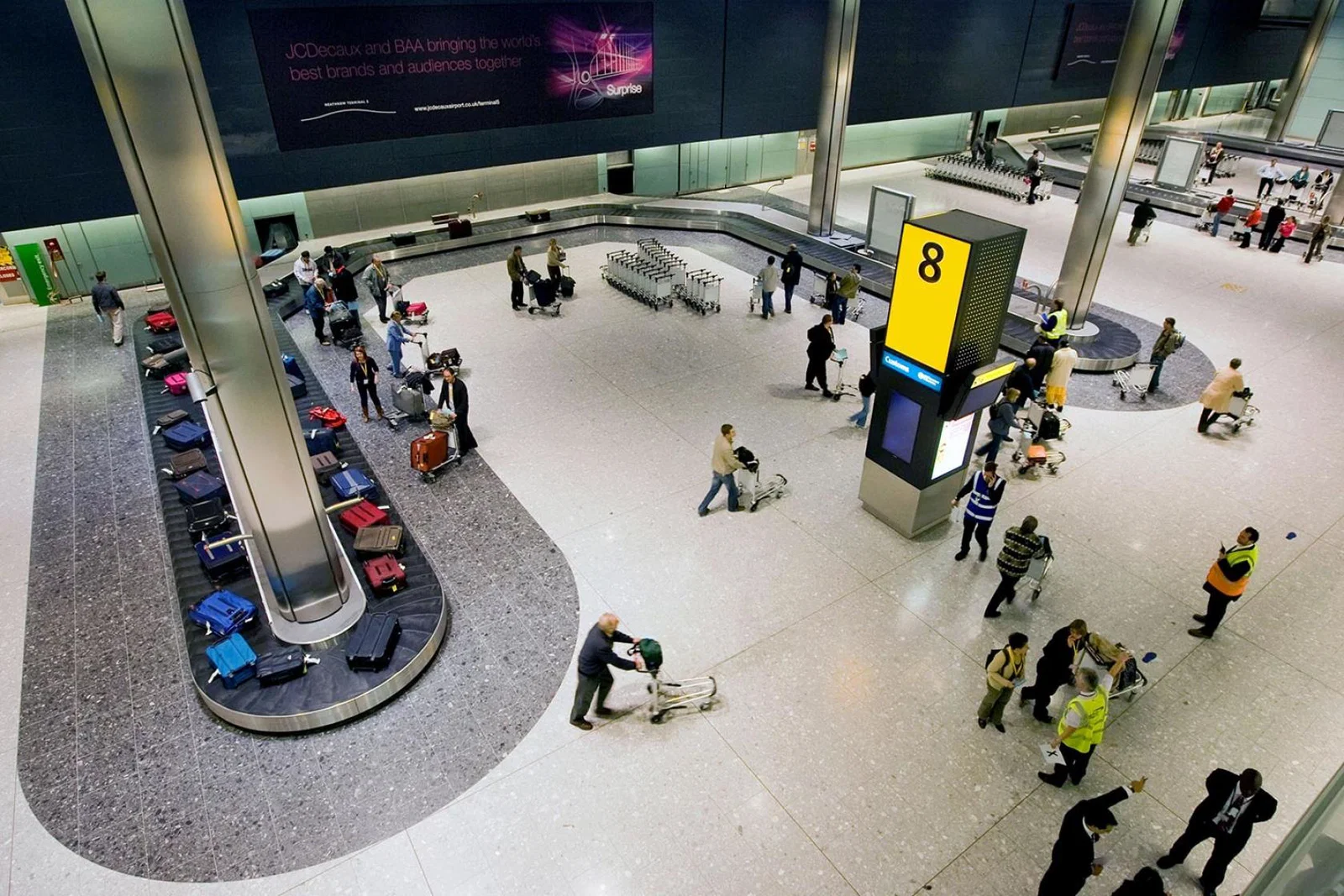
The big data system was tested at the facility over the summer and is aimed at reducing delays caused by the 66,000 passengers who transit through Heathrow each day.
The Times reported it uses 33 pieces of information, from nationality to the type of aircraft they are travelling in, to identify which passengers will be able to make a connecting flight and which won’t.
For instance, business-class travellers are seen as fast movers thanks to habit of rarely checking in luggage while departing from the forward cabin saves time.
On the other side of the equation, large families travelling as a group in economy with checked-in luggage are likely to be flagged up as slow to transit.
Professor Bert de Reyck, director of the school of management at University College London which is leading the technology development, said arrangements can then be made to ensure such parties do not cause further delays.
He added: “This allows the airlines to decide hours in advance whether certain passengers will make it (to their connecting flight) so they can reload the bags and transfer them to another flight.
“Alternatively, the airport can say ‘we want to do something special to get them from one aircraft to the gate’ like sending a bus.”