


"Most people would compliment us on that, because they think it’s good to have that balance. For me, this just shows we haven’t been doing so well with the trade.”
So says the new UK managing director of Hurtigruten, Magnus Zetterberg. His frank honesty is a refreshing change – there are no attempts to hide behind thinly disguised PR comments as so many chief executives tend to do. Where Hurtigruten is successful, he is sincere in his praise, and where it has performed less well, he is equally as candid.
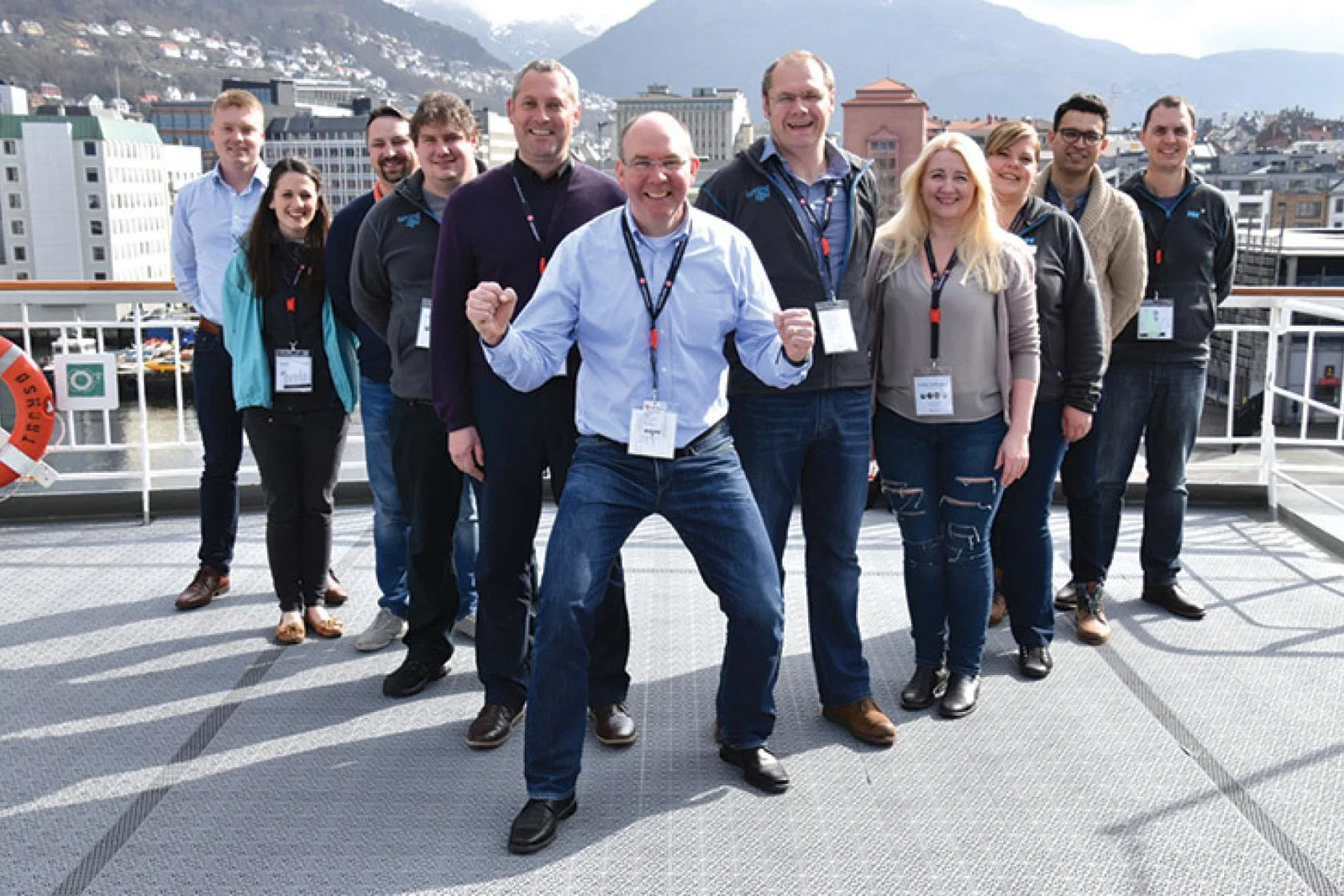
This could be the Scandinavian way (Zetterberg is Swedish), but after spending a weekend with the rest of the Norwegian’s company bosses, I have the impression this is simply the genuine ethos of a company that is as much about improving sustainability and giving something back to the community, as about boosting profits.
“With the refurbishment we want to offer a decor that is more in line with the Norwegian experience”
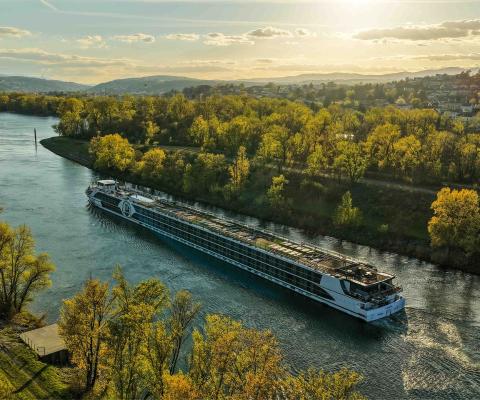
I meet Zetterberg as we sail the Norwegian fjords on Hurtigruten’s newly refurbished Kong Harald, which has been entirely taken over by some 400 travel agents for the line’s global fam. Outside, the landscape is a constantly changing breathtaking vista of snow-capped mountains and forest slopes, sporadically dotted by tiny red clapboard houses. He might be the UK managing director, but having only joined the line in September, it is the first time Zetterberg has sailed on Hurtigruten.
His background is in aviation, but he insists there are parallels with the products. “In one way it’s a big change but in another, not so much. It is still travel, and there is a high reliance on trade,” he says.
UK staffing
It is this attention to agents which Zetterberg is particularly keen to focus on. “There’s not been a lot of consistency in the UK in recent times,” he admits. This has in part been aided by a number of changes to the role which he now occupies.
After Kathryn Beadle’s departure in July 2014, the line appointed Cecilia Abert as UK and Ireland country director in February 2015, but she left the position just six months later in August. Head of sales Maxine Parker also then departed. Since then, Hurtigruten has been attempting to bring back some stability – in June it appointed Richard Adams as UK head of marketing, and Anthony Daniels replaced Parker as head of sales. This was then followed by the appointment of Zetterberg.
“We’ve made a really conscious effort in the last six months to re-engage with the trade. I want to be sold more through the trade,” Zetterberg insists. “We need the travel agents, and we need to support them – they are our extended sales force.”
His comments come as the line unveils a number of changes, which are likely to see Hurtigruten needing agents more than ever, to translate these changes to the consumer. This includes the company’s move away from being seen solely as a cruise line, as it aims to be recognised more as a tour operator. “We want to be known as an expedition company that entails both onboard and land-based experiences,” Zetterberg explains.
“We’re moving away from the cruise concept. We’ve never been a cruise company in the traditional sense, but we’re becoming clearer about what we want to be and who we are. “The challenge is to now educate the market about who and what Hurtigruten is,” he adds.
As part of the changes, the company will now be focusing as much of its attention on its land product as its ships, with a new drive on sustainability. Excursions now include beach clean-ups, and tours are offered which see donations given back to “local grass-root organisations”.
“Sustainability and taking care of the environment is extremely important for Hurtigruten. You feel a real responsibility as a company when you’re going into these untouched parts of the world [such as the Arctic and Antarctic].
“We definitely want to increase our land tours too – it’s another way to introduce customers to our product,” Zetterberg adds.
Back on land
Hurtigruten already has a number of land offerings under different brand names, although Zetterberg reveals these are likely to all be pulled together under the company name.
“We are going through a rebranding to a certain extent. Hurtigruten owns several hotels and a dog-sledding company, but under different names. We need to become better at promoting this [land offering] outside Norway and Scandinavia.”
“We’re moving away from the cruise concept. We’ve never been a cruise company in the traditional sense.”
The fresh direction for the line is being driven by the company’s new owners, venture capitalists TDR Capital, which took over 90% of the business in 2014. Zetterberg is keen to stress that Hurtigruten’s role as a service for local Norwegians will remain integral to the company – with a coastline dominated by fjords, much of Norway’s population still relies on Hurtigruten for transport and to deliver goods.
But he says TDR is also passionate about expanding the company’s product elsewhere. “They’ve pushed Hurtigruten to make it bigger than Norway and make a stake in exploration. “We will be launching a land tour product in warmer areas,” Zetterberg reveals.
“We’re looking at area such as South America for part of our 2017-18 programme. It could tie in with a ship we have placed there as well,” he hinted, “but more will be announced soon.” Given this new focus – the company even has a new strapline, “it’s all about the experience, not about the ship” – some might be surprised at Hurtigruten’s €100 million investment to refurbish four of its 1990s ships, including the Kong Harald.
And these are not small revamps – the ships have been totally transformed, from having a dated decor to sporting a new Scandi-chic style, which gives passengers “an authentic Norwegian experience”, Zetterberg says. He himself confesses the transformation of the vessels, no matter how significant, is unlikely to attract new customers. “I don’t think the refurbishment will bring more customers onboard”. Instead, the reasoning for the refurbishment “is about improving the overall customer experience,” he says.
“We’ve had a bit of a bad rep for being a ferry company in the past,” he admits. “You can look at the positive side – that it offers an authentic experience when walking in the footsteps of local Norwegians, but calling it a ferry is a negative disservice. So with the refurbishment we want to distance ourselves from the old ferry stigma by offering a decor that is more in line with the Norwegian experience. The ships now reflect more of the Norwegian heritage.”
Zetterberg is right – stepping into the cafe onboard the Kong Harald is like walking into a Norwegian dolls house, from the grandfather clock in the corner, to the tables with their doilies, and the wooden rocking chairs complete with sheepskin covers.
So has the newly revamped Kong Harald tempted Zetterberg to take a cruise himself? Definitely, he says. “I would love to experience walking with penguins, kayaking between icebergs in the Arctic. And I would love to see polar bears too – that would be amazing.”
True to form, Zetterberg is just as keen on the company’s land-based product though. “I just returned from a land tour in Spitsbergen with my family with Hurtigruten, and they described it as ‘the perfect vacation’,” he says. He might be starting to sound like he’s now spouting PR, but his love of the company’s land product is clearly genuine.
“We had dog sledding and snow mobiles. Spitsbergen has 3,000 polar bears and 2,000 inhabitants – my three children [who are aged 10, 12, 15] loved it.”
The real acid test though will be when agents are able to sample the land offer for themselves. And with the renewed focus on the trade, it looks set to be sooner than you think.