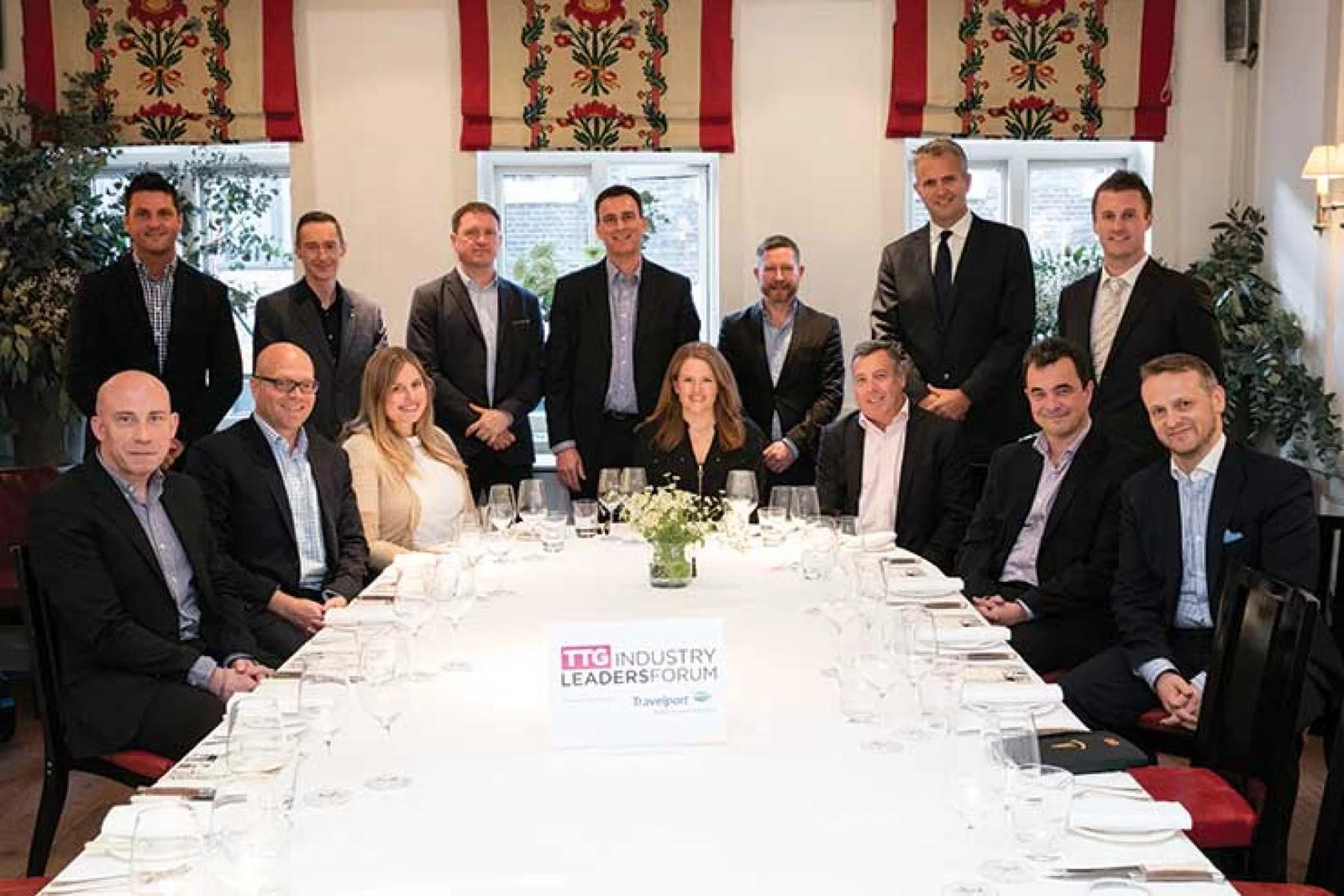
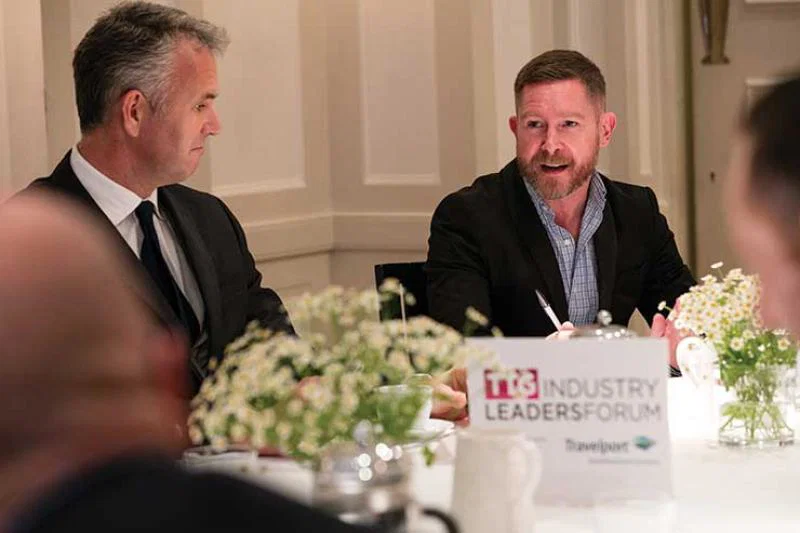
John Sullivan, head of commercial at Advantage Travel Centres, and Brian Young, managing director Europe, Middle East and Africa at G Adventures, agreed that “uncertainty is the norm now”.
“If you read everything in the news and didn’t make any decisions you’d never do anything,” said Sullivan. “Consumers are probably a bit more considered now though.”
Young added: “The thing that does concern me is politicians can make comments that spook everyone – that doesn’t do consumer confidence any good.”
Simon Altham, managing director at Hoseasons, said the company had carried out research which suggested people were “expecting a hit on household income. They’ve got the cash [now] and they want to lock the holiday down,” he said.
Altham added that he found it frustrating when people claimed Hoseasons had performed well this year “because of Brexit”, due to its domestic offering. “Brexit has not happened yet, and it’s our sixth consecutive record year,” he said.
For Gary Lewis, chief executive of The Travel Network Group, the biggest concern is the potential for another recession as a result of uncertainty in Europe.
“The year 2008 had a huge impact on our world and 15-20% market share was lost across the third-party distribution and independent travel market,” he said.
“One of the biggest things that scares me is if Europe collapses around us next year. Then we go into recession and historically those with lots of money drop down a level or two, and the bottom level disappears.
“But I think the industry’s more prepared for that than ever.”
Sullivan added: “Lots of these challenges are new. You can carry on with your long-term plans but you have to have the ability to react quickly.”
Altham said consumers continued to desire an element of certainty – particularly with price, which he said was highlighted by the growing popularity of all-inclusive holidays.
Embracing disruptors
Elsewhere, the forum was quizzed about disruptors in the market, and how much they believed the likes of Airbnb posed a concern, particularly with its recent push into the trips space.
Young admitted: “It will disrupt an element of the industry but Airbnb is reliant on someone outside of their company to deliver a certain level of service. It’s a different proposition.”
Altham added: “Airbnb is a big factor for us in the UK. I don’t think families want to take the risk though.”
Dixon said businesses should look at what is appealing about these “disruptors” and adapt accordingly - “as long as we do that we’ll maintain most of the market,” he said.
Altham suggested that partnering with such firms could also be an answer. “We now distribute through Booking.com,” he said.
“We could have sat back and let them disrupt our area of the market and try and contract our properties direct, but we thought the best thing to do would be to partner [with them]. Travel agents are expensive distribution compared to online, but we do see them as really important because they are interacting with our customers in a different way.”
The forum agreed that travel agents remained integral to the selling process. “Those agents that have specialised and shown their knowledge have put themselves back at the forefront,” said Wilkinson.
Sullivan and Altham agreed there had been a “renaissance” of independent businesses. “Our biggest agent growth is in independents,” said Altham. “Who better to tell you the best place to go than a travel agent?”
Chambers added that fam trips were more popular than ever, with Young agreeing that agents had become “increasingly relevant” as customers need “someone to guide them”.
Lewis said: “The world has changed massively but human behaviour doesn’t really change.
“Since 2008, agencies have had to get better just to survive and now they’re growing. Most agents are living and breathing their business and that becomes a powerful story.”
Looking ahead
Revealing their predictions for 2017, Anslow said he hoped an element of certainty would return for next year.
“If we can get some back we’ll have an excellent 2017,” he said. “The package market is doing very well.”
Paul Broughton, regional managing director UK and Ireland at Travelport, said: “We have seen a growth in acquisition and consolidation in the market and that trend will continue – small to mid-end of the market.”
Meanwhile, Chambers said the US was set to “embrace the luxury market next year”. “I think Trump will do the opposite of restricting tourism,” he said.
Dixon said he could envisage “a drift back to the eastern Med”.
Sullivan added that the western Mediterranean would continue to do well, while Wilkinson said he expected the consumer trend of wanting to know everything that is included in the holiday price would continue.
Jonathan Sloan, managing director at Hills Balfour, whose clients are mainly tourist boards, observed that in the past 12 months the focus had been on the UK rather than emerging markets. “I’ve never known our clients investing more in the UK,” he said.
Comment, Paul Broughton: ‘We empower agents’
As the travel landscape continues to evolve, the way we book travel has become a much more complex omnichannel experience and Travelport continues to be committed to delivering new innovations to support the need of today’s ever-connected traveller.
Travellers are becoming increasingly demanding, seeking more flexibility, connectivity and personalisation, as well as the ability to manage their own bookings via both high street and online agencies.
The year 2016 has seen Travelport invest in its mobile offerings, whether that’s the Mobile Travel Technologies-powered mobile apps for easyJet and Etihad; mobile itinerary management tool Travelport ViewTrip; or Locomote, which empowers business travellers to manage their bookings anywhere.
When you combine the personal-touch offering of a travel agent with the broadest choice in travel content and smart tools that empower agents to sell that content more effectively, it becomes a winning combination.
Paul Broughton is regional managing director, UK and Ireland at Travelport