









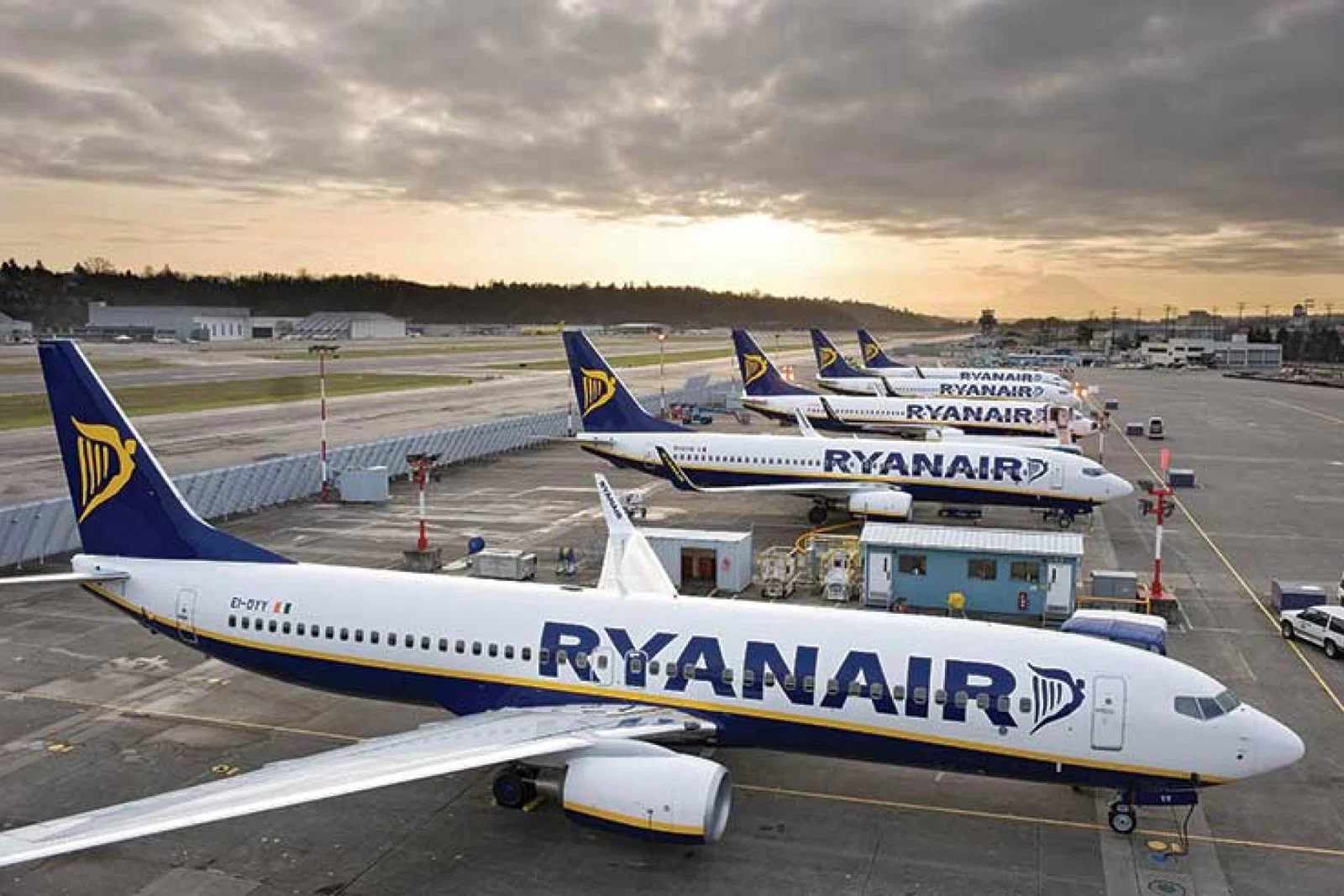
The Irish airline began cancelling flights in September after “messing up” the rostering of pilots. These cancellations were later extended through to March 2018 with around 20,000 services being axed.
But the pilots crisis has yet to put a dent in its financial results with revenue rising by 7% to €4.4 billion for the six months up to September 30. Passenger numbers went up by 11% over the same period to 72.1 million.
Ryanair’s chief executive Michael O’Leary said: “These strong half-year results reinforce the robust nature of Ryanair’s low fare, pan-European growth model even during a period which suffered a material failure in our pilot-rostering function in early September.”
The airline benefited from a “strong Easter” during the six-month period while costs also fell by 5%, including a 3% reduction in its fuel bill.
But Ryanair admitted that it has had to pay €25 million in compensation costs to passengers affected by its “rostering failure” so far.
“While we deeply regret these flight cancellations and winter schedule changes, and the disruption they caused to some 700,000 of our 129 million customers, we have worked hard to reaccommodate or refund all affected customer requests within 18 days of notifying them,” added O’Leary.
Ryanair said the rostering crisis had forced it to “address the competitiveness of our pilot pay” and a new pay deal meant it was offering higher salaries than some other low-cost carriers.
“We will now move from being competitive to offering materially higher (over 20%) pay with better career prospects, superior rosters, and much better job security than Norwegian - among others - can offer,” added O’Leary.
The airline said that the grounding of 25 aircraft over the winter 2017-18 season would mean that traffic was set to grow by only 4% to 131 million for the entire year.
Ryanair also predicted that fares across the current year were likely to be 4-6% lower than during the previous year.
Despite its cancellations, Ryanair is still expecting to make a post-tax profit of €1.4 billion to €1.45 billion for the year to March 31, 2018.