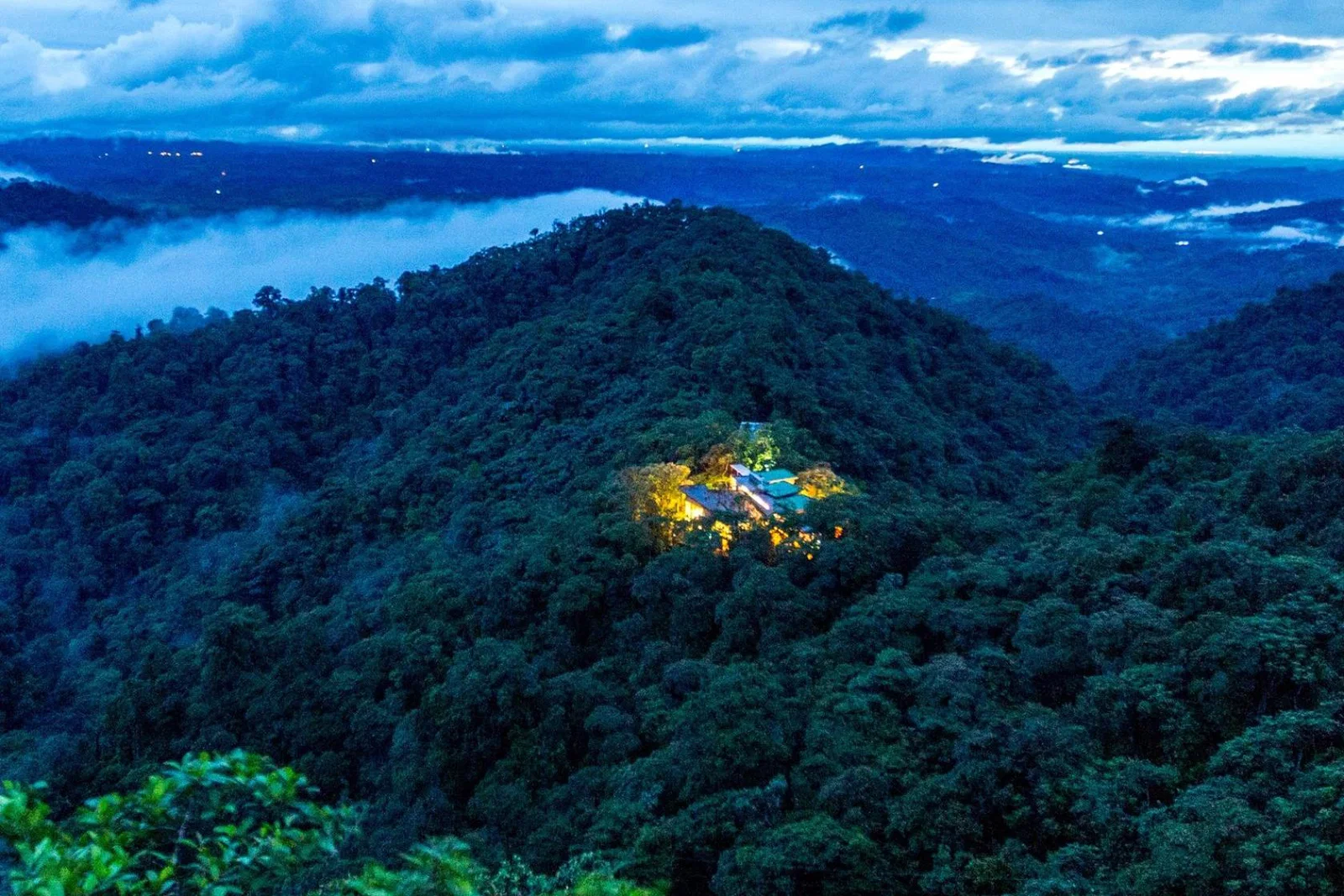
The sound of the Andean Chocó, home to Mashpi Lodge and it’s 3000HA private reserve, could become the first natural soundscape to receive UNESCO World Heritage recognition, following a bid by Mashpi Lodge and Fundacion Futuro to add the acoustic environment to Ecuador’s UNESCO Tentative List.
Defined by an extraordinary and ever-changing symphony of birds, insects and amphibians, the nomination proposes that the soundscape merits protection alongside the forest itself, not only because it is born from one of the world’s richest concentrations of biodiversity and endemic species, but because the sound is a direct acoustic reflection of that biodiversity and possesses natural beauty in its own right.
Since opening in 2012, resident biologists and visiting researchers at Mashpi have discovered 26 species previously unknown to science, including two in 2026. The latest findings include a flowering plant and a crab spider, both first spotted during a guided excursion with guests, reflecting the unique opportunity to witness scientific discovery first hand.
These findings form part of Mashpi Lodge’s broader research programme and longstanding commitment to conservation and sustainability. In partnership with Ecuador's National Institute of Biodiversity (INABIO), Fundacion Futuro and University of Guelph the lodge has contributed to one of the largest tropical invertebrate studies ever undertaken. The study identified 7,850 unique DNA sequences across the Mashpi-Tayra Reserve, creating one of the region's most comprehensive records of insects, arachnids, crustaceans and myriapods.