


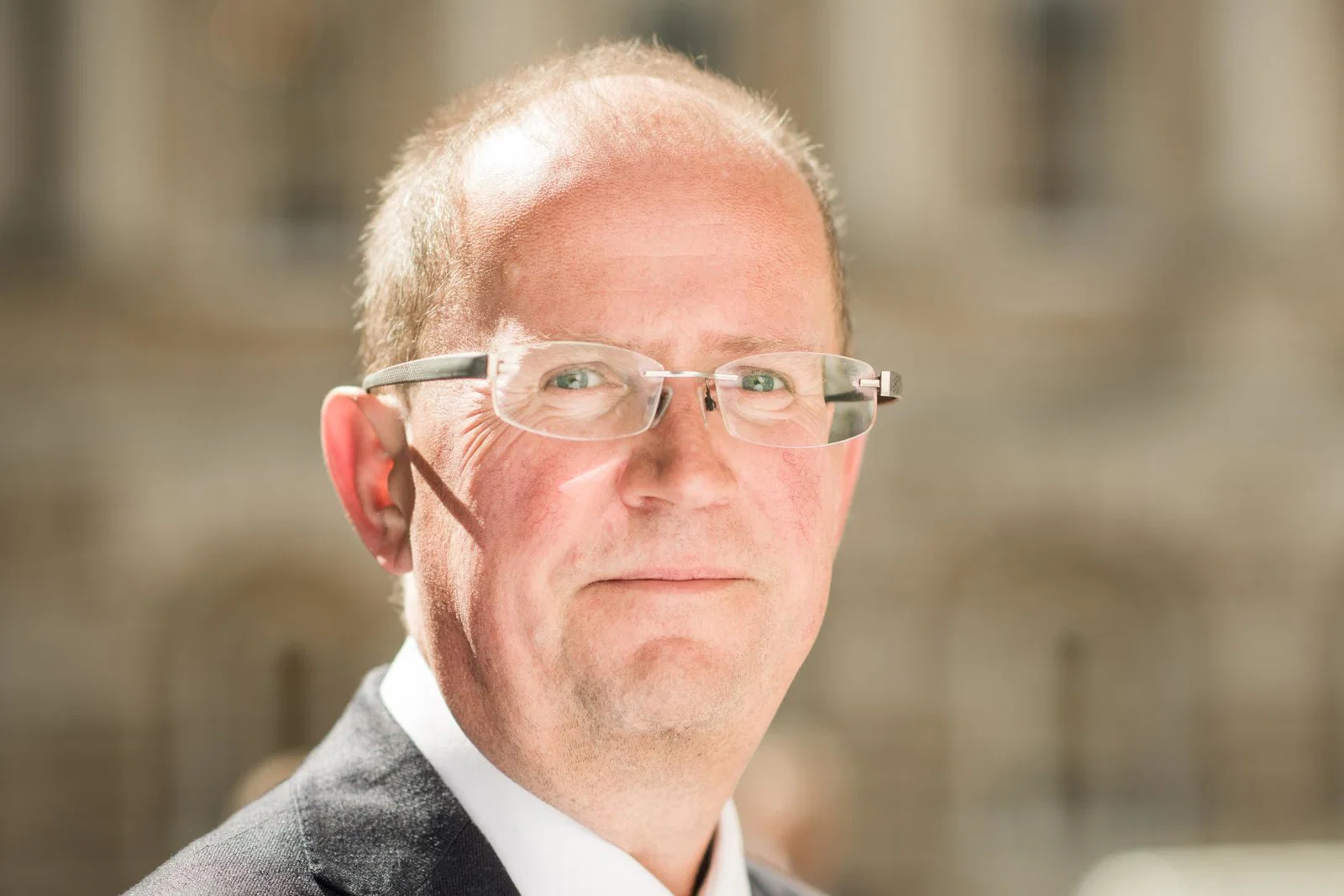
Tim, tell us a bit more about yourself, your route into the industry and your career, and what wisdom you'll be sharing at the conference.
My relationship with the travel industry has largely been accidental (other than as a client). My first career was as an academic. I taught American (and British) politics at Oxford University.
A combination of poverty and ego led me to switch into journalism and become a mostly political writer at The Times. It was in that light that I first came across the ITT at its annual conference in Malta in 2003 when I was a late substitute as a speaker.
ITT conference 2026
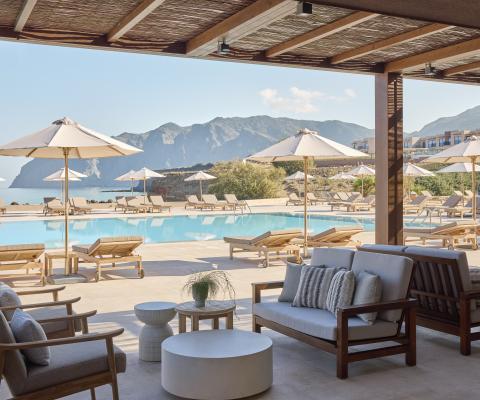
The 2026 ITT conference will take place over 8-10 June at the Higueron Hotel Malaga on the Costa del Sol, with TTG serving as media partner.
Besides bringing together a diverse line-up of industry leaders and thought-provoking keynote speakers, the conference creates valuable networking opportunities for industry professionals and new entrants.
Baroness Ayesha Hazarika will return as conference moderator, and she will be joined by speakers from across the agency, tour operator, destination and technology sectors, and beyond.
Catch up now with our pre-conference interviews with:
- Jacqueline Dobson, President, Barrhead Travel Group
- Frank Marini, Group President and Chief Executive, Railbookers
- Peter Ulwahn, Chief Executive, Tui Musement
- "Ethical hacker" Rob Shapland, Director, Cyonic
I spoke again at the next two conferences, co-moderated the event in 2006 and acted as moderator from then until last year. From 2013 to 2019, I was the Director General of the British Private Equity and Venture Capital Association (BVCA), which had many members who were investors in the travel sector.
In recent years I have been very plural in my activities but most of my time is devoted to Acuti Associates, a consultancy I co-founded, which is mostly focused on explaining and anticipating geopolitics.
Your career has spanned academia, media, venture capital, politics and geopolitics. So on the latter, where do we even start in 2026 after the events of the past few months?
In January 2025, I published a book entitled Trump II: Why He Won. What It Means For The World.
In it, I argued that the combination of Trump’s own victory, the Republican Party clinging on in the House of Representatives and winning by a larger margin in the Senate than expected meant that for the next two years, the President would have a unique opportunity to dominate American and international politics. I called it the first example of a second first presidential term in history.
As a result, I am far less surprised about the rollercoaster that has been seen in 2026 than most people.
How do you assess the implications, for travel, of the war in Iran, particularly with regards to fuel supply, the future of destinations in the region that have traded on a reputation for safety, and on people’s attitudes towards travel in general?
Travel is a resilient creature, assisted by the fact the vast majority of its customers are determined to have a holiday come what may.
I suspect the short-term effects of the Middle East conflict will prove manageable. Tourism in the Gulf states will take a hit, but that may mean that other regions enjoy a boost in demand.
The airline industry is much more exposed as it is difficult to pass on increased costs when so many tickets have been sold in advance. Precisely how painful this will prove will depend on whether or not the Strait of Hormuz is largely open by the time the ITT Conference occurs...
The oil price is, though, inherently volatile. Over the past 20 or so years, it has ranged between $40 and $140 a barrel. It is rarely consistent. This is a factor that travel has no choice but to deal with and be continuously aware of.
Can travel afford another two-and-a-half years of Donald Trump? And what are your thoughts and feelings on travelling to the US at this time, particularly during such an important year for the country?
The balance of probability is that the travel industry and the wider world will have almost three years more of Donald Trump so it will need to work out how to afford it.
I suspect, nonetheless, the ride will become less turbulent. The Democrats are well set to seize the House of Representatives in the mid-term elections this November.
Attention will move on to the 2028 presidential contest and the appetite for repeating adventures such as the one in Iran will diminish.
Personally, I think the idea of people boycotting democracies for travel because they do not like the results of an election in a particular country is deeply unappealing.
Italy has a governing party which has its roots in those who sympathised with Mussolini. France may have a President next year from a party whose history is even more dubious.
Do we think potential visitors to the UK should boycott us if we were to end up with Nigel Farage as the British Prime Minister?
What trends do you foresee that could shape how we go about selling travel over the coming months or years, and do you have any predictions about how this might unfold?
The critical message I want to make at the ITT Conference is as follows. From about 1990, after the fall of the Berlin Wall, to roughly 2015, we lived in a world which, while it would have dramatic incidents of various kinds, was in a systemic sense mostly stable. It was an age dubbed “The Great Moderation”. That has ended.
We now live in times that I have described as “The Great Fragmentation”, in which the old rulebook has been ripped up, and a new one has yet to be established. This means that there is a new “ESG” out there for the entire business universe to deal with – Events, Shocks and Geopolitics. Most of the large players in travel have yet to recognise this, let alone devise a strategy for it.
What would be your message to anyone working in travel at this time?
My thought for those working not only in travel but many other sectors is be prepared for fundamental change. As I have asserted, we are in an era of The Great Fragmentation, which means widespread geopolitical instability is the norm which will not come to an end when Mr Trump finally retires to Florida on a permanent basis.
This is about to be supplemented by another transformational occurrence, the full-blown impact of artificial intelligence – not only on travel, but the economy far more broadly.
I am an enormous fan of Jason Bradbury, a British futurologist, who argued back in 2019 that the 2020s would be (because of AI) the “thousand year decade”, with more technologically driven change in ten years than the previous thousand. There is enough time before 2030 for him to be proved absolutely right!