




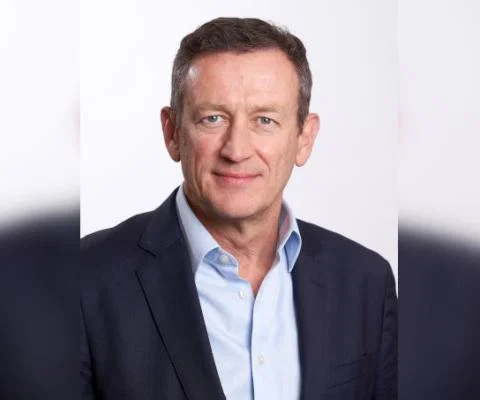
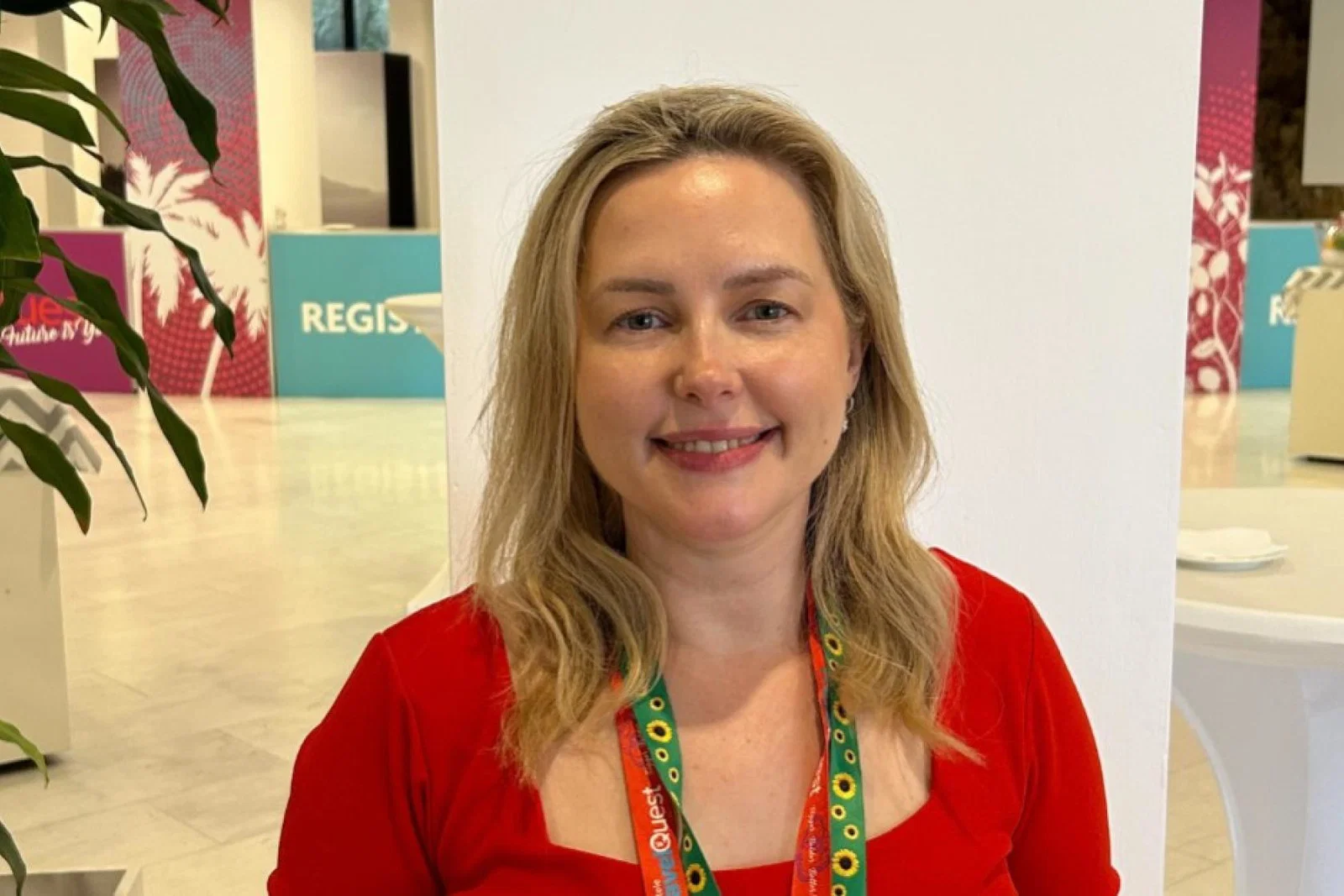
Doey Mulligan joined InteleTravel on the first day it launched in Ireland, almost three years ago in February 2023. The fact that Valentine’s Day is her anniversary date is a happy coincidence given how she has fallen in love with her roles as both a travel advisor and inclusivity ambassador with the travel company.
She was previously aware of InteleTravel operating in the UK, and with a background in project management, she did a lot of research when she heard it was coming to Ireland, where she lives, in Monaghan.
Travel was not Doey’s original career path – previously she worked in the insurance and telecommunications industries. She also loved acting on the stage, and just as she was looking forward to relocating to the United States, she was handed a fateful card.
“About 10 years ago I was in a near fatal car accident,” she explains. “I was fortunate to come out of it the way I did, but I have been left with a lot of chronic pain issues.”
Chronic pain affects your mobility, your energy levels and your cognition, she says, and although she tried returning to college in order to retrain, she found that sustaining any kind of job or education full time was too difficult.
“It can be hard to describe the impact of chronic pain to people,” she says. “It’s not an isolated pain or an acute pain, and I look physically capable. But there’s no consistency. I can wake up today and I’m not the same as I was yesterday, and that’s how it’s been over the last decade.”
Learning her boundaries and how to pace herself has been part of Doey’s rehabilitative journey: “When I pace myself, I’m more consistent every day as opposed to living in a flare-up for days and not being able to do anything.”
Why InteleTravel
Coping with this new reality made InteleTravel’s flexible model appear very attractive, and when Intele launched in Ireland, Doey was “all in”.
“Intele’s ethos around training also really appealed,” she says. “With daily webinars, I could have a really strong foundation and I wanted that strong, sustainable foundation as much as I wanted to build an income and a business going forward.”
The absence of targets was also a factor in choosing Intele, because it allowed Doey to build a strong foundation without piling on the pressure from day one.
The fact that Doey could lean into her love of travel was the icing on the cake. Before her accident, she’d travelled to the likes of Australia, New Zealand and Southeast Asia, and despite a fear of heights, had fully embraced the opportunities that came her way, from sky diving to bungee jumping and white water rafting. “We’re not here for a long time, so I fully believe you need to make the most of it, and I have always approached life with that mindset.”
She adds: “How I travel has definitely changed but that person is still there, and I still want to find ways of doing what I used to do, just in a different way.”
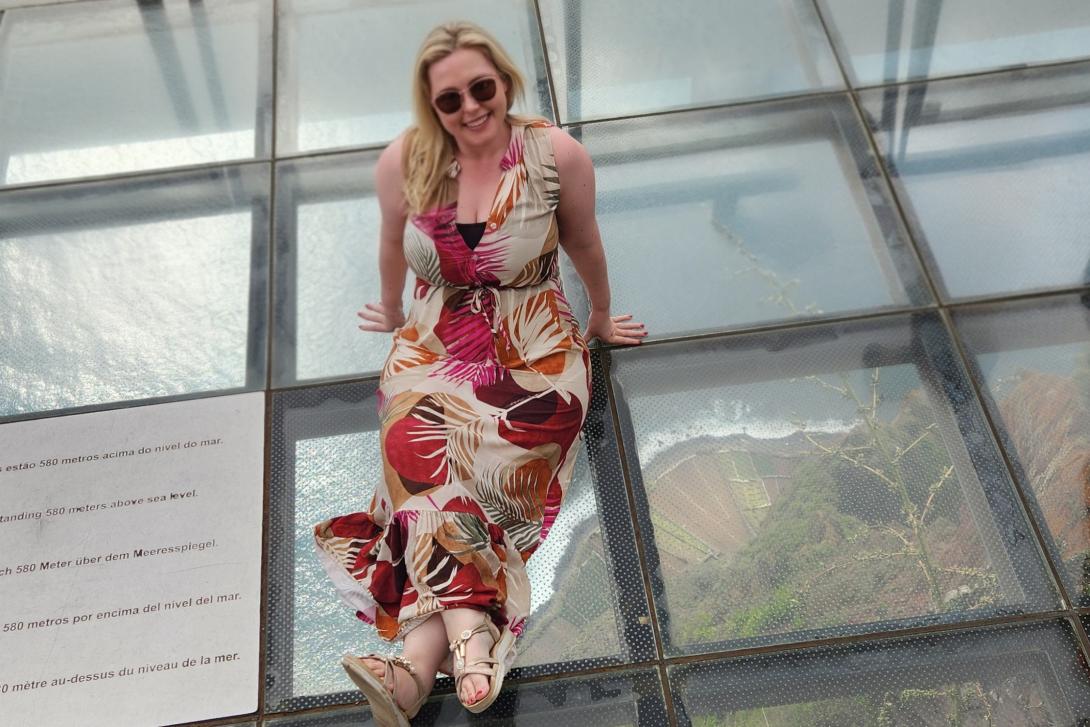
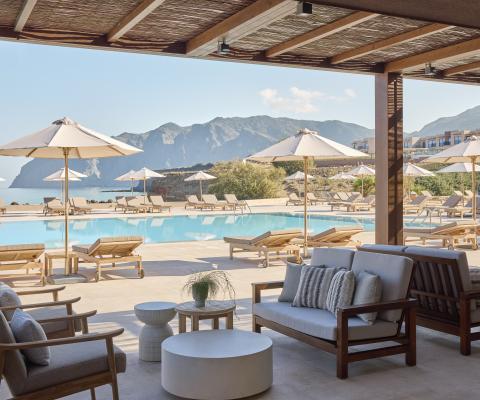
In Madeira: 'The world should not have to appear smaller to be inclusive', says Doey
This outlook in life – shaped by living with an invisible disability – has lent Doey a powerful sales tool – the ability to connect with people who have picked up a disability later in life and found their trajectory has changed.
Doey’s lived experience of accessible travel (and its shortcomings) has also helped her embrace her role as accessibility ambassador at InteleTravel.
“As an ambassador, I help connect the dots for advisors who have no or limited experience of living with a disability,” she explains. “Often it’s simply a lack of education, especially around invisible disabilities.”
Travelling with chronic pain
Nowadays, Doey will give herself a lot more time when she travels. For example, even though Porto, the location for the 2025 InteleTravel conference, is easily accessible from Irish airports, she booked flights to arrive two days before the event started.
“You’re on the go all day and into the evening with conferences, so I wanted to feel physically and mentally strong going into it, and not wiped out from the travelling experience.”
And while she is potentially able to walk from one side of an airport to the other, she has no hesitation in booking airport assistance, because of the difference it will make:
“This is something I try to relay clients. How are you going to feel when you get off the plane? Will you spend your first day or two of your holiday trying to recover from over-extending yourself at the airport? They often don’t want to ask for the support, because they don’t feel they have a genuine need. But they do have a need, if it’s going to impact their holiday.”
Human connections
In January Doey participated in Dublin’s Holiday World Show, Ireland’s largest travel exhibition, where she felt it was abundantly clear that people wanted humans to book their travel. “They might look to social media for trends, but they do want advice, especially people with disabilities. And as we get older in life, there are more limitations on how we travel.”
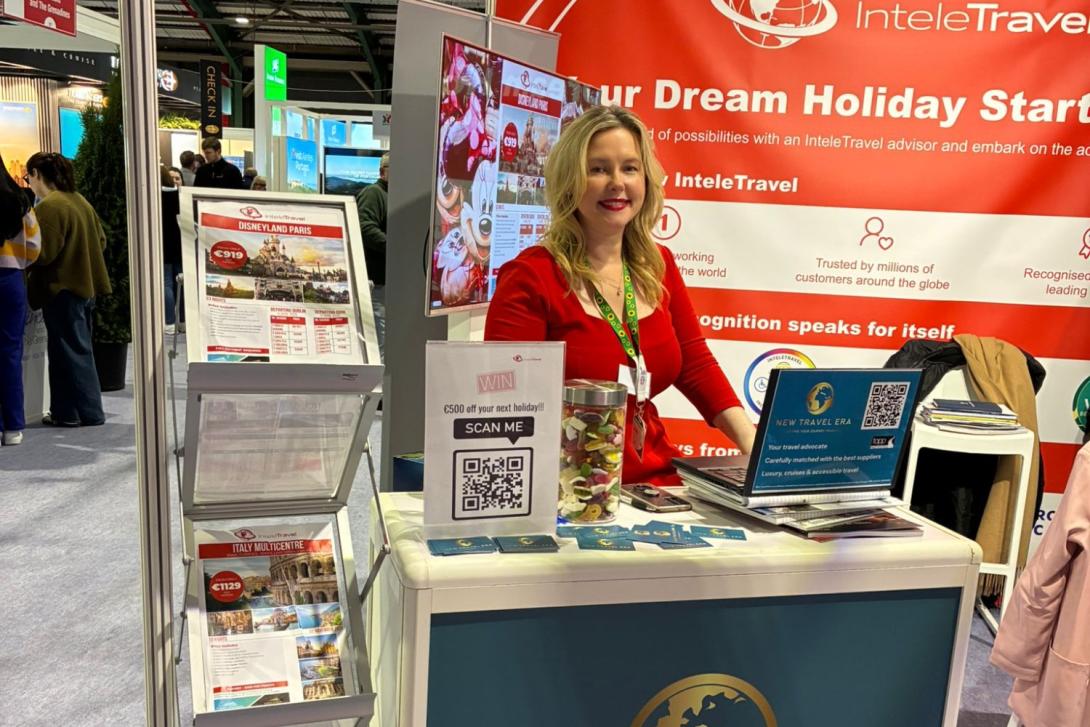
Doey took her business, New Travel Era, to Holiday World Show Dublin in January
“They want a connection with a human being who understands that having a disability doesn’t need to completely derail how you travel. Nobody wants to feel like a burden, they don’t want to draw attention to themselves… but it is ok to accept help and that doesn’t make you a lesser person.”
“A human conversation can help open up those avenues of help for people who would really benefit from them.”
She continues: “It’s not just the person who needs the additional support, but also their family. It can be very hard to be a carer at times, and when they notice a shift in their partner, that they weren’t as exhausted, the carer will often say, my partner was happier and so I was happier.”
Future goals
Doey’s goal is for inclusion to be embedded into everyday planning, so that no one organising or selling travel views accessibility as a niche anymore. The rollout of the Hidden Disabilities Sunflower; the success of mainstream operator Ocean Florida’s Accessible Holidays programme; the acceleration in industry training; the increase in the number of panel discussions centred on inclusion and accessibility – these all help create a positive momentum, says Doey, who maintains it is “not about perfection, it's about progress.”
Moving into year four with InteleTravel, Doey feels she still has much to learn: “I still feel like a baby in the industry to be honest with you,” she says. “Yes, my business is progressing but I’m always going to want to learn more.”
A new learning opportunity has arisen with her enrolment in Clia’s Cruise Champion programme, focused on expedition cruise. This will culminate in Doey attending the Clia Expedition Cruise Showcase in Svalbard in July, “a no-brainer to go and see five ships and understand the product better,” she says.
“I’m very lucky that I hit the sweet spot,” Doey says. “InteleTravel supports me where I’m at, but also where I want to go. I went from wondering how I was going to get to my physio class to travelling the world again, and helping others do that too.”
“I am so lucky and so blessed that I can move in the capacity I have, even though I have limitations with it... the world can feel very small when you're living with a disability, and you can feel unseen and unheard.
“If I can bridge that gap, to show people who need support, that the world hasn’t become smaller, it’s just that way you navigate has changed, then I‘m proud to be a part of that.”
Three tips for supporting clients with hidden disabilities
- Do not make any assumptions – just because a client does not look like they need support, doesn’t mean they don’t.
- Start by listening to your client. A very simple question like: “Is there anything you’d like me to know, to make your trip more comfortable?” or “Do you need any additional support while travelling?” These open up conversations that you can’t have on a website with a chatbot.
- Make personal connections with hotels and other travel suppliers so you better understand how they can support your clients’ accessible travel needs. When you get queries, you need to know where to turn.