





Like many popular tourist destinations, Italy started the year on a high. Its Covid recovery was complete, 2019 numbers had been surpassed – it was set to be a good year. That was until a certain US president decided to go to war...
“January and February were classic booking months, and our latest arrival figures were 2 to 3% up, for the first quarter of the year,” Flavio Zappacosta, head of the Italian National Tourist Board in the UK, tells me when we sit down together for an exclusive chat.
“But for the summer, the majority haven’t booked yet. There’s a question mark over whether we can maintain that growth from the start of the year. We are optimistic that bookings will still come, they will just be very last-minute. We have learned by experience that Brits do want their holidays, it’s a difficult thing for them to do without.”
'Rome has EES sorted'
The fuel crisis is more of a concern, he admits, than the reported delays at Italian airports, caused by the introduction of the European Union’s Entry / Exit system (EES).
Zappacosta’s partner is a British passport holder, and they had recent personal experience of border control in Rome, which Zappacosta says was ‘super organised’, perhaps a reflection of its airports’ advance adoption.
But he acknowledges problems elsewhere, not least in Milan where planes have taken off without the majority of their passengers, leaving them stranded at the gate, because of slow processing.
“I don’t know how many people will be put off,” he admits. “Maybe it’s more of a deterrent for a city break than a longer stay, because you don’t want to spend half your weekend away stuck in an airport.”
Reinforcing Italy’s commitment to EES implementation, he adds: “They are doing their best to improve in Milan, especially because it is one of the biggest airports, and they are aware of this problem in Italy. Hopefully we are going to fix everything.”
A one-man band... but not for much longer
Zappacosta joined the Italian Tourist Board in London back in 2009. He was originally recruited to organise events and exhibitions, a more defined role when he was part of a generously-sized team of 14.
But over the years that team has shrunk, thanks to shifting priorities and budget cuts, and now he is the sole representative of the Italian Tourist Board in London.
‘My job description got bigger and bigger, and in 2017 they chose to promote from within to lead the office, and I was lucky enough to be chosen,” he says.
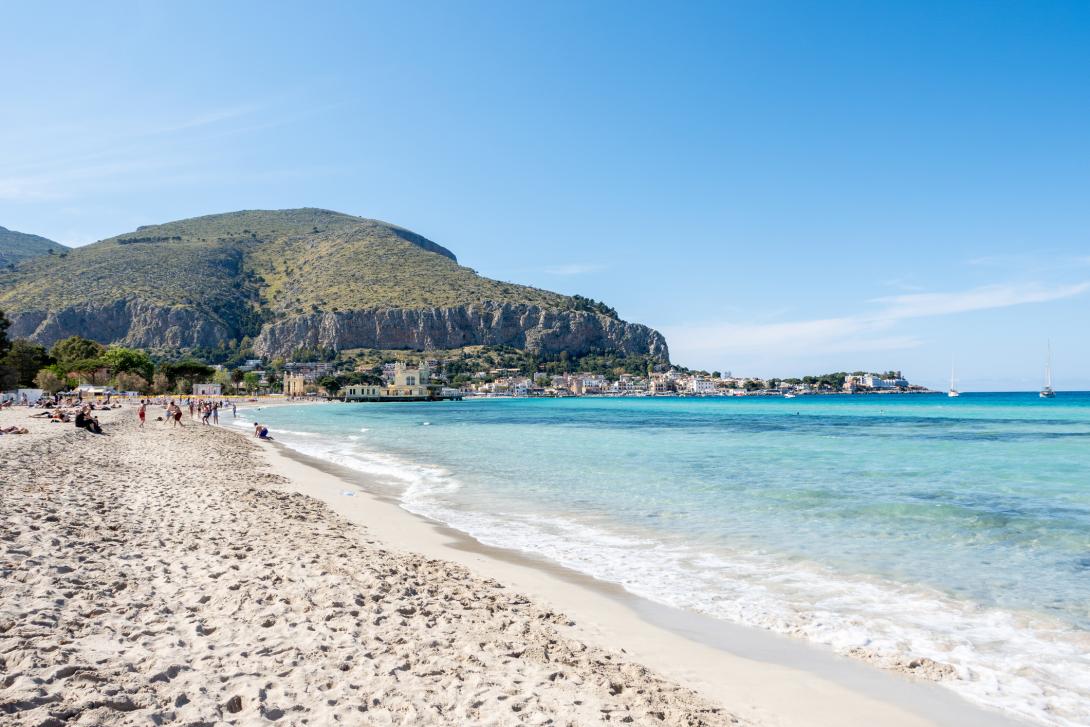
Zappacosta is a fan of Sicily's beautiful beaches
Almost a decade is a long time to carry the Italian flag alone, but hopefully not for much longer, Zappacosta says. He’s recently been given the budget to appoint a marketing and PR executive, and he’s already carried out the interviews.
“Hopefully a new person will start in a couple of weeks,” he says. “And I am literally begging head office for another couple of staff. Four or five would be the ideal.”
He is optimistic this signals a new, better-resourced chapter for Italian tourism promotion in the UK.
“We changed management in Rome a couple of years ago, and they wanted to restructure and to hire people in Italy first, before the international offices. And now they’ve finished with Italy, hopefully we’re going to get some funds.
"The UK, Germany and the US – we’re all struggling a bit, and we are the most important markets, along with France – but Paris is well covered,” he adds.
The Italy less-booked
Thanks to that swift recovery from the Covid-affected years and record UK arrivals to Italy in 2025 [6.5 million], the pressure isn’t on Zappacosta to deliver the numbers. Rather, his focus is on flattening out those peaks, and promoting lesser-known areas of Italy to visit.
“British travellers will generally go to Italy more than once in a lifetime, and the first-timers, fair enough, they want to see Venice and Rome. They are original cities. But after that, they are really looking for something different – and to wander around the smaller Italian cities, towns and villages.”
“[As a national tourist board] we don’t really say anything about Rome or Venice because it’s pointless. We want to make sure income from tourists is spread around the country,” he explains.
An example of this strategy in action is the Most Beautiful Villages of Italy Association, which includes more than 350 villages certified for their history, art, culture and landscapes.
Another example is the promotion of Italy’s mountainous regions as an under-stated alternative to the more popular alpine areas of France, Switzerland and Austria, and also a cooler option as Mediterranean summers become too hot for holidaymakers to handle.
Although there is plenty of competition for package holidaymakers among the European powers, and Italy tends to be beaten by Greece and Spain in the price wars, Italy has an important point of differentiation.
“You don’t really find all-inclusive resorts in Italy,” Zappacosta explains. “So, the people coming to Italy for their summer holidays are different from those going to Spain, for example. They generally stay in bed-and-breakfasts, hotels and villas, and they also hire a car. Not only do you get great beaches in Italy, as soon as you go inland, perhaps 10km, you find art and culture, and little hamlets to explore.”
He's also been giving shoulder seasons a big push, and last year, 34% of the total number of Brits who visited Italy did so between September and November. While not right for the family market because it’s term-time, other demographics are learning that Italy in the autumn brings fewer crowds, more pleasant temperatures and better value. “You can still have a great time in southern Italy, and swim in the sea, and it feels a lot more relaxing,” says Zappacosta.
Italy's own Camino route
There’s a growing market that the tourist board has in its sights – ramble-loving holidaymakers. Just as Spain’s Camino de Santiago has captured the hearts of more modern-day “pilgrims”, the tourist board hopes the 322-mile Way of St Francis stretching from Florence to Rome will do the same.
“We haven’t really promoted this before, so it’s quite fresh. We see that people are looking to have this kind of experience – not necessarily a religious one, but a spiritual one – because walking helps with that immersion, in the culture, the people, the food.”
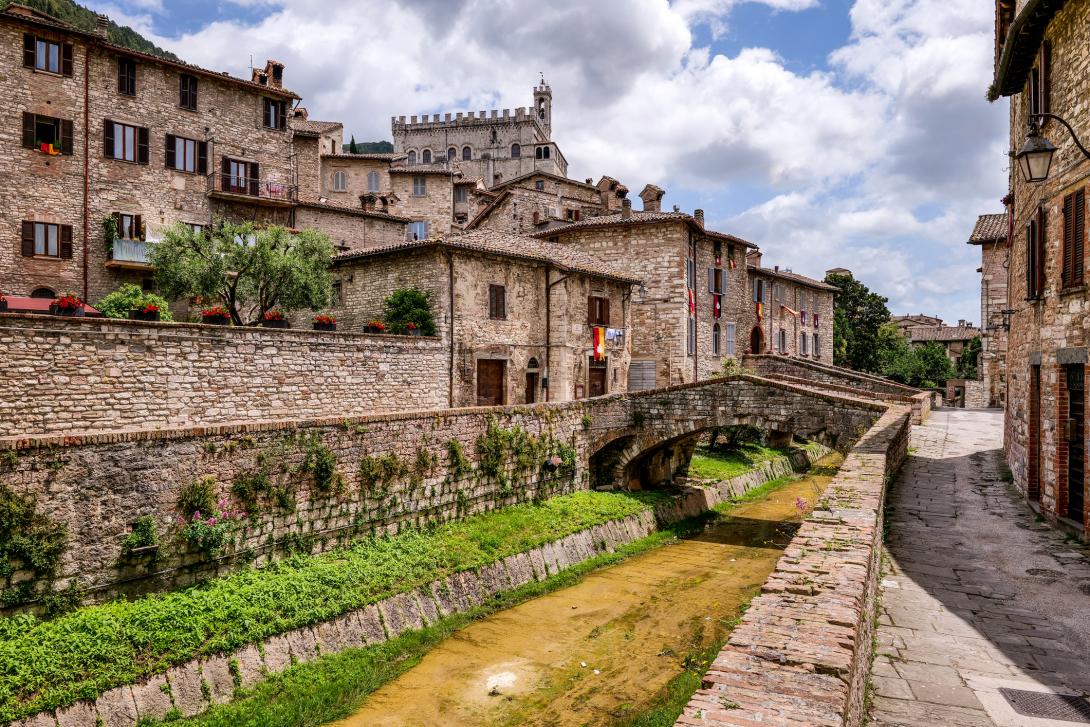
Gubbio in Umbria is a major highlight on the Via de Francesco
“And if you take the train, it becomes a very sustainable way to travel,” he says, which prompts to him to remark how good the long-distance high-speed trains are in Italy. And with TrenItalia planning to launch a high-speed direct service between London and Paris in 2029, breaking Eurostar’s monopoly, taking the train all the way from London to Italy should become a more seamless experience, he hopes.
Very diplomatically, when we touch on recommendations for lesser-known Italy, Zappacosta champions the misunderstood Sicily in the south and Friuli-Venezia Giulia in the north. Sicily because the beaches are beautiful and the cities fantastic “so you really can have the best of both, so long as you avoid July and August when it’s scorching”.
Then Friuli-Venezia Giulia, he says, is so undiscovered not even Italians make the most of it, and because of its location, bordering Slovenia and Austria, it has an interesting east meets west blend of cultures.
How to visit Venice, responsibly
And what of those first-time visitors who are determined to see Venice? Although Zappacosta doesn’t actively promote the city, what would his advice be?
“Not on a day trip, please,” he urges. “Go in winter – yes it can be cold but there are less people and you’ll enjoy it better. Just not during February when it’s Carnival, which is crowded. Stay in a hotel, eat in local restaurants, put money back into the local economy.”
It hardly needs saying that the antithesis of this is the cruise passenger, but now that the ships (the “huge monstrosities”) are no longer an eyesore in the city, and their passengers are handing over a €5 euro entrance fee, “at least a few euros are being reinvested in the city. There was a lot of criticism but it’s not an extraordinary amount of money and I think it’s quite fair,” he says.
Italy really is blessed with so many A-list tourism products that Zappacosta feels no loss that Rome and Venice hardly figure in his planning. “We are lucky,” he chuckles. “Italy is such a long country, from the Germanic north, to almost in Africa, it’s so diverse. We never get bored [of promoting] Italy, it’s always different.”