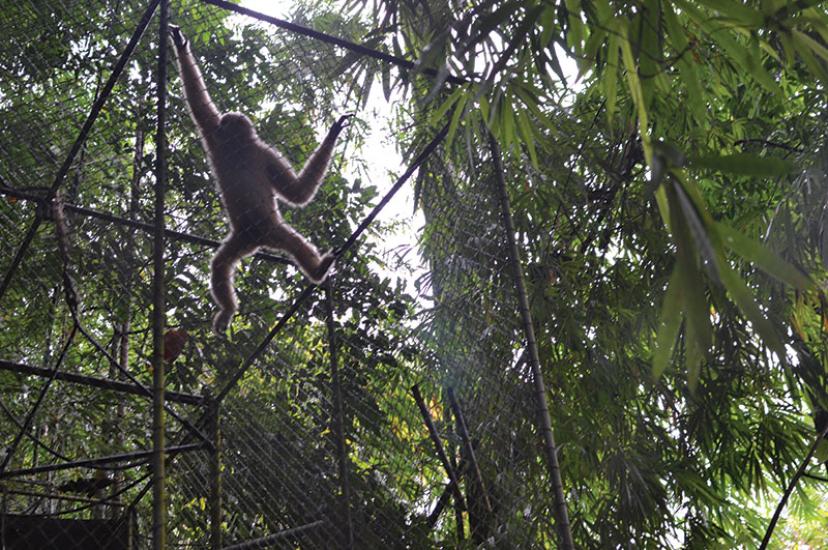
Back turned towards me, 13-year-old Gibby is the same camera-shy teenager that I was at her age. She’s just as boisterous too, swinging around like a lunatic and making a racket. But she is a heck of a lot more hairy.
A golden-cheeked gibbon from Vietnam, Gibby now calls the Phuket Gibbon Rehabilitation Project (GRP) home. “She was trafficked and kept as a pet in a Bangkok apartment,” one of the volunteer guides explains as we walk around the leafy enclosures, the sound of water rushing from the nearby Bang Pae waterfall. “But the neighbours complained about the noise and she was brought here.” Listening to the soundtrack of her howls, I can understand why.
Thailand’s biggest island, Phuket, was once home to a thriving population of white-handed gibbons until poaching and smuggling brought them to extinction some 40 years ago. The GRP was set up in 1992 to take in gibbons – many of which have been beaten or mistreated by their keepers – and to educate locals and tourists about wildlife preservation, and release the primates back into the wild.
Located in Khao Phra Thaeo national park – the isle’s last remaining rainforest – the project is a mere 12 miles from Phuket’s sparkly new international airport terminal. But I spot only two other tourists the entire time I’m there.
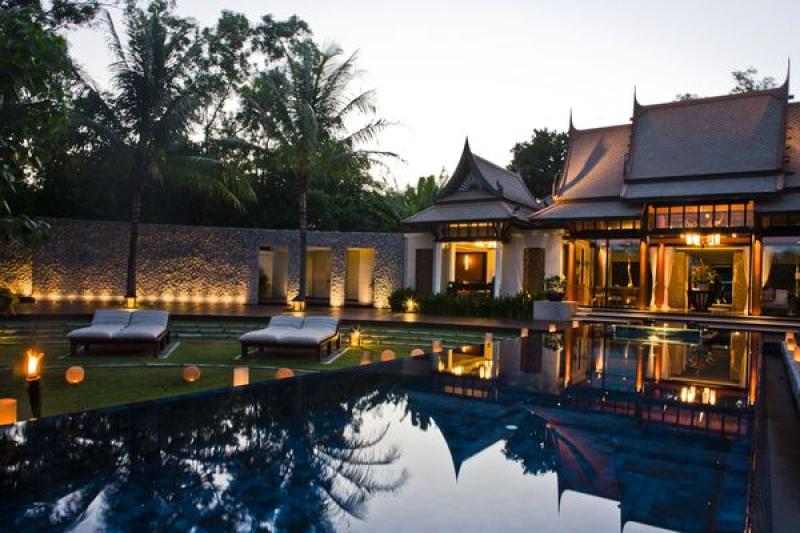
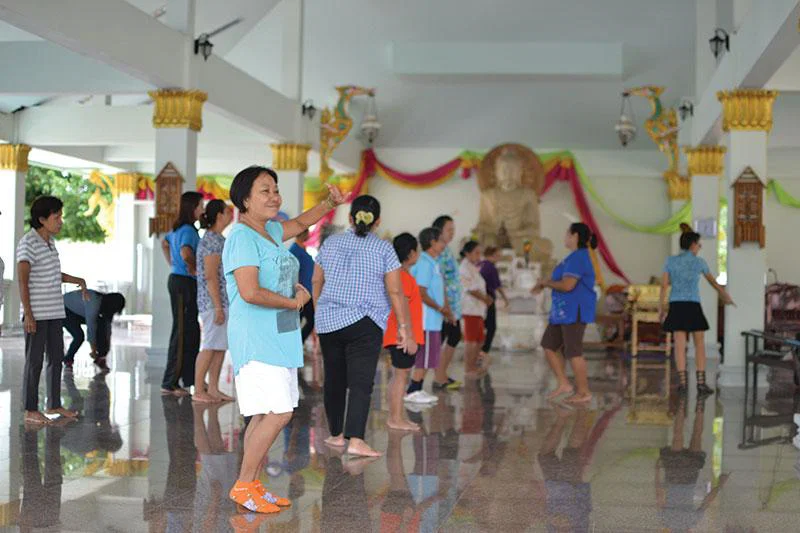
Phuket may be famed for its flashing lights, lashings of expats and raucous nightlife, but it turns out that the island also has a much softer side. In addition to the lush surrounds of Khao Phra Thaeo, the little-visited north boasts deserted white-sand beaches backed by thick forest, serene and ornate temples and small sea-gypsy villages, where life moves at a wildly different pace from that of Patong.