Time travel is a concept that has always fascinated me; unfortunately, such a pursuit has been limited to the realms of Hollywood. Yet on a trip to the Croatian capital with Monarch, I discover the city offers an abundance of antiquities, and I can barely contain my excitement at the prospect of absorbing myself in the history of this European gem.
Originally constructed in 1929, the Hotel Dubrovnik is a convenient base for city breakers in Zagreb, situated just off Ban Jelacic Square, a few steps from the heart of the city. With an easily accessible car park for hotel guests and free Wi-Fi, the property offers clients plenty of creature comforts. Getting there is easy too: Hotel Dubrovnik is less than half a mile from Zagreb Central Station and 11 miles from Zagreb airport. A taxi fare from the airport costs around £20, while a bus ticket will set customers back £4.
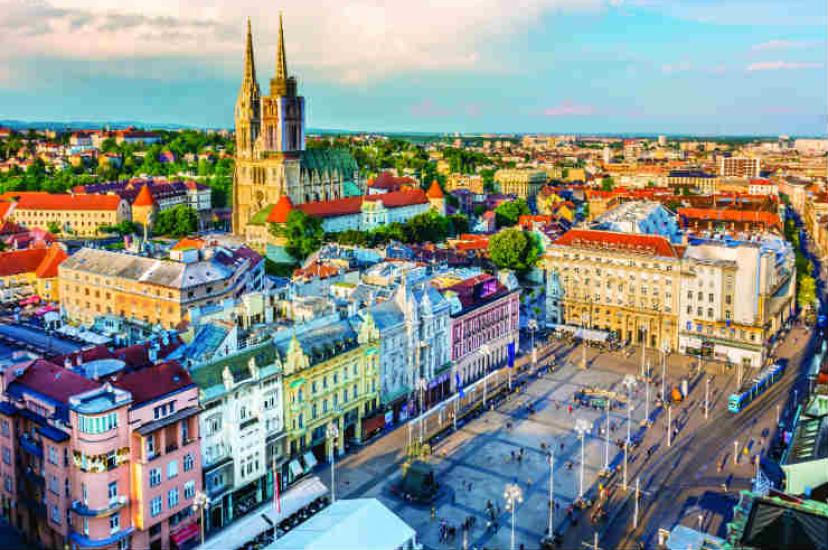
I begin my city tour in the square, which my guide, Jurica Puskar, informs me is busiest on Saturday mornings on account of the green market where residents come to buy and sell fresh produce.
“Notice everyone is wearing sunglasses so they can spy on each other,” he jokes.
Indeed the square is busy – children leap across the cobbled stones clutching balloons, residents barter over fruit and veg and hip young couples sip coffee beneath umbrellas in the shade. I’m already feeling like a local as I stop to examine a punnet of sweet-smelling strawberries. Puskar informs me that there is a chance I could appear in the society pages of the local magazine. I quickly try to look as photogenic as possible.
Zagreb is the most populous city in Croatia, with more than one million citizens, and is split into three parts: Upper Town (Gornji Grad), Lower Town and New Zagreb (Novi Zagreb). The latter is located further from the city centre and characterised by its high-rise modern buildings.