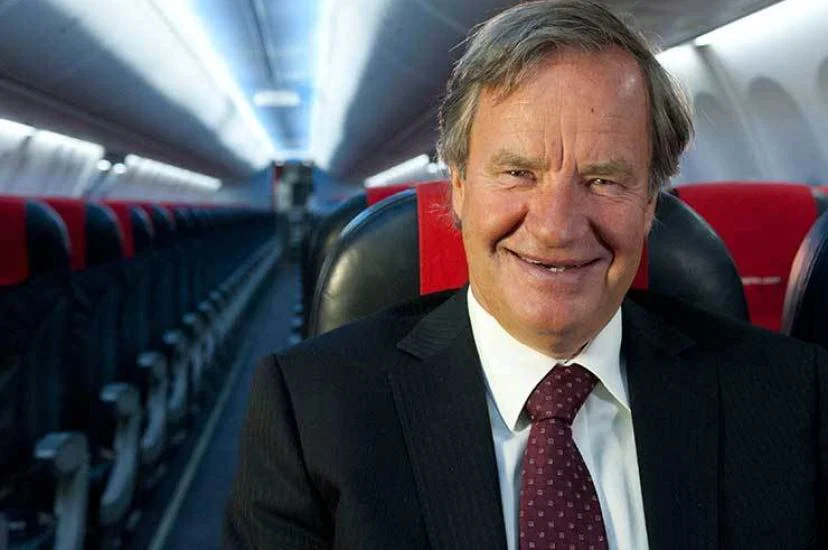
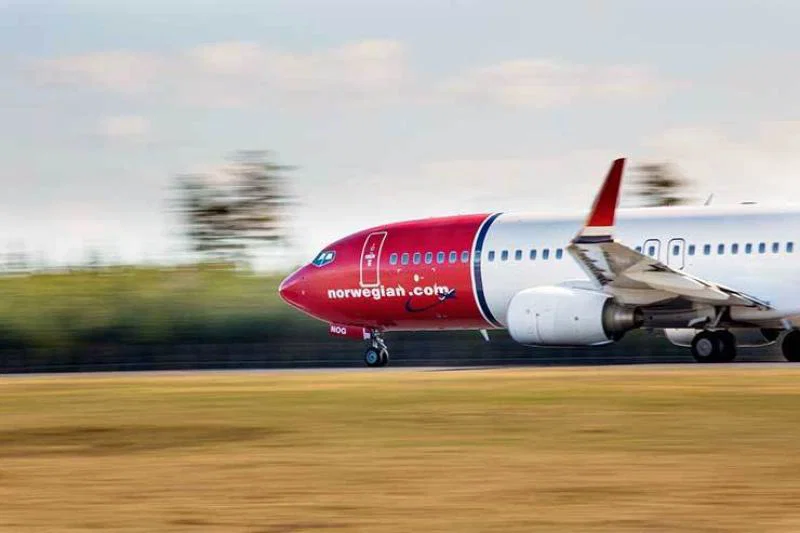
As an ex-fighter pilot and the writer of a literary thriller, you might expect the boss of Norwegian to have a romantic view of flying.
After all, he’s currently pursuing one of the industry’s holy grails: long-haul and low cost – something that has been attempted with only limited success over the past 40 years.
But does Bjorn Kjos see himself as a visionary? Not quite, it seems. When we meet, I’m keen to find out if he believes there will ever come a time when he knows he has succeeded in his quest.
“We know it because it’s profitable. That’s the key to it – if you’re profitable you’ve succeeded,” he tells me bluntly.
Focusing on the bottom line is something you’d expect from a qualified lawyer. Nevertheless it would be wrong to paint Kjos as a staid, corporate executive.
Frequently in our chat he breaks out into infectious chuckles and he shares the same combative attitude to his main legacy airline rival – SAS – as Richard Branson and Michael O’Leary do for theirs.
This mix of debonair daring and a ruthless focus on cost might just explain why his company is currently doing what many people thought couldn’t be done.
Sir Freddie Laker, who was one of the first to try to sell customers cheap transatlantic tickets, failed, as did a slew of carriers including Oasis Hong Kong Airlines and Zoom Airlines. So what makes Kjos so confident that Norwegian can prosper?
He believes Laker’s failure was down to the fact that in the 1970s there was no internet, and he was solely reliant on travel agents.
Kjos is also keen to highlight that a key way to ensure success is making sure that aircraft are in the air more often than they’re sitting on the concrete.
“You don’t earn any money when the planes are on the ground. That means that you have to have high utilisation, you have as few overnights stops as possible and of course you have a very efficient operation.”