Husky power
Finland’s terrain is mostly flat, interspersed with lakes and low hills, and while there is downhill skiing, it is on fells rather than mountains. There may not be the diversity of runs to satisfy your most experienced ski clients, but it’s plenty good enough for a beginner like me.
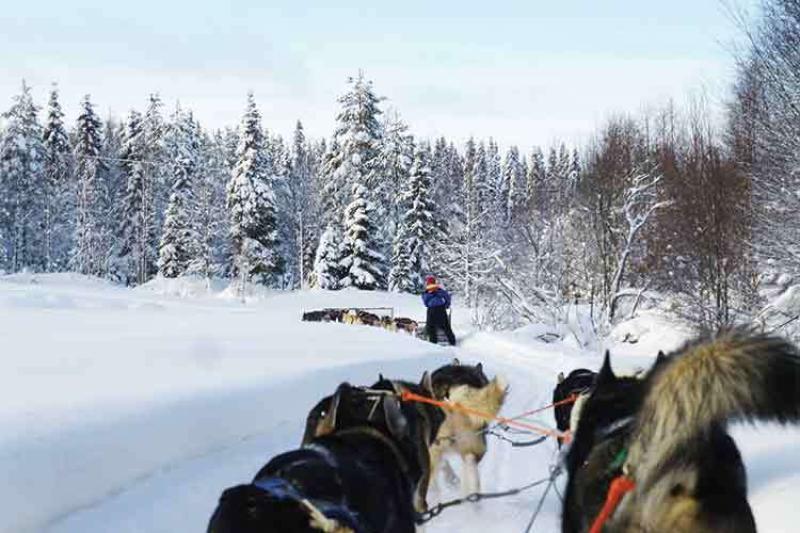
The unvarying terrain, however, is perfect for letting husky dogs race to their hearts’ content. At Era-Susi husky farm I drive a team of six dogs around a two-kilometre track. It’s a bite-size version of the longer trips on offer, and should I return, I would definitely opt for the four-hour 30-kilometre safari – or even the five-day adventure, sleeping in log cabins.
The owner of the husky farm is a charismatic individual called “Susi”, which means “wolf” in Finnish. Wearing a thick coat and mittens made of wolf fur and with his untamed beard, Susi looks as wolf-like as it’s possible for a man to be. But as I ride in his sledge, he reveals the softer side to his personality. “There are three reasons I love my job,” he says. “I am outside every day, I work with animals, and I meet people from many different countries.”
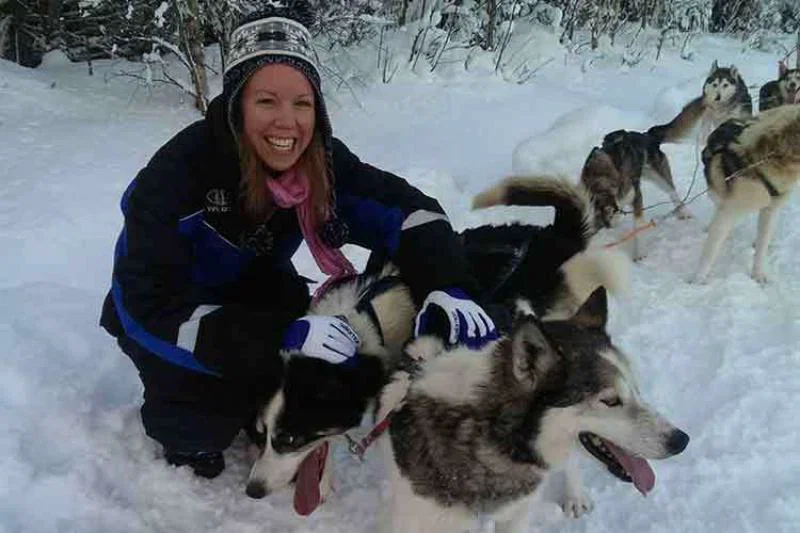
Susi started his business 18 years ago with eight dogs and he now has 200. My beating heart goes into overdrive when he hands me an adorable five-week-old puppy. In just six months the pup will start training. The dogs don’t need to learn to run, he explains: “Huskies have pulled sleds for 10,000 years or more – it’s in their blood.” But they do need training for the conditions: “They lack fitness after the summer holiday,” he says. “We put dogs in teams that have the same speed and power, and they often run in the same pair.”
He continues: “The young ones start in the middle, and the dogs at the front have to be brave and strong. We’re always searching for the good leaders, but only about 30% are mentally tough enough.”
Susi’s protracted briefing makes the act of driving the dogs appear more complicated than it actually is. But I suspect he enjoys having an audience. When it comes to it the two most important instructions are stepping on the break when required, and keeping a safe distance between sleds. Beyond that, you can trust in man’s best friend to give you an unforgettable ride.
If husky safaris are a more traditional way to rack up the miles, then snowmobile safaris are firmly of the modern age. I wouldn’t recommend sitting for too long as the passenger because it’s a rockier ride on the back of these gas-guzzling mechanical beetles and their fumes tarnish the exceptionally unpolluted air. But when you’re in control, skimming across the snow is a fantastic adrenalin rush.
Keeping warm
For all these outdoor activities, undertaken in temperatures that are firmly below zero, and can plummet as low as minus-40, it’s essential your clients have the right gear. I hire a pair of heavy-duty waterproof snow boots and a boiler suit for extra protection, but underneath this I invariably have at least three thermal and fleece layers, plus my own jacket. I feel like the Michelin man, lacking any femininity, and it zaps energy taking the boiler suit on and off. But when the cold starts to bite, the suit, my ski gloves and hat are worth their weight in gold.
There’s no escaping the cold unless you go inside, but staying active keeps the blood circulating, and there’s respite when we are trekking and we break for lunch around an open fire to enjoy as much delicious elk or salmon soup as we can ingest. The cold has an adverse effect on batteries so advise clients to keep phones and cameras in thick socks. They’ll be kicking themselves if their camera stops working in this photographer’s paradise.
Frosty fishing
The need to keep active in order to stay warm means my least favourite activity is the more sedentary pursuit of ice fishing. But then I don’t really see the appeal of fishing anyway so it was always going to be a tough gig to convince me that fishing while risking frostbite is any more worthwhile.
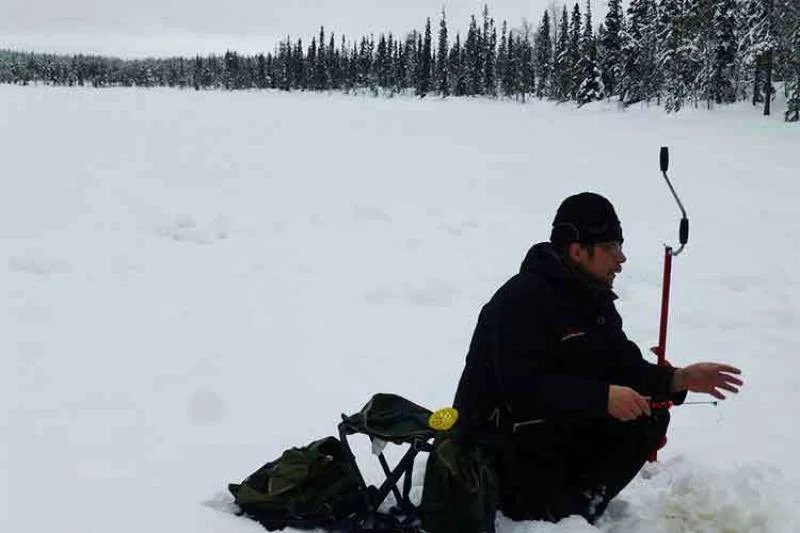
We trek across the frozen lake – a surreal experience in itself – and come to a spot where the guide investigates the contents of a net beneath the ice. It delivers a single fish, which has to be gutted immediately, spilling blood and guts over the pristine snow. The bigger fish had only just swallowed a smaller fish whole, so we get two for one, but this is the extent of our haul. It’s a fairly large group of us who drill holes in the ice, and sit and wait with our bait… and wait and wait. I’m no fishing expert but I reckon our loud chatter tips the fish off, and they all swim to the other end of the lake.
Luckily we’re not reliant on the fish for lunch, as there’s a vat of reindeer soup bubbling away in the kitchen at Isokenkaisten Klubi, the family hotel where ice fishing is part of the offer. The hotel is run by Sirpa Kamarainen and her sister Katja. Their parents started the business in the early 1990s and their mother still contributes by making wild berry juice, which they appear to serve by the gallon.
“Wild food is very important to us,” says Sirpa. “What we serve here comes from nearby or even just a few steps from the house.” They can accommodate 50 guests across their guesthouse, hotel and two cottages. “We like to keep this as a cosy, friendly place that is relaxing. Once you step outside, you can’t hear anything but silence.”
Isokenkaisten Klubi is just three kilometres from the Russian border, and 12 people live in the village year round. “Our nearest neighbour is a 74-year-old lady,” explains Sirpa. “She has an outside toilet and no running water, but she has her sauna and she does have internet.”
Sauna time
Switching on (with Wi-Fi) and switching off (in the sauna) are two principles at the heart of Finnish life. “Sauna is a really important part of Finnish life and history – there are five million people in Finland and more than a million saunas,” Tanja Pohjola, sauna manager at Pohjolan Pirtti, tells me. “It’s a warm, relaxing place to relax. It’s not a Finnish sauna if you can’t pour water on a stove. The steam moisturises the skin, opens pores to release toxins, boosts metabolism and aids sleep. We nickname it the adult sleep school.”
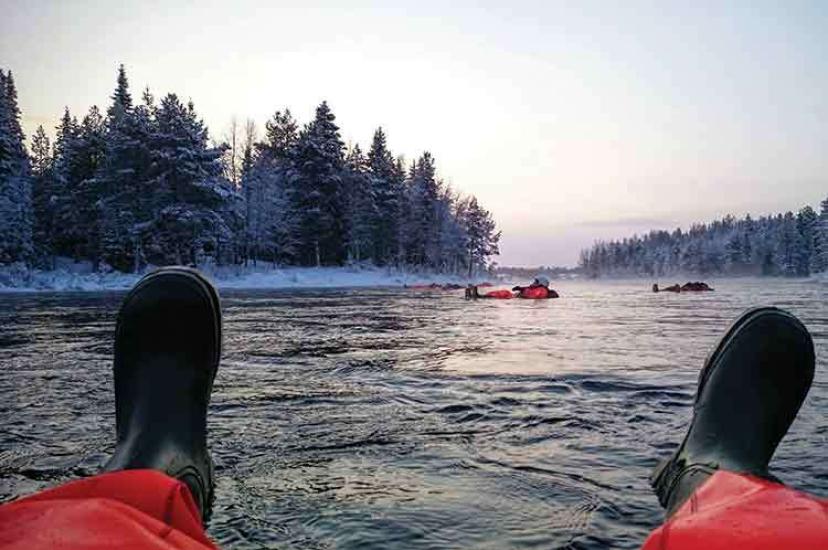
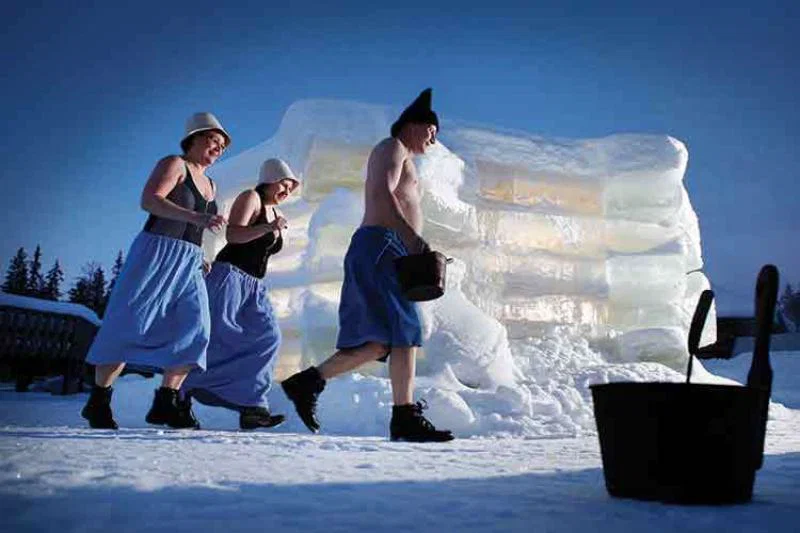
Of course if your clients really want to do it the Finnish way, they need to submerge themselves in an ice bath before running back into the sauna. The tip is to breathe slowly and calmly, says Eveliina Korhonen, sales and marketing manager at Rukan Salonki, as she demonstrates, making it look effortless. I follow suit but the only way I can bear the intense cold is to shriek as high as my voice will let me.
After a week of sinking into snowdrifts and saunas, I feel refreshed and invigorated, and I sleep like a log each night. There’s only one thing that can keep me awake, and that’s the Northern Lights. After a day blessed with sunshine, green streaks dance across the sky late one night to give me one final tick on that Finnish bucket list.
Book it: Ski Lapland offers four nights’ B&B at the Ruka Village in a studio apartment from £829pp based on two sharing. The deal includes return flights with Finnair from Heathrow or Manchester via Helsinki airport and transfers.
For further information, see Visit Finland and Ruka Kuusamo