





The sports star turned TV presenter told TTG he believed too many in the sector were under the misapprehension that working with customers who have accessible needs would “mean extra work”.
“They think it’s going to cost more money. It has all these negative connotations, rather than being a positive thing, that’s going to open doors and give everyone an opportunity to travel.”
Adepitan was speaking in his role as ambassador for Spain for All – a campaign run in collaboration with the Spanish Tourist Office, which aims to enhance accessibility across the country by identifying key pain points and developing an action plan to address them.
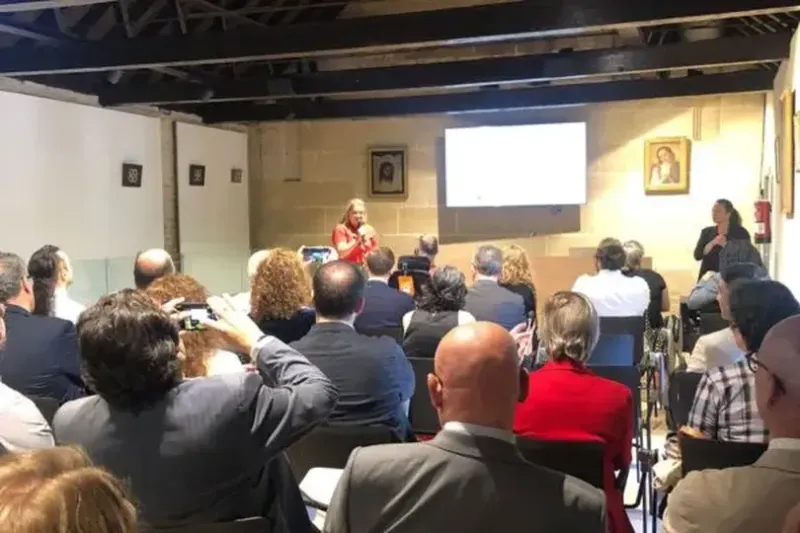
Its latest advisory board was hosted in Seville, with TTG invited exclusively to witness progress in action, as agents and operators came together to develop plans for making the country a more accessible destination for all travellers.
The committee consists of travel professionals with personal experience of disability, including Adepitan as well as agencies such as World Accessible Holidays, Enable Holidays, Wheelie Good Travel, and Travelosophers, and operators including Limitless Travel and marketing consultancy firm Communicate Inclusively.
In sharing its findings with local tourism businesses and stakeholders, the board wants to elevate accessibility standards in Spain and inspire other countries to follow suit.
Why Spain?
Spain is widely considered one of Europe’s most accessible countries, with the Spanish Tourist Office reporting 86% of UK travellers rate Spain as “very or quite accessible.”
Barcelona is often cited as the nation’s best destination for people with disabilities, who accounted for approximately 20% of its international visitors in 2024.
The Catalonian capital has long been praised by disabled travellers for its wide range of accessible services, from its abundance of sloping sidewalks to its inclusive public transport system.
Madrid and Valencia have also earned recognition for their accessibility credentials, with both cities adapting many of their tourist attractions to better accommodate disabled travellers. Seville is equally committed – visitors can even download an app which helps users with limited mobility navigate the city more easily.
Meanwhile in the Balearic Islands, Mallorca and Ibiza are making beaches more accessible by offering features such as amphibian wheelchairs and adapted boardwalks.
But there’s still work to be done. And with the European Accessibility Act 2025 coming into effect this month, it will soon become a legal requirement to cater to consumers with disabilities.
With this in mind, Spain for All’s advisory board identified the key issues facing disabled travellers to Spain, enabling the development of a targeted framework for the following solutions.

1. Collect the Data
Of the nearly 18 million UK residents who visit Spain annually, the number of how many identify as disabled remains unknown.
Not only does this lack of data make it difficult to plan accessible infrastructure, it also raises a key question: how many disabled people in the UK would like to travel to Spain but are currently deterred due to accessibility barriers?
As a result, the board discussed how Spain could be missing out on the so-called Purple Pound – the collective spending power of disabled consumers and their families, estimated to be worth around £274 billion annually in the UK, according to research conducted by Scope in 2021.
By gathering data on how many disabled people travel to Spain every year – and why others do not – its tourism office can better design its offerings to meet real-world needs.
2. Close the Information Gap
There is an undeniable information gap around accessible travel – both for consumers and businesses.
Members of the advisory board shared their personal struggles in finding verified information about a destination’s accessibility, both for themselves and for their clients. This lack of clarity further limits travel options, discouraging disabled people from visiting certain places for fear that they won’t be welcome.
The board stressed the importance of tour operators, destination management companies (DMCs), charities, and public and private organisations investing in the publication and distribution of reliable accessibility information. This includes up-to-date details on accommodation, attractions, transport, and local services.
3. Standardise the Travel Experience
A wheelchair-friendly hotel means little if the destination itself is not accessible.
The advisory board agreed the end-to-end travel experience – from the early research and planning to the actual journey – is still laden with barriers that negatively impact disabled travellers and their companions.
Issues raised included contradictory information from airlines, poor customer service, complex booking procedures, and discriminatory fees.
Accessibility also varies widely due to inconsistent standards across the tourism industry. While some airlines were praised for offering wheelchair assistance, others were criticised for mishandling mobility equipment.
Airport experiences were similarly unpredictable – some UK airports offer facilities such as sensory rooms and blue badge drop-offs, while others have been criticised for long delays in providing assistance.
To make travel accessible from start to finish, the board recommended standardising accessibility training across all customer touchpoints. It also proposed a Spain for All accreditation programme, which would certify organisations that meet strict accessibility criteria – providing reassurance for travellers and accountability for providers, with the board to release its final report in the coming weeks.