As I zigzag through the scorched, dusty plains of the Sonoran Desert, I think of this land’s Native American ancestors and wonder what they’d make of me, whirring through the wilderness on a Segway.
While arguably not the hippest mode of transport, the Segways we’re using on our tour with Adventures Out West make it incredibly easy to travel through the dry, sun-washed terrain of the 25,000-acre Fort McDowell Yavapai Nation area near Mesa, Arizona.
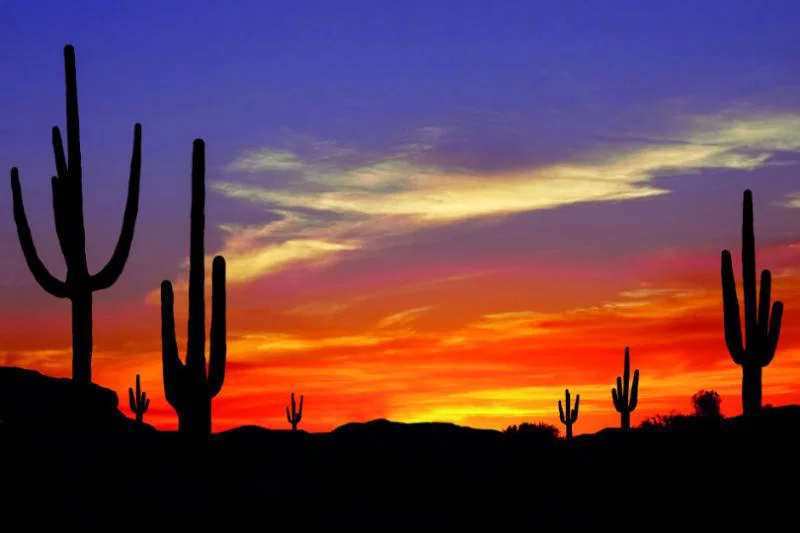
Thanks to our Stetson-toting, white- moustachioed guide Don, it’s also a great way to learn about flora and fauna, including the soaring, iconic saguaro cacti that are native to the Sonoran.
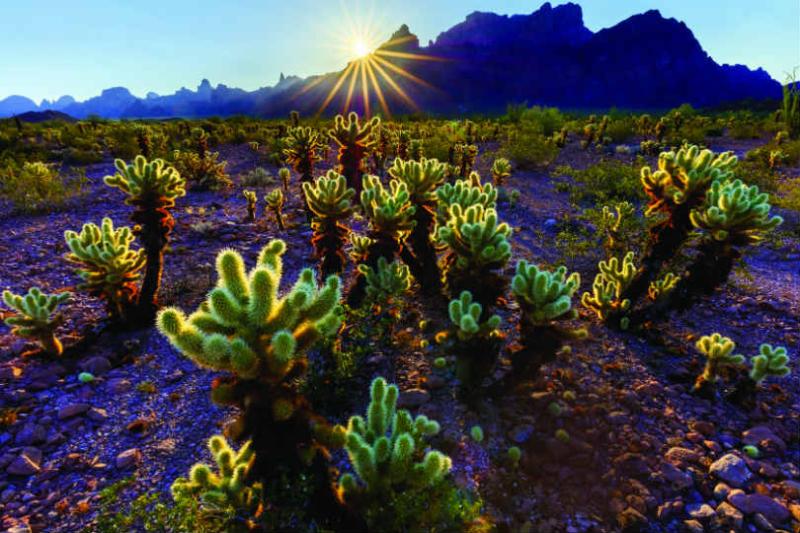
“Saguaros can grow to be 18 metres tall and can have as many as 25 arms,” he calls as we meander past prickly pair cacti, giving the notorious jumping cholla – pronounced choya – a particularly wide berth. Due to their easily detachable spines, a close encounter with a “cholla ain’t no joy-a”, we’d been warned.
On a pit stop, we learn how the Native American communities lived – and continue to live – off this seemingly inhospitable land, using leaves from fragrant creosote trees in their medicines and burning the cholla cacti to be able to cut them open and eat the juicy, vitamin C-rich flesh within (The Fort McDowell Off-Road Segway Tour is £74.27pp on Viator).
Though I feel worlds away from city life, we’re actually a stone’s throw away from Mesa, a city east of Phoenix that serves as an excellent gateway to Arizona’s impressive outdoor adventure offering.
Back at the ranch
At Mesa’s incredibly scenic Saguaro Lake Guest Ranch in Tonto National Forest, I opt for a more archetypal Old West mode of transport, taking a sunset ride on my salt-and-pepper dappled horse, 101.
The ranch has its own stable backing on to the Saguaro Desert and fringed by the looming Bulldog Cliffs and winding Salt River, and offers horseback trail rides to clients of all levels (children must be aged seven and over).
I put my faith in 101’s capable hoofs as we clip-clop over cactus-studded ridges, the movie-set-worthy Goldfield Mountains glowing gold, then ember orange as the sun sinks behind the horizon.
With its beautiful location and dining room complete with fireplace and saguaro skeleton centrepiece, it’s unsurprising the ranch is a popular wedding venue. Its 20 cabins are rustic, kitted out with Western-style rugs and blankets.
“We don’t have TVs, phones or clocks in our cabins,” says Dale Hahne, the ranch’s general manager. “We want people to come here to get off the grid and enjoy nature.”
As well as offering kayaking excursions on the man-made Saguaro Lake and Lower Salt river, the hotel also puts on tubing trips in spring and summer.
In the evenings, guests dine together alfresco at cowboy cookouts where beef sizzles on the barbecue and local musicians strum catchy country ditties.
Gold rush past
Arizona’s desert landscapes and fabled Superstition Mountains have acted as both a refuge and danger to the various communities who have called this land home, from Native American tribes and heroes, such as Apache warrior Geronimo, to gold-rush enthusiasts.
At the Superstition Mountain Museum, our guide Stan explains the Superstitions are so- called because many Native American tribes actually avoided them, believing them to be sacred to the gods of thunder, and only retreated there when they were forced to hide from non-native invaders.
With its Native American artefacts and mock- up of a gunfighters’ cemetery, the museum offers a fascinating slice of Old West history.
It also tells the legend of the Lost Dutchman Mine, discovered by prospector Jacob Waltz during the Arizona gold rush in the 1850s. He died without revealing its location.
Somewhat bizarrely, it even has its own Elvis Memorial Chapel, which featured in 1969 Western Charro! starring the King himself.
The museum is one of many attractions to be found along the Apache Trail, a 65-mile driving route in the Mesa-Phoenix area that was once a journey for Apache tribes and later for prospectors on their way to seek their fortunes.
On this scenic drive, clients can also visit Goldfield Ghost Town, an old mining town where clients can take underground mine tours, grab a beer in the saloon-style bar and watch daily “gunfights” presented by the Goldfield Gunfighters.
Other points of interest along the trail include Canyon Lake, where clients can hop onboard Dolly Steamboat for a scenic journey, spotting big-horned sheep, bald eagles and cormorants in the surrounding Superstitions.
Desert icon
I’m lucky enough on this trip to view the surprisingly lush Sonoran from many perspectives, including from the top of Wind Cave Trail at Usery Mountain Regional Park after an hour-long hike, and while floating above it on an epic sunrise hot air balloon ride.
Its saguaros are a true point of fascination, not only for me but for the many locals I meet, who each seem to have a fact about these icons of the desert.
One of my favourites is recounted by our guide Stan at the Superstition Mountain Museum, who tells me: “The Tohono O’odham people believe that when you pass away, you become a saguaro.”
With their arms bending upwards towards the heavens and their strong, sturdy trunks, I can see why – these guys have a true sense of presence and, like Arizona itself, leave an unforgettable impression.