Impressive feat
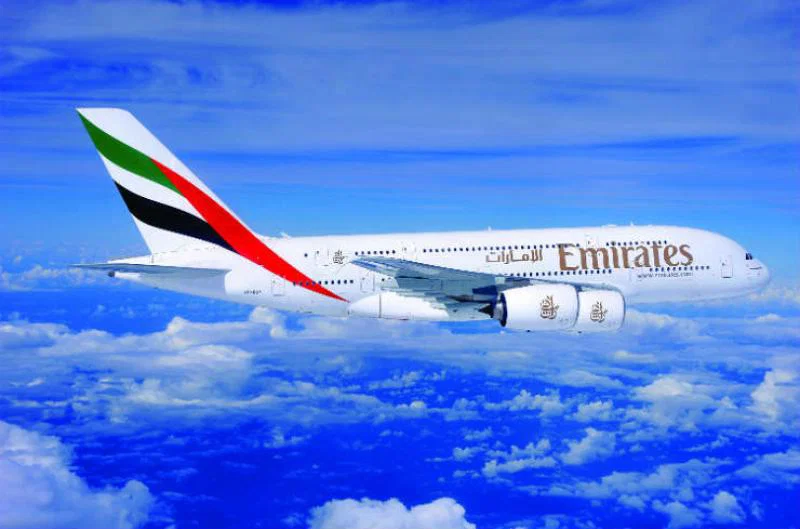
Arguably the regional airport’s most impressive recent feat is welcoming the behemoth that is the Airbus A380. As the world’s largest passenger airliner, it is estimated that less than 220 airports worldwide could accommodate the wide-body, double-deck, four-engine jet.
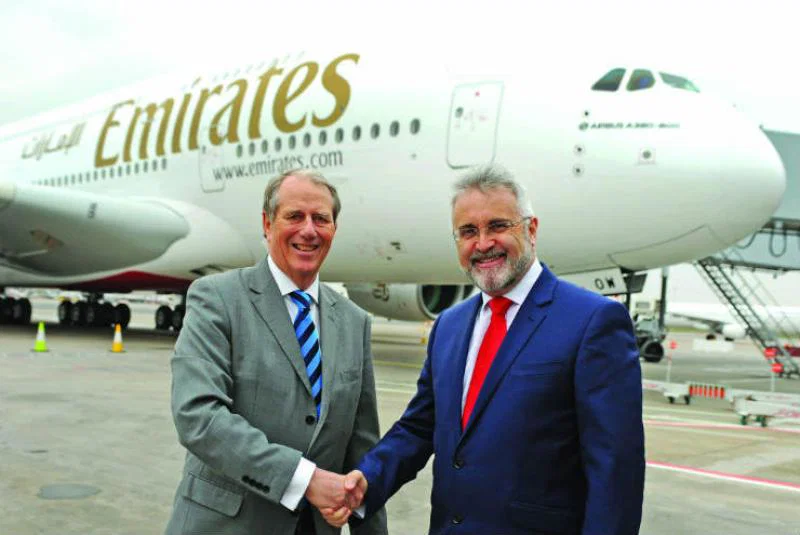
“We are the smallest airport to get this very large plane in their network,” explained Kehoe, speaking at the launch event last month.
The airport is working in close collaboration with Emirates, which now offers a daily, two-tier service from Birmingham to Dubai on its fleet of shiny new A380s.
Also talking at the event, Laurie Berryman, UK vice-president for Emirates, praised Birmingham airport for its responsiveness and speed at installing all the necessary facilities and features to accommodate the colossal aircraft. Berryman added that once Birmingham had the go-ahead Kehoe and his team made the airport A380-ready quicker than any other before it.
In December Emirates celebrated its 15th birthday at Birmingham. “Everybody thought we were mad to come to Birmingham in the first place,” Berryman explained.
He told TTG that Birmingham is a “very important airport” for the carrier. “Birmingham and Manchester will grow exponentially,” he said. “Southeast England is full [capacity-wise].” He added that more and more people who live in regional UK are reluctant to fly from the London airports.
The airline took up a treble daily service from Birmingham to Dubai in August based on the growing demand. And Berryman hinted that even more A380 services could soon take off from Birmingham, further increasing the airline’s capacity there – the lunchtime A380 service into Birmingham, carries 557 passengers in economy and 58 in business, meaning an additional 261 passengers are transported when compared with the airline’s Boeing B777 service.
“There’s potential for even a second or third service to go A380 in future,” he said. He added: “First class is something we might look at in future, but it’s much more likely to stay as two class.”
Berryman says that most of the airport’s passengers will take the A380 service to connect on to flights for Australasia and Asia, with approximately 30% visiting Dubai as their final destination. “This service will connect into five nonstop services in Australia,” he said, adding that a lot of passengers also head from Birmingham through Dubai and onto Thailand and the Indian Ocean.
Sales uplift
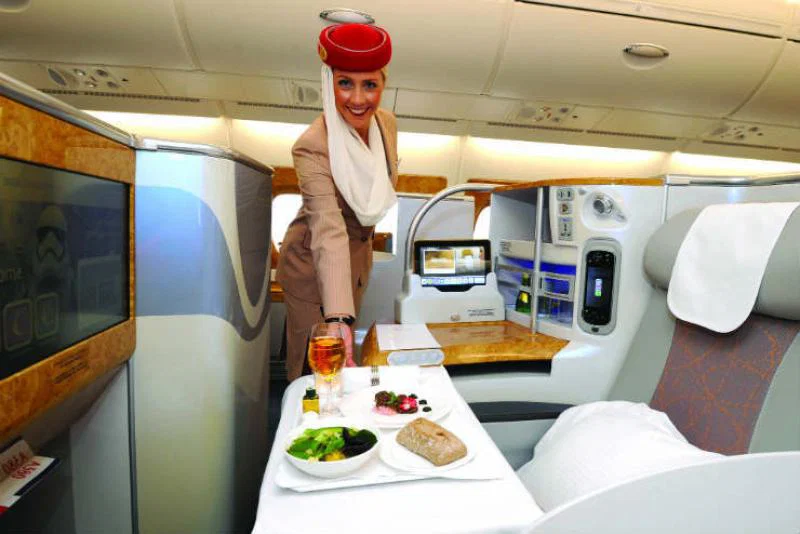
While some aviation pundits have heralded the demise of the A380 due to sluggish sales, Berryman was staunch in his appraisal of the product. “We love it, and more importantly the customers love it too. It’s very comfortable and quiet onboard and it has got Wi-Fi.” He added: “We see an immediate uplift, as high as around a 20% increase in sales [when we introduce the A380 to an airport] – we saw it in Manchester airport and at Gatwick.”
Emirates remains the largest operator of the Airbus A380, with 75 of the superjumbos in its fleet, and an additional 65 on order, which, when delivered, will increase the number of A380s in service to 140.
Talking to TTG, Kehoe said he has seen the positive effects of the A380 first-hand. “What was staggering was the number of people – possibly thousands – that came around just to watch it [the A380] land and take off. That’s the sort of excitement it’s generating in the community. The arrival of that airplane on a daily basis changes the way people look at the airport. It really does put us in a different league, increasing the positive perception of the airport. It’s a vote of confidence by Emirates.”
Ann Leung, director of Birmingham travel agency United Travel, was one of the industry professionals invited to the event. Of her customers’ booking habits and preferences, she commented: “The Emirates product is really good, [and so is] the service. They’ve always got so many destinations, which people love as well. And it’s a local departure. They are competitive with their prices and lots of people would like to try the new aircraft.”
Leung also noted that many of her clients love to book an economy seat on the upper deck for the feeling of exclusivity and novelty. “It’s almost like you’re mixing with business class,”
she said.
JTA Travel Management’s managing director, Wayne Darrock, was also present at the event to welcome the new arrival. “There are no shortcuts with Emirates,” he said. “Everybody’s made to feel special, and passengers pick up on that. There’s no question about it – Middle Eastern carriers have left European carriers behind in terms of service and onboard product. All the local independent agents are excited about the A380.”
And of Birmingham airport, Darrock added: “There are so many new routes coming in, it has really put Birmingham on the map. Especially with the great transport links. There’s no need to go through London [anymore].”
Bright future
Emirates has lots of exciting news to shout about, from its new services into Burma, Vietnam and the Philippines to its increased London frequencies (the airline now operates 70 flights a week to the capital).
And all signs point to an increasingly rosy future for Birmingham airport. “The government is investing in Birmingham’s future,” said Kehoe. HS2, the proposed new high-speed rail link between London and Birmingham, could have a huge impact on the regional airport, cutting journey time between the two to just 39 minutes. “It would effectively mean Birmingham is 70 miles closer to London, [bringing it] inside Gatwick and inside Luton,” he added. “At some point the railway will be operating before the new [London] runway is built.”
It may have been a turbulent decade for the airport, but Kehoe says that right now the market is buoyant. “There was lots of heartache in 2007 because of the loss of British Airways. But now we’ve got our mojo back.”