Community benefits
An organisation dedicated to ensuring the communities touched by tourism benefit from the opportunities it can provide, Planeterra manages more than 50 projects across the globe. And in celebration of International Women’s Day on March 8, three more projects aimed at women in developing countries have been added to the fold.
“Before ITB opened this year, the team in Germany said, ‘We want to do something different this year rather than just a trade booth,’” Sweeting explains. So the organisation arranged for a pop-up art gallery during ITB that would focus on women to launch its 35-day long Planet Her campaign, which sought to raise awareness and highlight the role that women have in travel and tourism, as well as generate $25,000 in funds.
The three new projects, in Morocco, Australia and Belize, all feature the same end goal – empowering local women to redefine their roles in society. But each features a different back story.
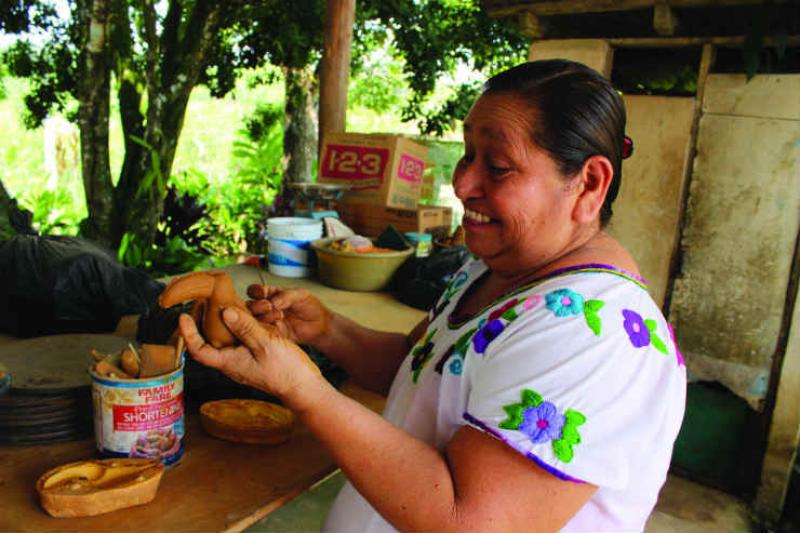
The Belize Pottery Cooperative in San Antonio, for example, was up and running for several years before G Adventures and Planeterra came along.
“It was very informal and off the side of the road, so there were very few tourists coming through,” he explains. “They were already in the tourism business, but not necessarily thriving. We said, ‘You’ve got this business and we like what you’re doing.’”
And so the partnership began, with G featuring pottery-making workshops at the cooperative in its Explore Belize and Explore Guatemala and Belize itineraries. Sweeting adds that sometimes best practice is about working with what’s already available: “Don’t reinvent the wheel. Is there something that already exists?”
This mantra was very much the basis for Planeterra’s new project in Meknes, Morocco. “We’d highlighted that Meknes could be a great place [to launch a new project],” he explains.
“We did research and found this wonderful organisation Afer (Association Des Femmes et Enfants Ruraux) – a very strong women-run non-profit.” The vast majority of women working for the organisation had very little experience working with travellers, Sweeting says.
The project now features on five of the operator’s itineraries, with tourists benefitting from a “lunch and learn” session that includes a basic Arabic tutorial as well as a traditional meal.
The four women who run the project full-time receive a salary, but that is just the tip of the iceberg, Sweeting notes. “The profit goes back into the non-profit,” he adds. “And they now have that facility for other community events in the evening. What we bring in is training and dealing with tourists – capacity building.”
Minimal involvement
In principle, it sounds like a mutually beneficial programme, but are local communities being led by outside interests? Sweeting emphasises that Planeterra and G’s involvement is minimal, adding that their approach is very much in line with that of Body Shop founder Anita Roddick, who is often cited as pioneering the “trade not aid” movement.
“It’s about giving people a hand up rather than a handout,” Sweeting says. “Helping people help themselves. We work independently with the projects to analyse and advise on what they need in terms of support and help. It’s very much a business-to-business dealing. We’ve learned that mollycoddling people doesn’t work down the road.”
Sweeting goes on to explain that both G and Planeterra are careful in their curation of experiences to ensure that it isn’t voyeuristic or exploitative for the local communities involved.
"The zoo effect does still happen in tourism and it is awkward, but G is really understanding of what a local experience is in the 21st century.We do a lot to empower them to tell their stories the way they want to tell their stories.”
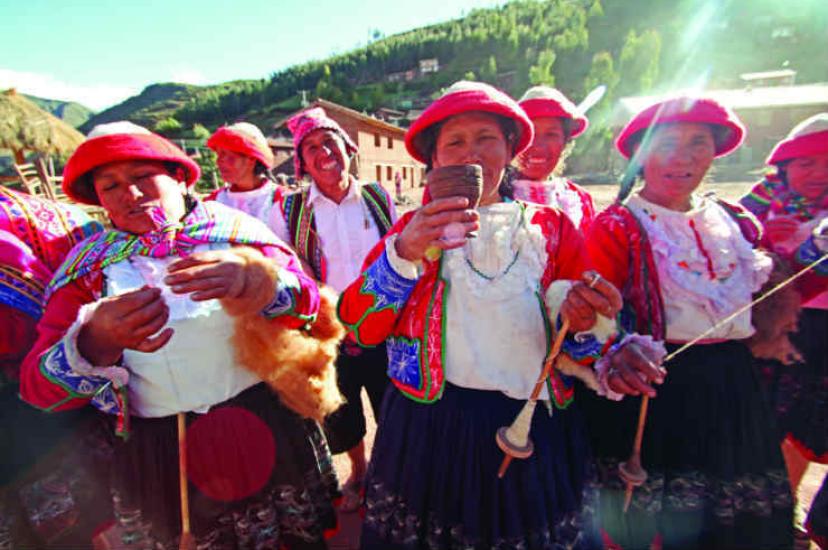
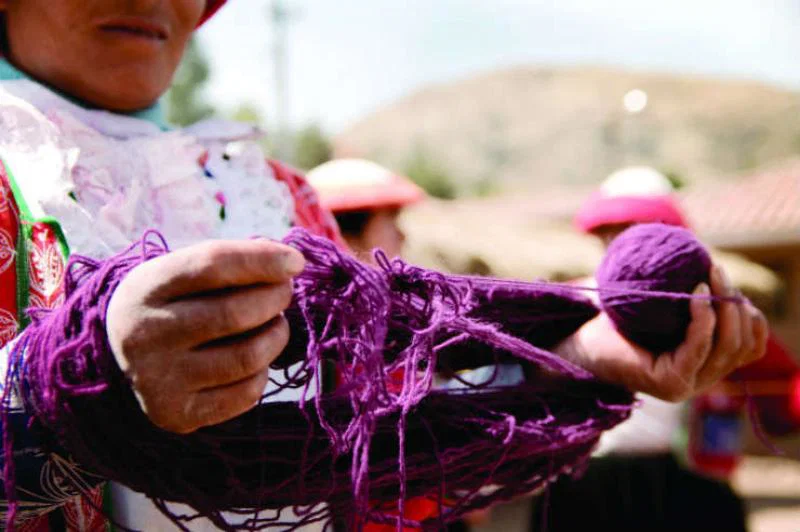
He offers an example of Planeterra’s very first project in the Sacred Valley, Peru, to illustrate the organisation’s commitment to best practice. An indigenous women’s weaving cooperative that was established in collaboration with Planeterra in 2005, Sweeting says it was at risk of becoming a victim of its own success. With five to six tour groups overlapping at times, G began to receive increasingly negative feedback from its customers about the quality of the experience.
Both G and Planeterra relayed the information back to the local Ccaccaccollo community and asked how the number of tours coming through could be managed. “They staged areas and split it up; from wool harvesting to the wool dyeing process, to seeing the alpacas,”
Sweeting says. “We presented the problem and they came up with the solution. It’s very much about empowering them to come up with the solutions that work for them and for the traveller.”
The same level of autonomy applies to how local organisations choose to invest their earnings, Sweeting adds.
“These communities are empowered to spend how they want, and that’s what I love about this stuff,” he says. “They want the same things as we do – healthcare and education – and that’s what they’re spending the money on. We can help them with advice and suggestions on setting things up. It’s the exact opposite of colonisation.”
Feeling inspired? “We welcome help from our partner businesses,” says Sweeting about the Planeterra Foundation. “Last year 11 STA Travel consultants and seven G Adventures employees climbed Kilimanjaro to raise money for two women’s empowerment projects in Tanzania, Moshi Mobile Mamas and Maasai Clean Cook stoves. Together they raised more than £25,000. It was an immensely personal challenge for them as they visited the projects on the same trip as the climb.” |