In business, it’s often good practice for companies to take a step back and consider alternative scenarios when pursuing their strategies and goals.
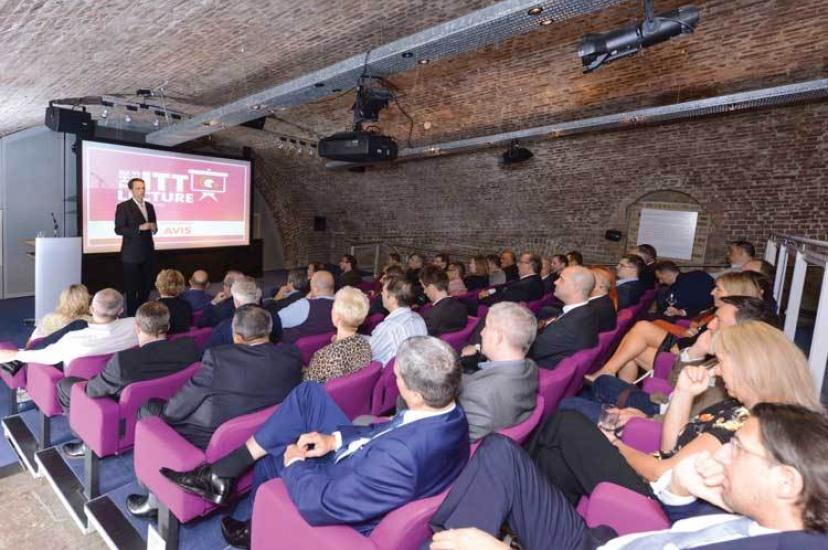
It’s a sentiment echoed by ITT chairman Steven Freudmann, who announced last month the launch of the “ITT Lecture” – a series of talks that would bring in “outsiders” to offer a fresh perspective on where the travel industry gets it right – and wrong.
The inaugural speaker, Matthew Taylor, chief executive, Royal Society for the encouragement of Arts, Manufactures and Commerce and one-time advisor to Tony Blair, argued that the travel industry could be doing more to help tourists feel “free”.
“My starting point is that tourism is not taken as seriously as it should be, compared to other industries,” he began. “It’s a huge industry. Huge size, huge significance, huge impact.”
Taylor drew extensively on the Enlightenment period – a philosophical movement that dominated the world of ideas in Europe in the 18th century. The goals of the movement included liberty, progress, reason and tolerance.
Tourism enlightenment
“The RSA is an Enlightenment organisation; we look at how to deal with issues, issues that have been around for a while, and that people feel could be solved.
“Tourism took off at roughly the same time as Enlightenment; people wanted to take off, they were wrapped up in this notion of freedom, with the Grand Tours. It used to be just for the elite, then Thomas Cook made sweeping changes, and he has driven a revolution.”
Thomas Cook began his international travel company in 1841, with a one-day rail excursion at a shilling a head from Leicester to Loughborough on July 5, according to Cook’s website. He was “devoted to helping Britons see the world”.
However, Taylor argued that since that first journey, little has been done to rethink the tourism concept. Just as now is a different world to back then, with the RSA offering “21st century enlightenment”, he asked: “How can tourism undergo Enlightenment?”
He continued: “As human beings, we’re not that suited to the modern world. Research shows we are bad at knowing what makes us happy, understanding it.
“It’s a different world. If you dug up those [Enlightenment] philosophers now, they’d be amazed, but also shocked… when we talk about freedom, we should go back to what the philosophers said – it’s not about being able to eat 10 cheeseburgers.
“Now, tourism should be unapologetic. The best tourism is when you relax and have a great time, but also lets you grow, to return home better equipped for life. Tourism is about giving people freedom, but it should also be about true freedom, going somewhere that offers you insight, and a journey of self-development.”
Referring to the current refugee crisis, Taylor asked the audience: “Why is ‘economic migrant’ a word of abuse? There’s a real challenge for people going away. It’s odd when people go away [on holiday], they then come back and talk about the people as if they were a different race.”
As a result he argued that tourism should enable greater interaction with locals. “Why do we fly people into protected areas? How can tourism encourage a greater sense of empathy?”
He also questioned the notion of progress in the travel industry, which appears to be determined to be about “faster planes, and more people”. “We’ve got to find the space to find out what progress is. It can’t be more, more, more. You can’t have nine billion people travelling.”
And the answer? Taylor said it was “a collective action issue”, but challenges arise because of the highly fragmented nature of the travel industry. Yet, it can happen incrementally, he added, citing certain events that act as catalysts to bring the industry together, such as the Boxing Day Tsunami, which led to mass collaboration within the tourism industry to help destinations affected.
“It’s about discourse, and creating a narrative so that people will think: ‘That’s a great idea’.”