Engineers
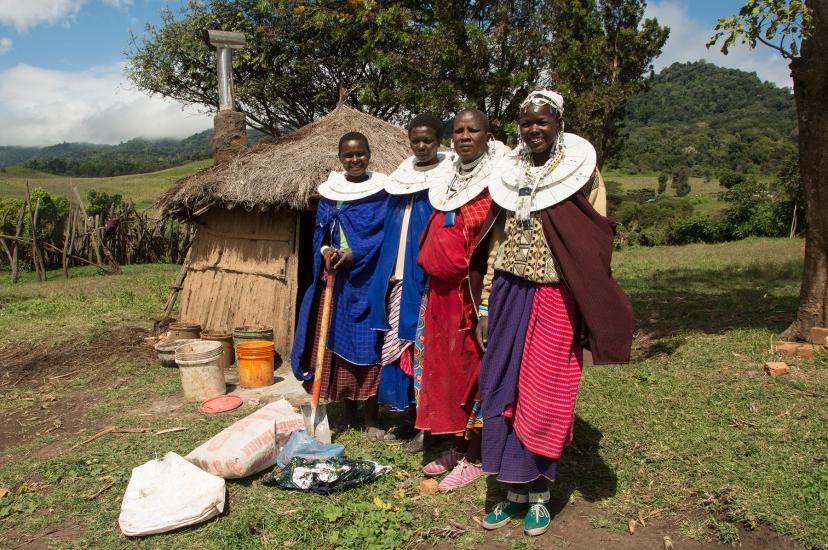
In Tanzania, women from Maasai communities are training as engineers to install clean cookstoves across the communities.
The women engaged in Planeterra’s Clean Cookstoves Project in Tanzania host G Adventures travellers on an educational tour, where they learn more about the communities and the issues of the traditional ways of cooking, with each tour providing a clean cookstove to a household without one.
Many homes in the Maasai community use open fires for cooking, which makes them very smoky and unhealthy places to live. The communities see many health issues arise from this style of cooking, and the Clean Cookstove Project was designed to tackle that.
To date, 15 women are employed and 1,250 community members are benefiting.
Evie Ndhlovu, regional programme manager, Europe, Middle East and Africa at Planeterra, explains: “The Clean Cookstoves project is a fantastic example of how community tourism can drive female empowerment. While engineering and building is stereotypically a male role in many parts, the Maasai community actually faced a challenge where the male community members didn’t want to engage in work which involved such close proximity with other engineers.
"The women on the other hand, who were used to spending time with other females, jumped at the opportunity. They were so happy to be climbing ladders, using tools, learning new skills and earning their own money!”
A Maasai representative adds: “Rather than the usual visit to the Maasai for songs, dancing and bead jewellery, the G Adventures visitors get to meet remarkable women working in a skilled team to improve their homes, making them safer and healthier and more comfortable by installing smoke-eliminating and efficient cookstoves and solar-powered lighting systems.
"The impact and benefits are very significant and wonderful. Children can study in the evenings in a safe environment, there is much appreciated income for the women and, most importantly, the children and their mothers live and work breathing clean air."
Mokoro guides
The safari operator Ker & Downey Botswana is helping another group of African women blaze new trails in different ways.
The company currently employs two female polers, Cindy at Shinde Camp and Beauty at Kanana Camp. In this age of gender labels, where it has always been and still is implied that this is a man’s job, Ker & Downey is intent on giving everyone, including women, a fair chance and opportunity to be empowered in their line of work.
“Riding in a mokoro is one of the oldest traditions of the Okavango Delta that gives guests access to a labyrinth of waterways without the sound of a motor,” says Fran Hird, managing director at Ker & Downey Botswana. "At most Okavango camps, you’ll find it’s a male guide that takes guests onto the water but now more women are poling the rivers.”
Poling a mokoro is an ancient art, balancing the vessel and using a long pole called a “ngashi”, to pole or push the mokoro forward. Historically, men poled mokoro to gain access to good fishing and hunting areas. Women would use the mokoro to harvest reeds and waterlily bulbs.
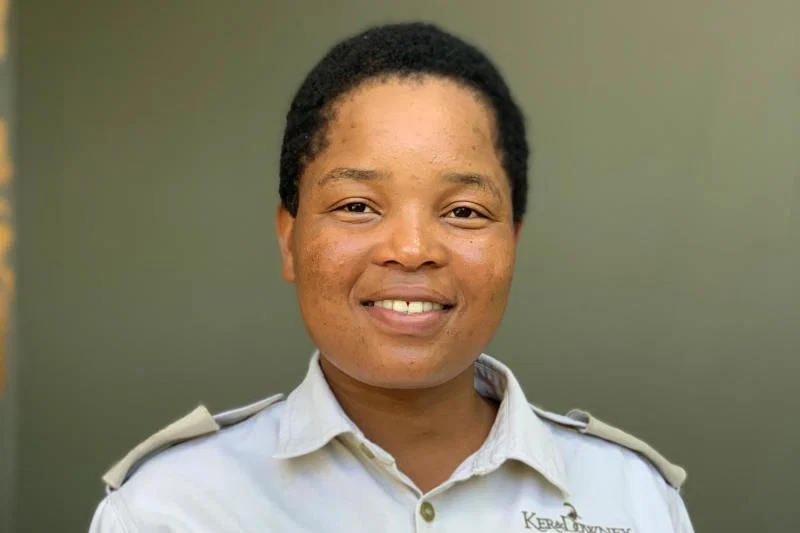
Beauty Tsele became the first female poler in the region when she joined Ker & Downey Botswana under the Women Empowerment Scheme in 2013.
“As a poler, one must understand that mokoro is totally a different experience from other activities – its uniqueness comes from the tranquillity and the peacefulness that guests will experience,” she explains.
Now there is another female poler, Cindy Mothogaathobogwe. Growing up in a small village called Boro, she saw guests being transported in and outside of the Okavango Delta via mokoro, which motivated her to pursue a career in that area.
A poler must make checks and balances concerning safety by making sure that the mokoro is equipped with all necessary equipment and most importantly guests must be thoroughly briefed before boarding mokoro. Polers also assume responsibilities of back-up guides for walking safaris as they are generally aware and knowledgeable of their environment.
Hird adds: “It is incredibly uplifting to see these women rising and leaving their mark in this field.”
Conservation heroes
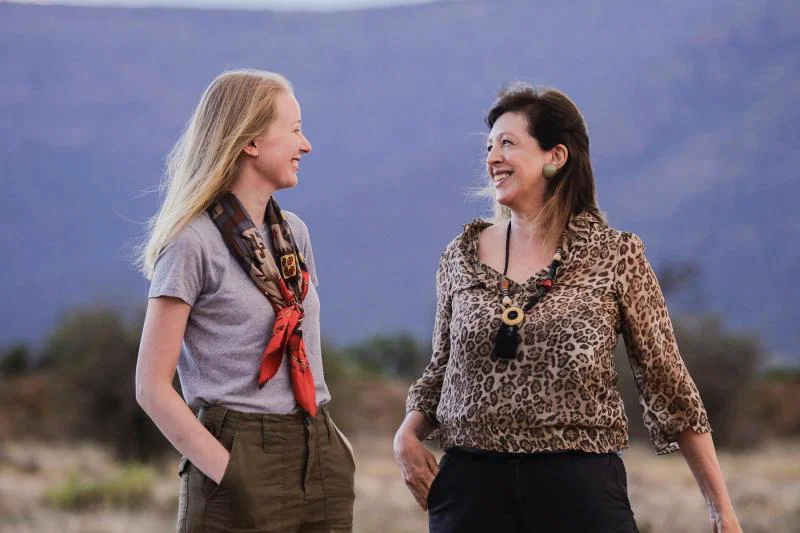
Sarah Tompkins, founder and director at Samara Karoo Reserve is one of Africa’s female conservation pioneers, working alongside daughter Isabelle, to run an eco-tourism business, with a huge emphasis on biodiversity conservation. They tackle land restoration projects, rhino anti-poaching efforts, roads, water points and reintroduction of wildlife like cheetah.
Sarah says: “Like any field of work, conservation has been dominated by men for a long time, but thankfully that is changing. More and more women have entered the workforce and are finding their voice, helping to effect change across the globe, protecting the places they love. It has always seemed so counter-intuitive to me that 50% of the world’s human capital should be excluded from helping society address the global challenges we face. How will we achieve our conservation goals without addressing these gender gaps?”
As a mother-daughter team, Sarah and Isabelle feel very strongly about helping women to realise their potential. In transforming the land use at Samara from farming to tourism, they have increased the number of jobs available to local women. These jobs tend to be better remunerated and with more extensive benefits and training opportunities than traditional farming roles.
She adds: “There is always more to be done, but we are proud of our track record so far of nurturing junior female employees into management roles, implementing flexible working hours for mothers with children and hosting regular women’s meetings within the Samara community so that everyone feels heard.”
The hardest part is dealing with the niggling realisation that we have so little time left to truly protect and restore our planet, says Sarah. “We sit at a critical juncture right now – we have to act, to do something. It would be so easy to be demoralised and to feel defeated about the task at hand, from the extinction debt to climate change – and some days are more difficult than others. But it’s important to live with hope and not with fear.”
But there are many rewards too: “When we discover leopard tracks and capture camera trap images of a male leopard on the reserve after 25 years of rewilding. And when we discover, as we did last week, that there are possibly not just one but three leopards moving across our landscape – two males and a female!
"When guests tell me how much they love Samara and return again and again. When a team-member does a fantastic job and obtains new qualifications. All of those things give me the strength to deal with the hard parts, every single day.”