Back in May, it seemed that everything had been in place for the full laptop ban being imposed on Europe as had been originally planned. Indeed, at one aviation event I attended, delegates spoke of little else, albeit off the record, having been briefed by governments that the ban was imminent.
However, the trail then went cold and it was almost a surprise when John Kelly, US secretary of homeland security, announced last month a raft of new security measures which will impact an average of 2,100 daily flights carrying 325,000 passengers. The new rules themselves appear vague and this is apparently down to security requirements.
“We cannot play international whack-a-mole with each new threat. Instead, we must put in place new measures across the board to keep the traveling public safe and make it harder for terrorists to succeed.”
The official briefing document states: “The enhanced security measures include but are not limited to: enhancing overall passenger screening; conducted heightened screening of personal electronic devices; increasing security protocols around aircraft and in passenger areas; and deploying advanced technology, expanding canine screening and establishing additional pre-clearance locations.
“Over the course of the next several weeks and months, the Department of Homeland Security (DHS)/Transportation Security Administration (TSA) will work with aviation stakeholders to ensure these enhanced security measures are fully implemented.
“Those stakeholders who fail to adopt these requirements with certain time frames run the risk of additional security restrictions being imposed.”
While the DHS refused to confirm when the new rules will be introduced, although industry sources indicate this could be from 21 days to 120 days after the announcement, a spokeswoman admits flyers will feel an impact.
"Terrorists want to bring down aircraft to instil fear, disrupt our economies, and undermine our way of life. And it works – which is why they still see aviation as the crown jewel target in their world."
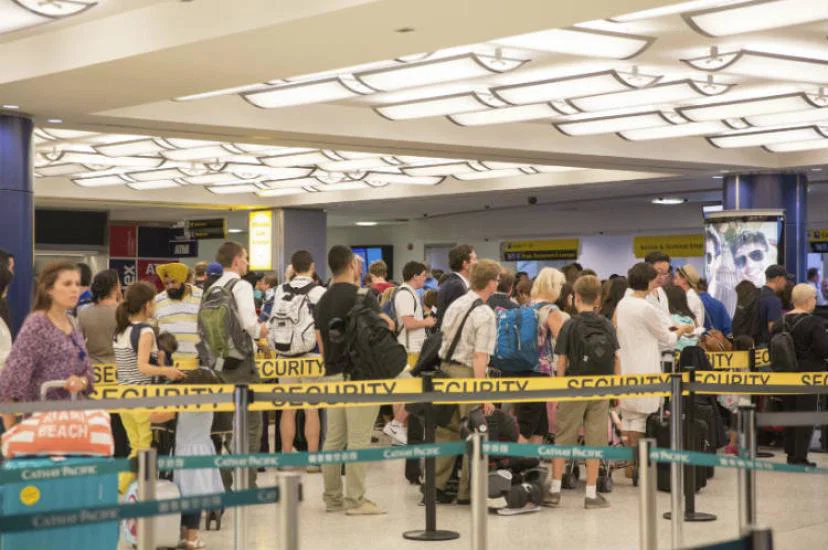
“The enhanced security measures are both seen and unseen but all passengers flying to the US may experience additional screening of their person and property,” she says. “We recommend that passengers flying to the US prepare for a more extensive screening process.”
Aviation as a target
Announcing the new rules, Kelly justified them by referring to a long list of both recent attempted and successful terrorist attacks targeting aviation. He adds: “Terrorists want to bring down aircraft to instil fear, disrupt our economies, and undermine our way of life. And it works – which is why they still see aviation as the crown jewel target in their world.
“My conclusion is this: it is time that we raise the global baseline of aviation security.
“We cannot play international whack-a-mole with each new threat. Instead, we must put in place new measures across the board to keep the traveling public safe and make it harder for terrorists to succeed.”
Certain sources have welcomed the news as a climbdown from the proposed laptop ban, which had left airlines concerned over passenger safety as numerous devices containing lithium batteries stored in the hold could have created a new risk instead.
One tells Routes News: “The very fact that there’s still a possibility for passengers to bring their personal electronic devices onboard is something that should be seen as a positive aspect. The old proposal would have been very disruptive and this is a more pragmatic approach.”
Seeking clarity
However, the Association of Corporate Travel Executives (ACTE), which has members in more than 100 countries, criticised the US government for failing to provide any detail with the announcement.
Executive director Greeley Koch says: “The Trump administration’s vague travel security policies continue to vex the business travel community. While these new screening procedures are far preferable to an outright electronic device ban for business travellers, we still need clarity on what this looks like in practice.
“How onerous will these new protocols be for travellers and airlines? What if an airport or airline has difficulty complying – does that lead to a ban on electronics in the cabin? Until we have the details, this policy has the potential to become a de facto device ban.”
“The enhanced security measures are both seen and unseen but all passengers flying to the US may experience additional screening of their person and property."
Meanwhile, Robert O’Meara, director media and communications, Airports Council International Europe, welcomed the decision to drop the automatic ban on laptops and other handheld devices bigger than a mobile phone.
He added: “We are satisfied that the US has not implemented a complete ban on electronic devices on passengers flying from European airports. “We have been very heavily engaged in these conversations in which all sides were really looking for a way of taking account of these security concerns.” Despite the concerns of ACTE and other travellers, information supplied by air bookings analysts ForwardKeys suggests the new rules may have less impact on air travel than feared.
Analysis shows there was no negative impact on reservations following the introduction in March of the laptop ban on eight mainly Middle Eastern countries. Instead, ForwardKeys CMO Laurens van den Oever said travel from those countries to the US was much more badly affected by president Trump’s original travel ban implemented in January as it dropped by 5.8%.
Forward bookings were even worse hit, he adds, as a month after the ban was implemented they were down 21% from the affected countries, compared to 0.4% from the rest of the world.
Van den Oever adds: “Consequently, ForwardKeys suspects that the subsequent laptop ban had a relatively smaller impact than it otherwise might have done because the image of the US had already been dented.”
Whatever the impact of the latest measures, the final conundrum is when they might be dropped. The DHS is again refusing to comment on time scales because of security concerns.
However, given 2016 saw the 10-year anniversary of the supposedly temporary liquid ban for aviation, it would be wise for airports and airlines to start implementing the changes with the view that they are here to stay - potentially for a very long time.