The “consolidation solution” merged data from two reservations platforms, enabling JacTravel’s commercial management to work with more transparent data and, perhaps more importantly, work at a faster pace.
Yet it would not have been possible without drawing on the consultancy’s finance technology experience – which has been building up over the past 20 years.
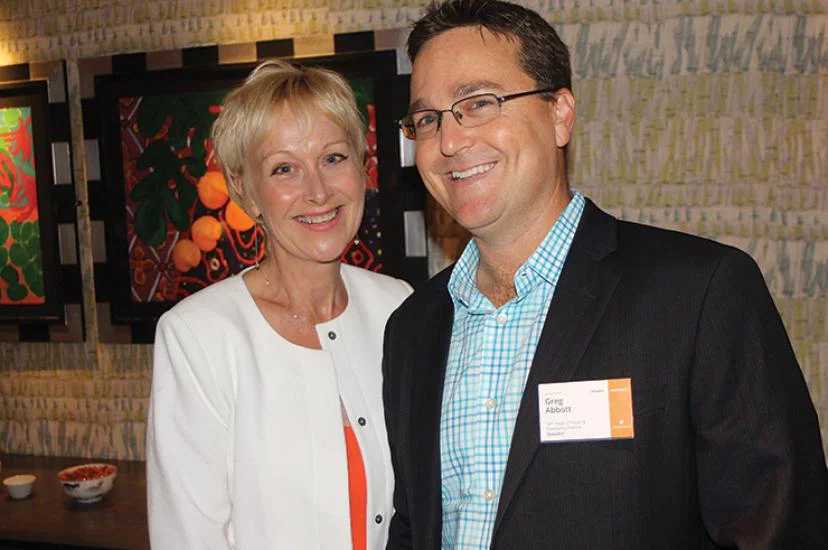
“After JacTravel’s acquisition of TotalStay, there was data sitting on two different platforms,” recalls Charlotte Lamp Davies(pictured above), DataArt’s vice-president, travel and hospitality, Europe. “Having client data in two siloed systems was a challenge and prohibited holistic future business planning.”
A data “warehouse” was built, based on principles used by DataArt’s financial services practice. “We try to leverage what our other practices may or may not have done before,” Lamp Davies adds. “We’ve got 20 years’ experience in the finance sector; we can leverage that.”
“Our finance team has been chewing on blockchain for some time and is working for a large bank on this"
“[With JacTravel], the first step was combining, then unifying, so you can aggregate and integrate,” adds Greg Abbott (above), DataArt’s senior vice-president, travel and hospitality, who notes another area where cross-fertilisation will be key in the future: blockchain – the distributed ledger technology currently most famous, or infamous, for underlying cryptocurrencies such as bitcoin.
“Our finance team has been chewing on blockchain for some time,” Abbott says, “and is working for a large bank on this. But it takes time for companies to figure it out. Trust is a big factor in travel; blockchain is the special sauce.
“We’ll see more of it, and we can help apply it to travel. For example, I’ve talked before about unified travel profiles. Millennials may want to own their own travel profile.”
Lamp Davies believes blockchain is also on the radar for the “larger players in the industry”. “Blockchain offers security. Airbnb, for example, could use it to check the authenticity of guests. There’s a huge number of people connected, and it could stop fake reviews or accounts. The technology could be very exciting.”
Abbott, meanwhile, thinks hotel contracts management may well soon come under blockchain. “There’s that single point,” he adds.
Another sector that is increasingly merging with hospitality, among others, is telecommunications and in February last year DataArt relaunched a dedicated telecom division, to focus on building “high-performance, cost-effective, scalable, secure infrastructure and solutions for telecom providers”. “It’s a new vertical for us,” says Abbott.
“We’re investing, and developing expertise in the domain. Telecommunications touches hospitality, and the guest experience – it’s about the connected guest, based on using data, and that touches the telco providers.”
One new client, Alice, fits perfectly into this arena. The start-up mobile guest engagement and request management platform for hotels is spearheaded by Alex Shashou, whose family is behind the Malmaison hotel brand.
As for the next 20 years, DataArt is now targeting organic growth in Europe. Germany is a “big market” notes Abbott, highlighting the recent opening of an office in Munich. And while the US “outpaces” the UK in terms of business, Abbott insists the UK “remains as important as ever, as a global anchor” with Lamp Davies adding she is actively looking to work with larger travel management companies.
With new technologies and sectors in its sights, and an appetite to mix things up, DataArt could well kickstart 2018 in a similar style.