




Last year, ITT conference delegates headed away from Sardinia pondering whether travel can embrace AI while retaining its human touch. Twelve months on, and AI and talent were very much at the top of the agenda again at this year's conference in Malaga.
But whereas the 2025 conference looked more philosophically at the existential threat AI was perceived to pose to a new generation of travel professionals, this year's bash more closely examined the direct effects AI is already having on the industry, particularly on its talent pipeline.
So just how comfortable is travel with the advent of AI and the pace of change it is inspiring? Is AI really reducing entry-level roles and allowing firms to consolidate their workforces? And how do businesses go about introducing AI that, rather than replacing, empowers their human workforce to be better than ever?
This is how the debate unfolded at the 2026 ITT conference – plus, a handful of thought-provoking takeaways from a stellar line-up of industry speakers.
'What a year it's been – already'
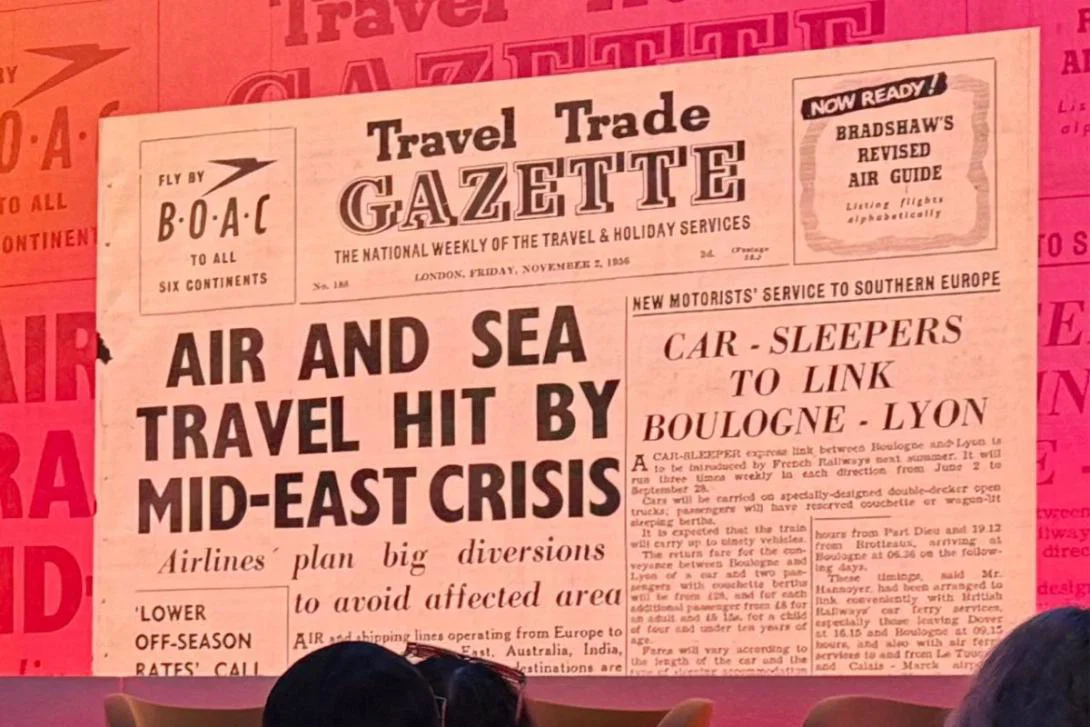
ITT Chair Steven Freudmann set the tone. "The past few months have tested us all, haven't they?" he said, only to moments later flash up a TTG headline from 1956 – 70 years prior – warning of air and sea travel being hit by a "Mid-East crisis".
"The world goes round," he continued. "Through disruption and uncertainty, we adapt, we evolve, and emerge with a new sense of purpose. And I have the unique privilege of witnessing first-hand the passion, innovation, and above all else, the resilience of our industry."
Moderator Ayesha Hazarika picked up the baton. "What a mad year it's been," she said. "And one man – Donald Trump – has been very busy in 2026. The man has caused so much misery to so many people in such a short time, particularly in your industry.
"It's causing such economical turmoil. You're having to pass costs on to consumers, flights are being cut, inflation is soaring, as is aviation fuel. And yet somehow, it's cheaper to get a fortnight in the Seychelles than a weekend in St Ives.
"So listen, it's an anxious time right now. I know all of you and the different strands of your businesses are under a lot of pressure. The geopolitical climate is affecting our domestic situation, our economic situation – it's basically a bit of a s**tshow."
An era of 'predictable unpredictability'
Academic, journalist and analyst Tim Hames narrowed in on the Trump effect, characterising the US President's outlook as "essentially transactional" with no great qualms about "who wins".
"It's a combination of huge structural change in how our international politics works, which fundamentally affects business, and the presence of a particular president who suits that moment," he said.
Hames said the upheaval Trump has brought could, perhaps, have been foreseen. "This is not an era of unpredictable unpredictability, but in many senses, [an era of] predictable unpredictability," he proffered, adding his core message would be one of "be prepared".
70 years on, similar challenges
He cited a recent study by a Canadian law firm, carried out prior to the conflict in the Middle East, which interviewed 300 senior execs from international companies with revenues in excess of $500 million; 71% of those interviewees said they considered there to be a high level of geopolitical risk, with 58% saying it had increased in the past six months.
However, less than half (43%) could identify an individual in their organisation responsible for geopolitics, yet nearly nine in 10 (88%) nonetheless said they were confident they were prepared for a major geopolitical event if one was to occur at short notice.
"Talk about kidding yourself," said Hames. "You should ask yourself – am I thinking about this? Is anyone on my team? Is anyone we've brought in to advise us on this? If the answer to those questions is no, the next question is – am I comfortable with that answer? And question after that is, what contingency planning am I doing?"
AI doesn't have to negate human input
Speaking of structural change, perhaps the biggest factor threatening to revolutionalise travel in ways we haven't yet even begun to fully comprehend is AI. Indeed, some – like industry grandee and AI evangelist Steve Endacott – would say this revolution is already well under way.
Endacott led a panel discussion exploring whether "trust" might yet be travel's "superpower" in an AI world. "Travel is an emotional purchase," said Lindsey Winterburn, Co-Founder and Chief Operating Officer of Travel Solutions Network.
"Travel is a honeymoon, a holiday for which someone's saved for 12 months. They want a connection with a real person, they want to feel intimacy with that person. They want authenticity, for them to listen and care. [With AI], if something goes wrong, they've got nowhere to turn."
Gil Antolin, Founder of Luxury World Traveller, said the next big step for travel would be to harness the power of the vast influencer and inspiration economy that exists predominantly on social media, essentially turning content into a booking channel which can then be serviced by AI.
He said trusted influencers could generate thousands of leads from a single piece of content, with CRMs that can now capture this consumer information and continue the sales process. In addition, Antolin said instead of sustaining leads through traditional brand websites and channels – typically in browsers, which get cleared in about 45 days – his business was finding new ways to continue these conversations, recognising travel isn't typically an impulse buy.
"They're not going to delete Instagram, they're not going to delete TikTok," he said. "They're opening these apps 30, 40, 50 times a day. So we're leaving those links in their direct messages where they can find them. And conversions are going through the roof."
Endacott said the agents of the future would be influencers who know how to market themselves. Simon Powell, Founder of Inspiretec and AI start-up SystemsX, replied that the rapid rise of AI didn't negate the human aspect.
"We all talk about the death of the travel agent, yet Hays [Travel] is doing better than ever," he said in response. "You've got agencies out there that are growing. Why? Because of the people side of it. Yes, I'm a technologist, I've got an AI business, but I'm a big advocate of having that human in the loop."
Powell said "AI agents" would improve search for human agents by narrowing down queries and returning better quality information. "We now have to search multiple systems to actually book a holiday," he continued. "If we go back five or ten years, we could search one system and aggregate those searches. That's what 'AI agents' are going to do for us."
'Sometimes, people just need to speak to a human'
The sparring continued. Winterburn said that while AI would streamline processes and reduce legwork, humans came into their own at times of crisis like when the conflict began in the Middle East.
"We're talking about the booking process," she said. "But what happens when things go wrong? We [Travel Solutions Network] had holidays, B2B, B2C, sales and service. And the power of human contact was unbelievable.
"My first priority was who have we got stuck in resort? And what's the vulnerability of each of those customers? We worked through the night with the team. We had customers on the phone crying. We had elderly people. A large percentage of those customers have actually re-secured a booking for the future because of that service."
Winterburn said a major pain point was getting hold of airlines. Endacott said an AI agent, trained on what it needs to say, could handle thousands of calls in a matter of seconds for an airline. "It's ridiculous to say only a human can do all that," he remarked.
"When somebody's got a problem AI cannot answer, they need to speak to a human," Winterburn retorted. "You want empathy, sympathy," she said, adding getting hold of airlines at the time was, ironically, hampered by chatbots.
Wardle Travel Director Chris Wardle asked Endacott how AI would handle a situation like Covid. Endacott said he [Wardle] would be "amazed" by what agentic AI can do now it can communicate with accounting and customer service systems, and make outbound calls. "Most people wouldn't know it's not human," he said.
Powell added his business was looking closely at how AI can handle amendments, cancellations and other changes. "It's a perfect example of where AI can have a real impact and take dead costs out of our industry as the transaction has already been made."
AI adoption creating a skills gap
The conversation segued into the next discussion, moderated by Travel Massive Director Matthew Gardiner, which set out to answer whether travel is undermining its own talent pipeline. Gardiner told delegates there was evidence that hiring into some junior AI exposed roles is already beginning to decline.
"The question for leaders now is no longer whether AI will impact working travel – it already has," said Gardiner. "The real question is how do we respond? Proactively or reactively? Do we wait and catch up later? Or do we invest now in the skills, the culture, the talent pipelines that our organisations need to be future ready?"
He continued: "Junior talents aren't just task completers. They are the future leaders of this industry. People learn by doing, by making mistakes, by developing judgement, by getting out there into the real world and meeting customers. If we automate too much of the foundation, where does it leave us in terms of future expertise?"

Clockwise from top-left: Ian Brooks, Dr Kate Harland, Bhav Taylor and Matthew Gardiner
Dr Kate Harland, Assistant Professor at Northumbria University and a member of the ITT's Education and Training Committee, said there was a growing knowledge gap between students' exposure to AI and how it is being deployed in businesses.
She outlined a ITT Future You white paper launched at the conference, research from which revealed the vast majority – 95% – of students are using AI in their assessments and assignments. Yet only 48% feel they have the skills to be able to use that AI effectively.
"We have industry that fully expects them to have had that experience in education," she said. "So the question is how do we ensure those formative AI experiences are built correctly, responsibly, ethically."
Ian Brooks, Co-Founder of Gail Kenny Executive Recruitment, said there was "definitely" a skills and adaptability gap. However, he said it was perhaps understandable given the relatively recent – and rapid – rise of AI. "We can't expect there to be loads of people out there with lots of knowledge about AI," he said.
Brooks said among the many CVs the agency receives every day, AI was only just starting to appear among people's stated skills and competences. "People aren't really claiming their experience in AI just yet."
TProfile Chief Sales Officer Bhav Taylor, another member of the ITT committee, added travel needed to look at what other industries are doing, like the motor industry, which has quickly transitioned to producing electric vehicles. "They're [manufacturers] now having to employ software engineers because electric cars run on computers," she said. "So we're seeing that pivot. We've absolutely got to do this in our industry and narrow that gap in the skills."
So is it a threat to junior roles?
Gardiner said one of his biggest concerns was AI replacing junior roles, and in doing do, depriving the industry of its leaders of the future. "If we're automating that junior, entry level, where do our future leaders learn their craft?" he warned.
Brooks, though, took a different view. "Running a recruitment business, anything that takes jobs away is definitely concerning. But for me, it's just evolution."
He asked delegates who started their travel careers as holiday reps to raise their hands, and many did. "There you go," he continued. "There are very few holiday rep jobs now, because they've changed dramatically. But I don't think that means we won't have leaders any more. It's the evolution of the type of roles that exist in organisations."
Brooks added he felt the roles at biggest threat of being replaced by AI were, in fact, in IT, claiming somewhere in the region of 50% of new code written in the US is now being written by AI.
Harland said entrants should think more about their passions and where they believe they can make a difference. "Human connection allow organisations to keep moving, and to keep, acquire and retain customers," she said.
"I think the risk is of building a future that doesn't necessarily account for that human connection. We can't leave that behind. We have genuine, passionate students that want to get into the industry. We need to keep them, because it's the passion that keeps our industry alive, and keeps it going, and that's why customers keep coming back to us."
Asked to sum up, Taylor said with AI here to stay, travel had to embrace it – and to work closely with academia to maximise its potential; Brooks advised delegates to start with the people in their organisations that don't believe in AI and turn them into advocates; and Harland urged business leaders to put their faith in young people – travel's future "superstars".
Where's the support from government for talent?
Sticking with the theme of talent, Barrhead Travel President Jacqueline Dobson's career started in her local agency as part of the youth training scheme (YTS). "I started my Barrhead Travel journey 26 years ago as a sales consultant," she told delegates. "Without a university degree, I approached my traineeship with a fiery dedication and determination to succeed.
"My time as an apprentice instilled in me a life-long commitment to nurturing talent, helping them grow as individuals and to strive for more. At Barrhead, we invest in training and our people. One of the best parts of my job is mentoring and sharing my experiences to help colleagues reach their potential. Watching their success is truly rewarding."
Dobson said travel needs more support from government to strengthen its talent pipeline
However, Dobson said more needed to be done to guarantee travel's talent pipeline. "As important as mentorship can be, we also need to provide people with solid educational frameworks," she continued. "As an industry, we are not getting enough government support to ensure we have a sustainable pipeline of talent with the right skills to deliver for now and for the future.
"The travel sector is full of opportunities, but without reliable training programmes, how do we fulfil their potential? At a record time of UK unemployment of 15.8% for those aged 16 to 24, where is investment in training? And just how effectively is government spending the huge apprenticeship levies it's siphoning from businesses?"
Relationships matter in turbulent times
Dobson also shared her take on AI. "All of us need to embrace the challenges and opportunities now rather than be left behind in the technological rush," she warned. "Barrhead Travel has demonstrated over 50 years it is not enough to simply follow the market.
"However, do not fear. AI will never replace the travel advisor. People still make a crucial difference, and that's a global view strengthened by my role overseeing both UK and USA businesses. Although the market in the USA is very different with fewer high street agencies and more remote advisors, the demand for a real person with expert knowledge is just as relevant now."
Dobson said the litany of crises travel has had to negotiate, such as the current conflict in the Middle East, has allowed Barrhead staff to look after their clients in ways AI can't. "These are deep relationships, often cultivated over many years, during which the client forms implicit trust," she said.
"That relationship matters in times of turbulence. Right now, the Middle East continues to be incredibly challenging for our business and industry. But having a resilient team who naturally step up in a crisis has helped us navigate negative fallout and proactively deliver solutions and support for our customers. AI may generate quicker data and options, but it's people who provide that vital touch."
Dobson elaborated on this in a Q&A with TTG Media CEO Daniel Pearce, who asked what functions agents will be able to hand over to AI. "AI will help in terms of efficiencies," she said. "Right now, there is not one system where you can book a flight, cruise, hotel and transfer, and bring it all together, and then load it into your back office."
She also touched on immediate, practical applications of AI that will bring efficiencies. "A lot of the time, we're double-keyed," she said. "We're putting the information in the suppliers' systems, and then into our own system. So I really think AI and automation will help from a travel advisor perspective."
AI transformation starts from the top
Frank Marini, President and Chief Executive of Railbookers Group, said the group's AI journey started by defining the problem the company needed to sort – namely, making rail simple for travellers and travel agents when booking and ticketing platforms are massively fragmented.
"We went into this saying, 'hey, we're got a lot of data, and a lot of confusion', so what's our AI journey?," said Marini. "That was at the back end of 2023. I quickly realised I had to get ahead. So I took a week course on leading an AI-driven organisation at MIT [Massachusetts Institute of Technology]. I was the only person from travel there. And it truly was a gamechanger for me and the organisation."
Marini said he felt it was important he "led from the top". "I knew I had to go and learn this myself. I learned to break down every role in the company by task – what tasks should be a machine? What tasks should be a human? I gave everyone in the company a ChatGPT licence and told them to play with it. We didn't want our team to get nervous about it."
Echoing Powell, Marini said he did this to work out "where the human should be in the loop" and repeated it with every department, working out where to embed AI and AI agents. "My goal was never to reduce staff," Marini added. "It was to upskill them and bring them on the journey, so we could really spend time with our customers."
Marini told delegates he felt compelled to become an AI expert himself before taking a lead on the group's transformation
Railbookers then used AI to leverage the vast knowledge throughout the business – "I have a few real geeks that work for me," Marini quipped – to create an in-house AI-powered knowledge base, which continues to grow every day. "It's a living, breathing thing – all of a sudden, everyone in the company is a rail expert," said Marini.
Marini also reminded delegates not to lose sight of the efficiencies AI brings. "Let's say you have someone who creates five blogs a week," he continued. "Well now they're using AI to collaborate. So why are you still doing five blogs a week? You can do 15 in about two minutes. What I find is companies forget to set higher productivity goals because you have a tool that does a lot of the work."
Marini added: "AI transformation is not a technology problem. It's a change management opportunity. People management is even more critical with AI than ever before. Is it going to hurt? Is it going to take jobs away? You're always going to need the human. At the end of the day, it's changing how managers manage."
Travel at risk of making the destination 'irrelevant'
The final keynote came from G Adventures Founder Bruce Poon Tip who, speaking on "the evolution of purposeful travel", left delegates with a conundrum, warning them travel was at risk of commoditising experiences to the point where the destination becomes irrelevant. "I think we can all agree that's a very dangerous place for us to be," he said.
Poon Tip explained he believes everyone is born an explorer, before being conditioned to become "tourists". "Society makes us tourists – consumers of culture rather than contributors," he said.
Consumer messaging, Poon Tip said, often makes travel a one-way experience where people feel they have a right to service of a certain level with "all the comforts of home", picking out the thread count of the hotel bedsheets as an example. "I think that's the strangest thing, and dangerous – totally dangerous – making people feel like they never left home."
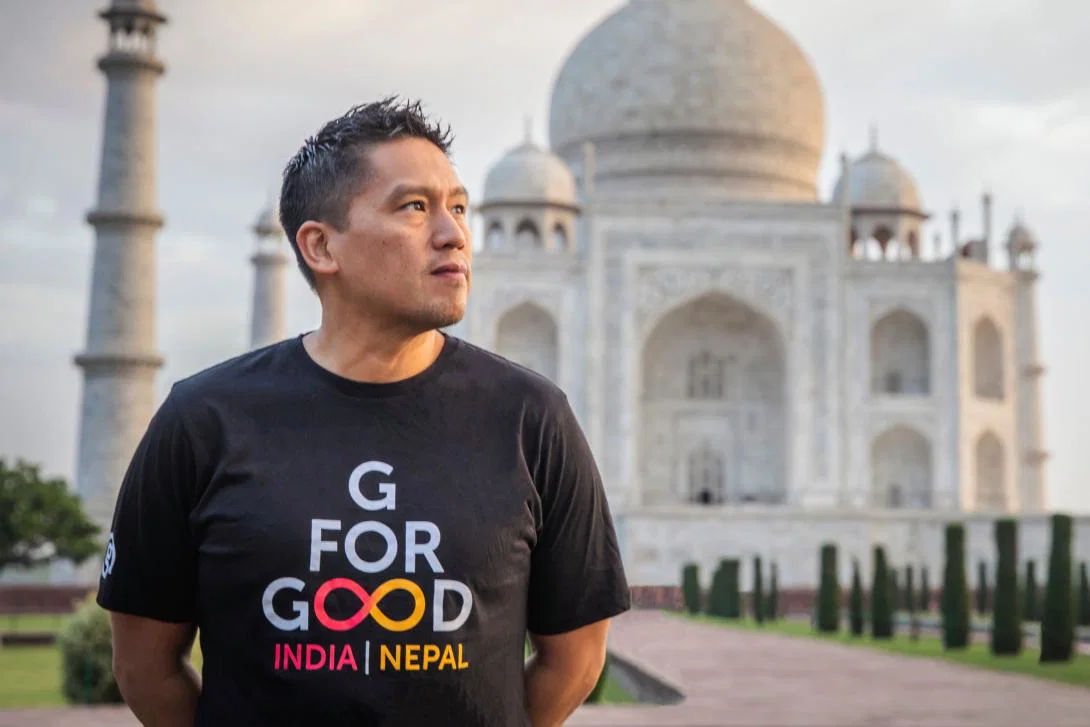
Poon Tip: 'It's dangerous making people feel like they never left home'
He reminded delegates that G Adventures' first brochure, published in 1990, contained a note saying: "If you want the comforts of home, do us a favour, stay at home."
Poon Tip continued: "Pre-pandemic, we were selling amenities. People were booking. They don't even care where they're going any more. The destination is irrelevant. I think that is the most dangerous place the travel industry can be. And I'm calling this out to all of you today.
"You can have French food, Japanese food, Italian food, but you're going to Jamaica. We're seeing less people get off ships because they don't even go on the excursions. We all have those friends who go on holiday and never show a picture of where they are. They just take pictures of their food."
Three other talking points from the 2026 ITT conference...
MSC Euribia's great escape from the Gulf
Earlier this year, MSC Euribia found itself confined to port in Dubai – one of six ships that became trapped in the Gulf owing to the war in the Middle East. In conversation with moderator Hazarika, Antonio Paradiso, Vice-President of International Sales at MSC Cruises and Explora Journeys, gave delegates a unique insight into how things unfolded in MSC's crisis room.
"Our number one issue was getting people back as soon as possible," he began. "Within three days, we had repatriated more than 6,000 people. We arranged charter flights. We completely refunded the cruise. Despite what was happening in the world, we had to look after – to entertain – our customers. The reviews were phenomenal. While the world was turning upside down, they were having the time of their lives."
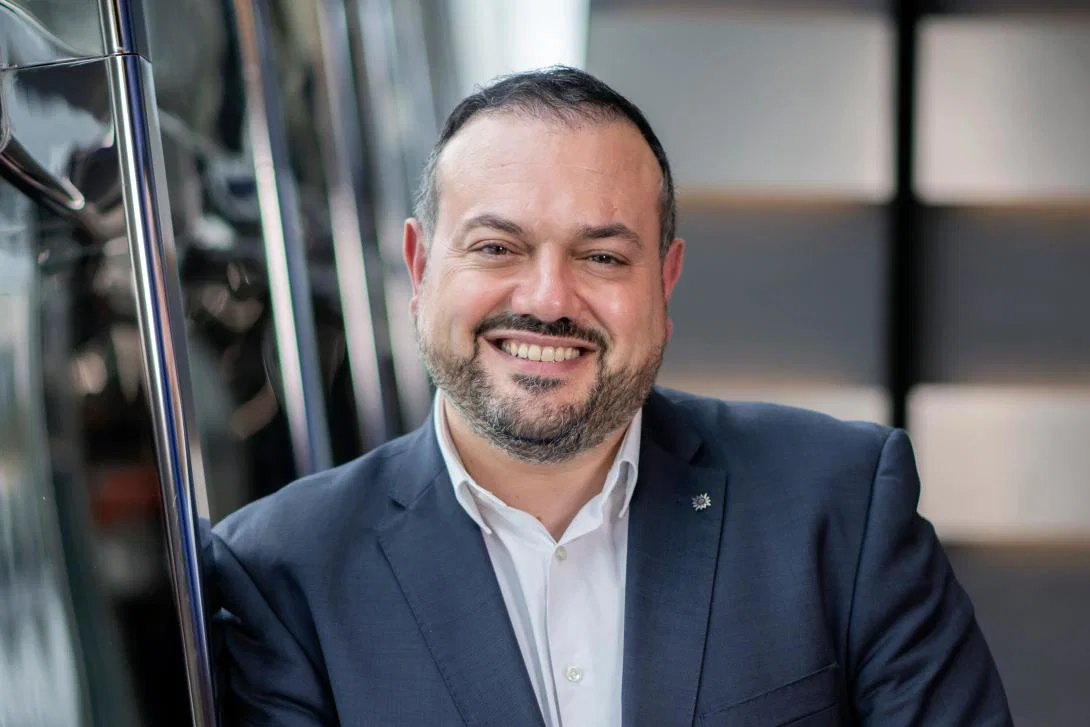
Paradiso: 'We had 60 minutes to get that ship out'
MSC has customers from 160 countries, said Paradiso. "So step two was identifying some airports we could use to fly people home. In Europe, it was London, Amsterdam and Rome. Of course, given my usual luck, I had 3,000 Brits onboard – that says a lot about how the Dubai season was going. But we're very proud that within two to three days, everybody was safe. We also look after our crew, so 70% of the crew were evacuated within a week."
Paradiso said it was then "the waiting game" started. Six weeks later, with the Strait of Hormuz opening and closing all the time, MSC identified a 60-minute gap to get the ship out. "I called it our sea trials," he continued. "We have our own intelligence. The trick was to sail very close to the shore of Oman.
"I think the marine traffic app was probably the most visited app on that particular evening. People were connecting from all over the world. I had people messaging me on social media, 'we're following the ship!'. We had love and support from everywhere. I didn't sleep all night. It felt like a military operation. I have to say thank you to our amazing captain and crew. I'm lost for words for what they had to endure down there."
Don't think once you've booked the package that you're done
Peter Ulwahn, Chief Executive of Tui's tours, activities and excursions platform Tui Musement, urged delegates to tap demand for experiences, sales of which he said drives loyalty, revenue and repeat business.
Ulwahn presented Tui data on whether customers are prepared to spend more or less on destination experiences, with more than half saying they would. He said selling destination experiences through a platform like Musement drive incremental revenue and can be bolted on to existing packages.
"The killer argument is that customers that do things in their destinations also drive NPS – Net Promoting Score," he explained, claiming an 18% uptick in NPS. "So they are more loyal and have a higher frequency of repeat business. And there is a consistently higher rating for customers who saw more of a destination – [they] were a more happy customer."
He added: "It is a fantastic opportunity to drive personalisation and drive loyalty."
Cybersecurity – take it seriously
Elsewhere, ethical hacker Rob Shapland explored some of the common vulnerabilities he encounters when asked to test businesses' cyber defences, and how – more often than not – it is employees that are the weak link rather than systems or platforms.
He shared three main takeaways: firstly, employing MXDR – managed extended detection and response. In short, having someone monitor your network 24/7 looking out for anything abnormal, connecting these events and addressing anything out of the ordinary before it has a chance to cause disruption.
Secondly, Shapland said that all-too-often, companies rely purely on e-learning to cover cybersecurity. "I know from my own experience, when I do an online training module, I'm giving it 10% of my attention at best. Hopefully I've got everyone's attention during this.
"Take this into your training. Grab them with a story, then slip in all the advice about phishing and passwords. Grab people's attention and keep that training alive."
Finally, Shapland urged delegates to actually test their cyber defences. "You might have bought the most expensive products in the world," he said. "And then you get hacked. Do we think Marks and Spencer had no security? Of course they did, but it didn't work because they hadn't tested them against the exact methods the criminals use."
Taking questions, Shapland said cyber criminals – using ransomware – typically target larger businesses they know can afford to pay out. However, he added smaller businesses, even if the potential payout is lower, are still common targets as they're less likely to have sophisticated defences.
Shapland said that in his experience, when running through ransomware scenarios with senior leaders, they typically swear not to pay a ransom. This, though, quickly becomes a more simple business decision – pay up promptly, or face the consequences of being offline for an indefinite period of time. "Around half of UK businesses end up paying the ransom fee, in general," he said.
He added that while cyber insurance typically included ransomware cover, hackers will often seek out their victims' cyber insurance policies and set the fee they demand according to the level of coverage the business has to maximise their potential gains.