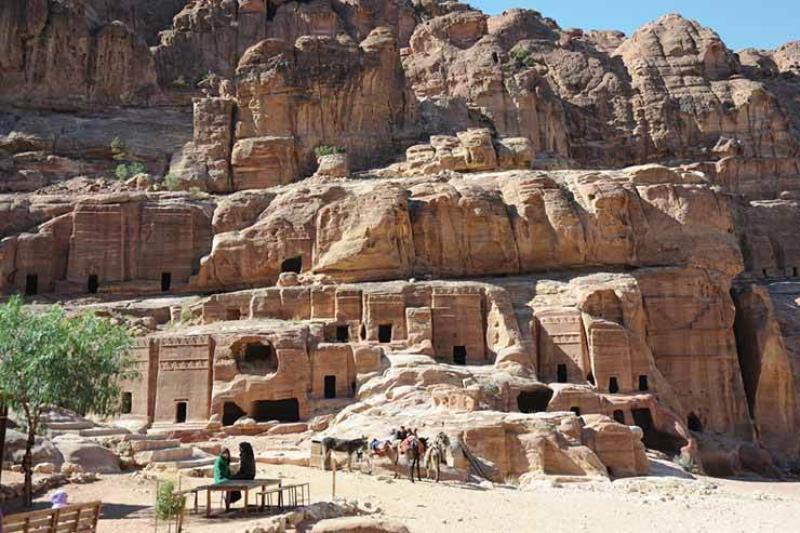
We’ve already spotted the elephant-shaped boulder and the camel sculptures adorning the sandstone corridor leading into Petra, but craning our necks to the skyline, we just can’t make the next one out.
“A bottle of Jordanian wine if you tell me which animal that rock resembles,” our guide Mahmoud promises.
After a stream of wild guesses, we give up. “I’m joking, there’s nothing, but look behind you,” grins Mahmoud. We spin around to see that iconic Petra view, The Treasury, glimpsed through the narrow gap of the mile-long canyon we’d just walked through.
Mahmoud’s trick has cleverly manoeuvred us into position for the big reveal and his ruse produces a collective gasp, including from me, a second-time visitor.
Every Indiana Jones fan knows Petra and The Treasury, but unless you visit, you can’t grasp its grandeur or imagine how important this city must have been. The Treasury (actually a royal tomb) marks the entrance to an ancient trading post as powerful as Mumbai or Dubai is today and is just one huge stone monument among many.
Petra was chiselled from sandstone by the Nabateans, the Arab race that predated the Romans, who built their city from 600BC in the canyons of southern Jordan around a system of dams and water channels. Later, the Romans invaded and extended the city, before it was abandoned following an earthquake. Rubble from this eruption means that 80% of Petra remains three metres below current ground level and archaeologists are making new discoveries every year.