



St Helena’s director of tourism, Jono Passaportis, has told TTG the destination is ceasing to market itself as a holiday choice for retirees. Instead, his team plans to use niche markets to access networks that will be drawn by St Helena’s unique proposition.
“Recently we commissioned some research,” he explained, “which found the demographic that is most ready to book St Helena is between aged 35 and 45, which is exciting for us.”
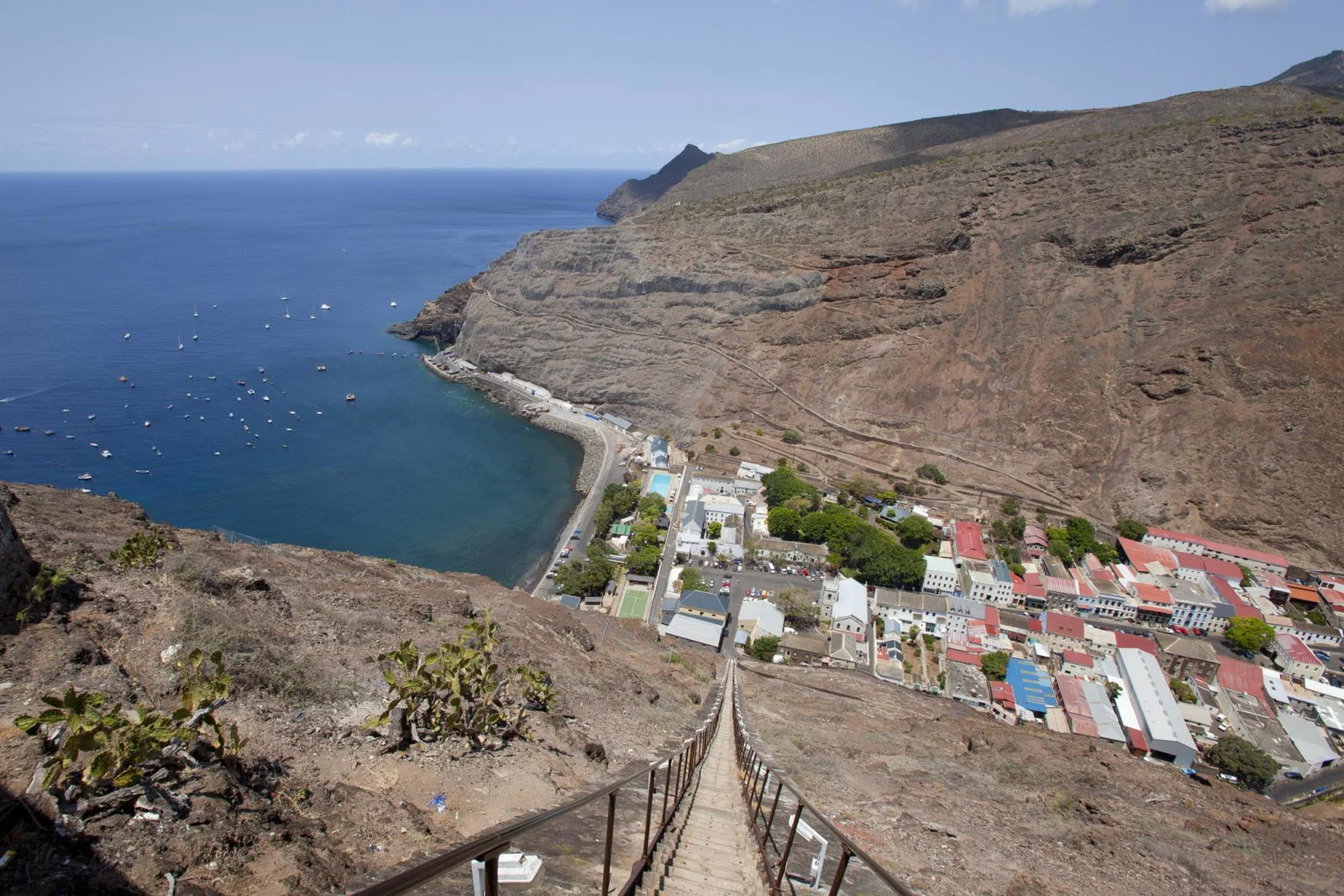
“We’re a 47-square mile volcanic rock in the middle of the South Atlantic Ocean, with so much to do on that little island, we really feel we’d be doing a disservice not marketing it as a soft adventure destination.”
He said the tourist board was going through a repositioning exercise, with the aim of attracting fewer bucket-list tourists, who chase passport stamps and then retreat.
“We’re not a destination you just tick off the box and forget about. We offer the kinds of experiences that stay with you forever.”
Tapping into local networks
With these in mind, they now plan to target open water swimmers, who might be intrigued by the prospect of circumnavigating the island. “It hadn’t been done before and then it was done three times last year,” Passaportis said. “It’s a 47km ultramarathon, and the event is organised by a private company called Open Water Africa.”
Another challenge the destination offers is the 'world’s most remote marathon', which starts at historic Plantation House and ends at the seafront in Jamestown. Plus, diving, history and heritage, and conservation are all niche markets St Helena wants to tap into.
“We’re going to be creating events around the niche pillars. The biggest one next year is Adventure Week (21-27 February), which features activities such as snorkelling, hiking and kayaking, the famous Jacob’s Ladder Challenge, and will culminate in the world’s most remote marathon.”
"Conservation because we have the only remaining cloud forest in UK territories, and we have one-third of the UK's biodiversity on our tiny little island. Admittedly a lot of the biodiversity is in the ocean, but we're the only place you will see the wirebird. There's only about between 550 and 630 of these little birds left in the world and you just spot them on our cricket pitches – birders are delighted," he said.
Setting out the new strategy, Passaportis revealed that wider destination awareness was hampered by lack of budget: “In the past we’ve gone out and tried to get destination awareness, but it’s not very recognised in the UK in particular. We can’t be putting banners all over the London Underground.”
“What we’re looking to do is get under the skin of a few little micro-niches and then use their networks to market the destination.”
'We're at Ground Zero'
With just 450 international UK arrivals by air from April 2024 to March 2025, there’s no doubt St Helena is niche. But with the UK providing 45% of its international tourism arrivals, the market’s importance is also clear. There are only 64 serviced hotel rooms on the island, and 92 seats on the weekly flight from Johannesburg. There’s a second weekly flight from Cape Town in high season (end of December to second week of March). Air access wasn’t even a possibility before 2017.
Passaportis said: “We’re targeting 4% annual growth, which doesn’t sound incredibly aspirational until you realise that’s 21% over five years, which is quite substantial growth. We are literally at ground zero – which is exciting. We’re the newest tourism destination in the global market, and we’re developing it in the right way. We’re restricting our expectations so that I don’t have political pressure to go out and bring in the wrong kind of tourist.”
The growth will come from marketing the shoulder seasons, November and December, and March to May. During these periods, the weather is generally still fine although not guaranteed, fares are slightly cheaper and hotel rooms have better availability. There are modest plans for hotel growth. Another eight rooms have been added but still need to be audited before DMCs can contract them. Then there will be 35 more rooms in the coming five years.
DMC creation
In response to tour operator feedback that availability needs to be more obvious, Passaportis has been focusing on increasing St Helena’s DMC capacity, a role which previously fell to the tourist board. These are huge advances for an island that only received fast speed internet two and half years ago. “It wasn’t that long ago you’d call a hotel on their landline and ‘Auntie Sue’ on the end would check her paper diary to see whether she had space,” he said.
Training agents is also a priority. The Cape Town flight has been a blessing, and South Africa is a popular, logical twin centre but agents need to know that flying out of Johannesburg and back to Cape Town is not the best option because it only gives three days on the island. “Occasionally our flights are delayed and when they are, it’s by a minimum of 24 hours because we have a weather window for landing. Far better to do the four-day or the seven-day stay. It means if there’s a delay, you’re still going to have a really good stay.”
He also recommends booking through tickets from St Helena all the way to London, again so that if there’s a delay flying out of St Helena, the traveller doesn’t have to buy a new ticket for the South Africa to UK portion.
Passaportis is currently in the UK to attend Experience Africa next week, where he will relay information like this to tour operators. “The two things go hand in hand,” he says. “We need to build up consumer interest and also the travel trade’s ability to convert that interest into bookings.”