In 2013, the Travel Foundation set up a Destination Council on the island of Sal in Cape Verde. The previous decade had seen rapid tourism development and growth but with little collaboration to address local issues. For instance, Sal’s economy is highly dependent on tourism and the “fly and flop” and seasonal nature of its beach-based offering can limit opportunities for local people. It has limited rainfall, no recycling facilities and limited landfill capacity, plus it is the third largest nesting site for loggerhead turtles.
The Destination Council allows local organisations to work together to better manage tourism’s impacts and develop a shared vision for the future of Sal. It includes hotels, environmental NGOs, utilities companies, tour operators, excursions companies, and local and national governments.
Early projects
The first efforts focused on some relatively “quick wins”, to help put the Destination Council on a firm footing – for example, erecting information boards at beaches and historical sites to increase environmental and cultural awareness, creating a free Sal visitors’ guide and map, and organising beach cleans.
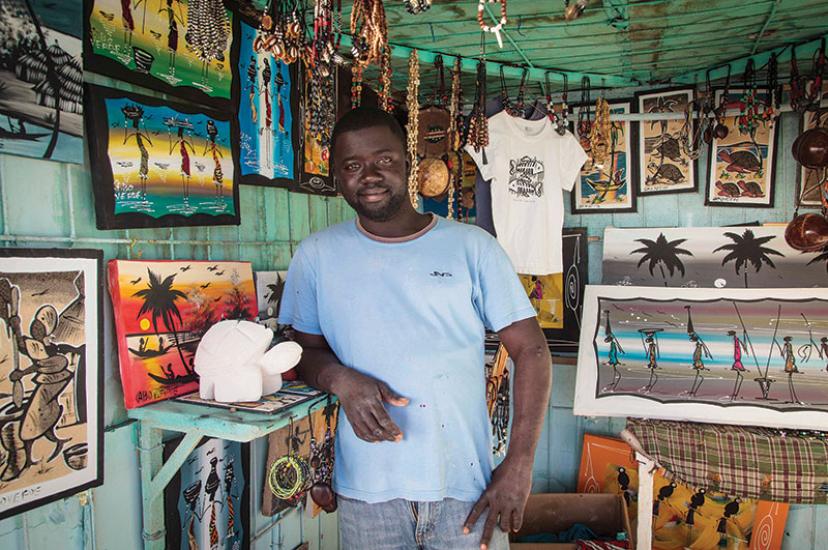
A training programme for craftspeople and excursion providers was offered to enhance the range of “real” Cape Verdean products and experiences on offer, and introduce best practice for turtle watching. Regular craft fairs have been set up in hotel grounds, and a “live” crafts exhibit was piloted within Sal’s museum, creating new routes to market.
Zito, a Cape Verdean artist, says: “I participated in three workshops with the Travel Foundation and they have been very important. I learned how to improve the quality of my products to meet tourist expectations, how to market my crafts, and how to approach tourists so I can improve my sales. The training expanded my horizons.”
Environmental focus
In 2016, the Travel Foundation carried out research on behalf of Sal’s Destination Council, which confirmed the importance of the environmental impacts of tourism. For instance, hotels in Sal and Boa Vista create 42% of the total volume of waste to landfill on the islands, tourists use five times more water than locals (and all water must be desalinated), and there are frequent power cuts, which affect locals and tourists alike.
So the Destination Council and the Travel Foundation, with funding from the Tui Care Foundation, are working to improve resource efficiency in the tourism sector – aiming to reduce the volume of waste going to landfill from Sal and neighbouring Boa Vista by 20% by 2018, for example.
Following successful good practice training for 40 turtle-watching guides, the Travel Foundation is now developing guidelines for responsible nature-based tourism, which may become integrated into a national scheme that is expected soon.
Marceo, a local tour guide, says: “I have worked in this business for more than five years and it is the first time that a workshop about turtle watching did not generate hostile debates among us. It was a very interesting approach from the environmental NGO that did not point fingers but, instead, showed us what we can do to improve our behaviour and performance.”
Why does it matter?
Cape Verde is a developing country and is officially classified as a “small island developing state (SIDS)”. As such, it shares many of the sustainable development challenges that other SIDS face (including Caribbean and Pacific islands) – such as a high dependence on tourism, limited resources and a fragile environment.
In places such as this tourism can be a unique opportunity; what other industry values local culture, beautiful landscapes and wildlife? But of course, tourists will only continue to be welcomed, and to enjoy their visits, if the environment is looked after and local people experience the benefits.
What can I tell customers?
Whether it’s Cape Verde or another destination, when you are describing what’s special about it, help your customers to be a part of measures to keep it that way. You could give tips on:
- Responsible wildlife watching
- Locally grown or made produce and souvenirs to look out for – and what to avoid
- Doing their bit to reduce waste, water and energy use
- How to explore the local area