The film industry in the US is immediately associated with the Hollywood Sign. Famous actors sipping iced lattes and discussing their next big movie deal is often brought to mind, but this was not always the case.
Before becoming a haven for big-shot directors and actors, Hollywood used to be home to cowboys, farmers and bandits. The 1800s saw easterners move to the area for better weather, and soon it was a hot spot for new houses.
It was only a matter of time before filmmakers scouted it as the perfect film location and, sure enough, in 1907 bad weather drove a small Chicago film company to complete a shoot in the area. By 1912, at least 15 independent studios were making films there; by 1920, 40 million Americans were going to the movies every week.
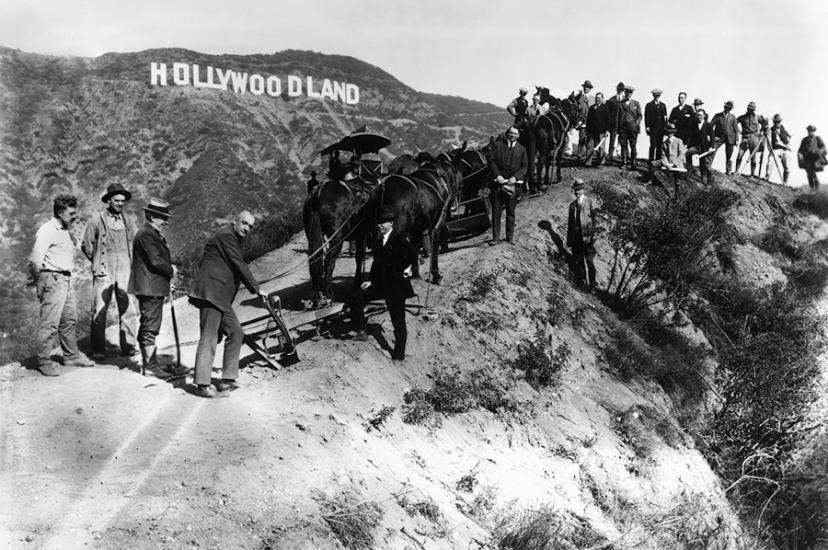
But the sign itself does not come from the area’s success in the movie-making industry. Instead, a real estate developer decided to advertise an upscale development called ‘Hollywoodland’ between the peaks of Mount Lee in 1923 with the now iconic white letters.
It cost $21,000 to finish but, like all national landmarks, there are competing claims as to who first suggested the idea. Some say that it was posed by a rival real estate company, others that it was a misinterpretation of an advertising sketch. However, no one actually knows whose idea it was – despite years of research there’s no single verifiable answer.
The sign consisted of 60-foot telephone-type poles as support posts, and steel metal for the letters. The final part of Mount Lee was too steep for any vehicles to lug the last pieces of the sign, so they enlisted the help of mules to drag the 1,400-pound poles to their destination. It was finally completed in December 1923, and believed to be the largest sign in the world, illuminated by 3,700 light bulbs that twinkled above the city.
Over the years heavy winds repeatedly knocked down some of the letters. For six years from 1944, the H lay on the ground and the sign read OLLYWOODLAND. Repairs in 1947 removed the word ‘land’, and as Hollywood’s movie makers deserted the city and a seediness crept into the once glamorous boulevards, the neglected, decaying sign seemed emblematic of its namesake’s fortunes. A facelift in 1973 was no more than a sticking plaster for structural deficiencies.
It was not until 1978 that the sign became the icon that we know today. Realising its historical significance, public and celebrities came to the rescue and fundraised enough money to completely replace it. One of the fundraising events included a party at the Playboy Mansion hosted by Hugh Hefner. Very Hollywood.
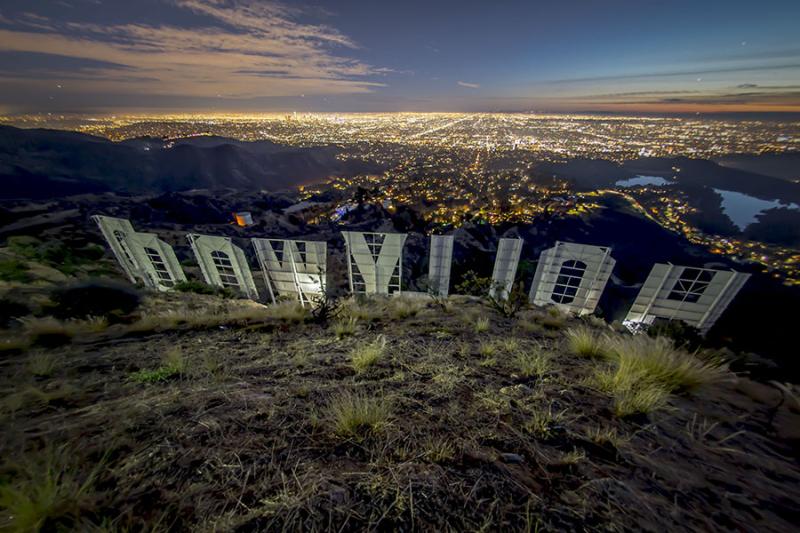
Now, the sign stands at an impressive 45ft, is 450ft long and weighs a whopping 240 tons.
Having started life as a temporary billboard, no one at the time conceived that the sign would endure to become one of the world’s most recognisable landmarks. For the past 40 years it’s been protected by the Hollywood Trust and since 2000, the area has been equipped with surveillance cameras and security to deter graffiti artists.
Now the sign has reached the ripe old age of 100, it’s been given a celebrity style makeover for the celebrations – pressure washed, primed and painted. Rich with history and representing the American film industry throughout the world, this Hollywood icon still commands the limelight.