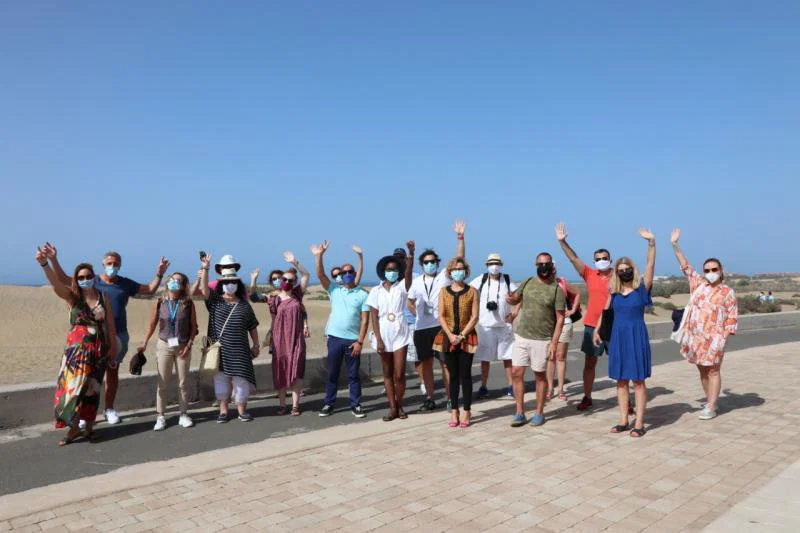
The familiar thud of the aeroplane’s wheels making contact with the runway is even more welcome than it has been previously as I sit in my window seat feeling eager to set foot in my destination: Gran Canaria. It’s just days since the Foreign Office lifted its ban against all but essential travel to Spain for the first time since the Covid-19 pandemic, and this is the first press trip to the Canary Islands since the UK’s four-month lockdown, hosted in conjunction with the United Nations World Tourism Organisation (UNWTO).
As of 26 July, the UK government reinstated the ban against travel to Spain but has excluded the Canary Islands from this, with travellers still able to visit but required to self-isolate for two weeks on return to the UK.
Spain’s first case of Covid-19 was recorded in the Canary Islands on 30 January, but this doesn’t mean the destination is the worst hit in the country by a long shot. Between the eight islands there have been 2,483 cases, which amounts to 0.12% of the Canary Islands’ population and, when compared to the UK’s 295,726 cases (0.44% of the population), the stats show the archipelago has managed the spread very effectively. This is backed up by the fact the destination has reported just 162 deaths from Covid-19.
“Of course one life taken is one too many, but we have a very well equipped public health service and, compared to other places, we can’t complain about our stats,” says Angel Victor Torres, president of the Canary Islands, at the press conference I’m attending during my first evening on Gran Canaria.
He reveals that there’s a plan in place to inject a “massive” fund into the Canary Island’s tourism sector, which is welcome news considering tourism is responsible for 35% of GDP and 40% of employment.
With air capacity in July down 30% on the same month last year and the International Air Transport Association estimating recovery of global air transport won’t be complete until at least 2023, the Canary Islands are expecting tourist arrivals to reach just 60% of what they were in 2019 by December.
Last year, Gran Canaria received 4,267,385 tourists, 18% of which were from the UK, many drawn by the destination’s year-round warm climate of 18-25 degrees Celsius.
SILVER LININGS
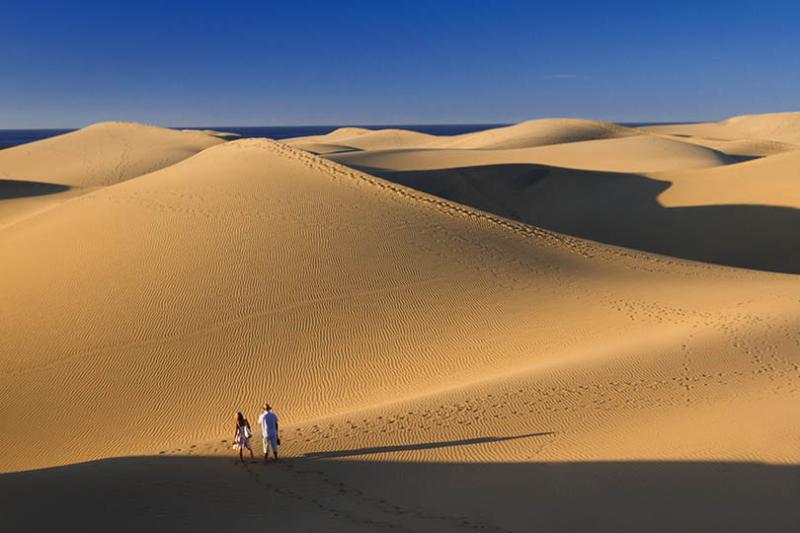
While the impacts of the coronavirus crisis on tourism in Gran Canaria initially look pretty bleak, there are silver linings. During my visit to the 400 hectares of sand dunes, lagoon and palm grove that make up the Maspalomas nature reserve on the south coast of the island I chat with Juana Rosa Aleman, who works in the marketing department at the Gran Canaria tourist board.
“The pandemic has of course had a negative effect on the island, but lockdown meant there weren’t any tourists or locals walking on the sand dunes, and the plants and animals that live here have recovered,” she says, adding that there are now “four guards working here daily to ensure the dunes continue to recover.”
Speaking to one member of this new patrol, I discover the environment here has restored itself to the same state it was in 50 years ago. Walking along the promenade at Maspalomas, it’s possible to take in the iconic sand dunes and keep a distance from other visitors in adherence with current social distancing measures in Gran Canaria.
A NEW ERA
As it stands, the Canary Islands is one of only two regions in Spain where protective face masks don’t need to be worn in public at all times – the rule is that citizens and visitors must wear a mask if in a public space where it’s not possible to stay two metres apart from others – but locals are expecting an imminent law change to match the rest of the country.
While some activities do require clients to wear masks, such as visiting the Christopher Columbus Museum in Las Palmas’ picturesque old town of Vegueta or exploring the Cueva Pintada archaeological site in Galdar, there are plenty of alternative options where tourists can keep their faces free of protective gear and maintain a safe distance from others.
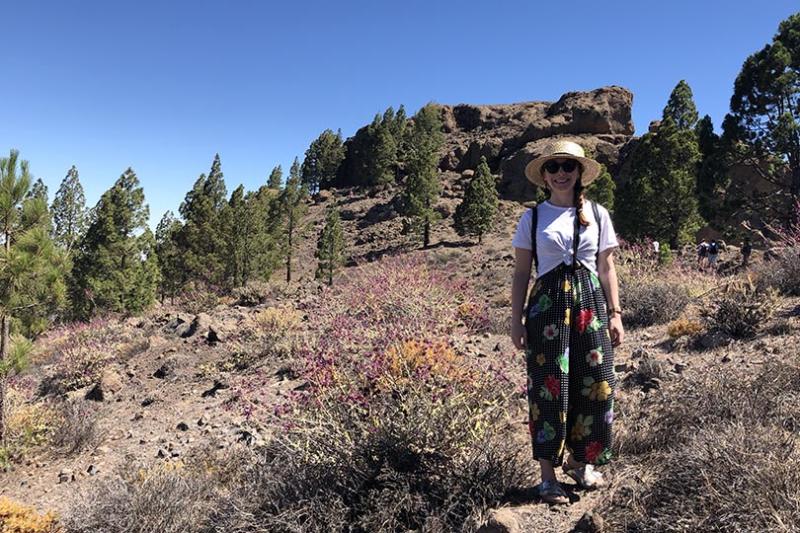
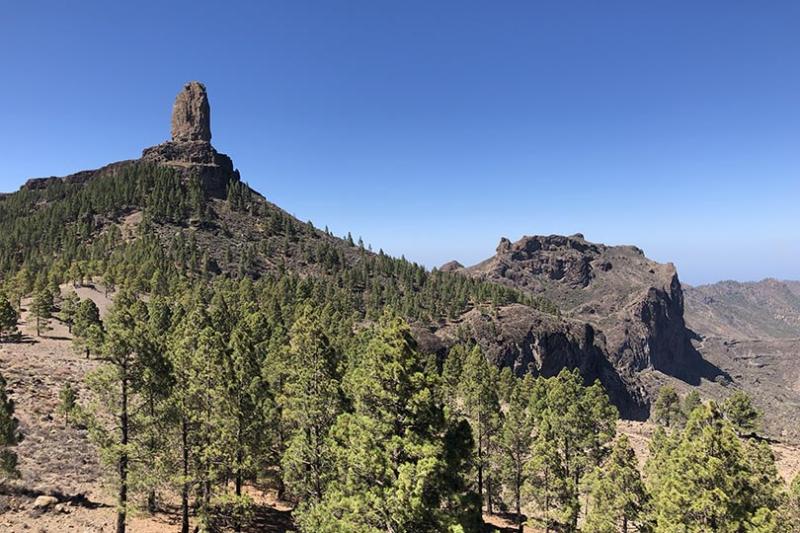
Hiking in the Roque Nublo rural park in the volcanic island’s interior is one such highlight. I take part in a 5km walk to the iconic Roque Nublo and Tejeda Caldera and I’m surrounded by nothing but the sound of cicadas, pine trees and postcard-worthy vistas.
“Ask a lot of tourists if Gran Canaria is beautiful and they will say ‘no’ because they just get their transfer from the airport to their hotel for the beach,” says my guide Julia as we reach the top of an incline that reveals a panorama of a magnificent caldera and the village of Tejeda (considered one of the prettiest in Spain), plus an uninterrupted view to Mount Teide on the neighbouring island of Tenerife. It’s true that visitors not venturing into the centre of the island don’t see Gran Canaria’s true potential, so at this moment, I make it my mission to tell every tourist I meet who comes and stays on the coast what they’re missing out on.