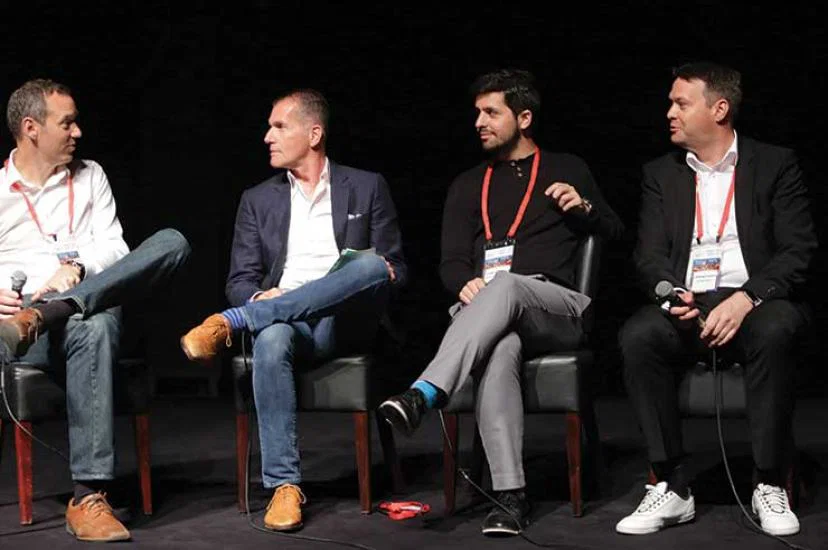
That was the message of Stephen Scott (above, far left), head of global innovation at International Airlines Group (IAG), speaking at Travel Tech Israel in Tel Aviv’s Cameri Theater last week.
During the second annual event, Scott described the proliferation of legacy systems across the industry as the biggest problem of all. “Although is it is a global business [aviation], it’s also a national business,” he said. “There are a lot of regulatory restrictions that hinder the airlines moving en masse in a direction. Innovation is starting to move much faster – we’re doing it as individual airlines and groups of airlines, but we need to continue that, taking out the legacy technology and finding new solutions.”
Earlier in the day, travel industry analyst and panel session moderator Henry Harteveldt had compared major travel companies unflatteringly to “battleships”, describing them as not being nimble. “They talk a good game, but are weighed down by their own size and slow to innovate,” he said.
This presents a problem for start-ups with limited financial resources, especially when trying to address the biggest challenges, as Scott freely admitted. “I see a lot of start-ups developing products that could help us at an industry level and the airlines need to be better at cooperating to deal those bigger industry challenges,” he said.
“It’s very important that we create research funds that enable start-ups to work with us on the problems that take longer to solve.” Despite fierce competition between airlines, Scott said he could see opportunities to pool resources for mutual benefit.
“For example, speed through airports is something all airlines need,” he said. “It’s not competitively sensitive, it just requires a lot of parties working together.” IAG already has its own multi-million pound fund for research and development. The fund is not revenue-targeted, allowing time for products to be researched properly and then tested with some of IAG’s 100 million customers.
Scott said: “If you can create an innovative culture and work with the start-ups to get their product to market, they get the chance to test how to scale their product, and at the same time we can test whether the product provides the commercial and customer value we expected.”