








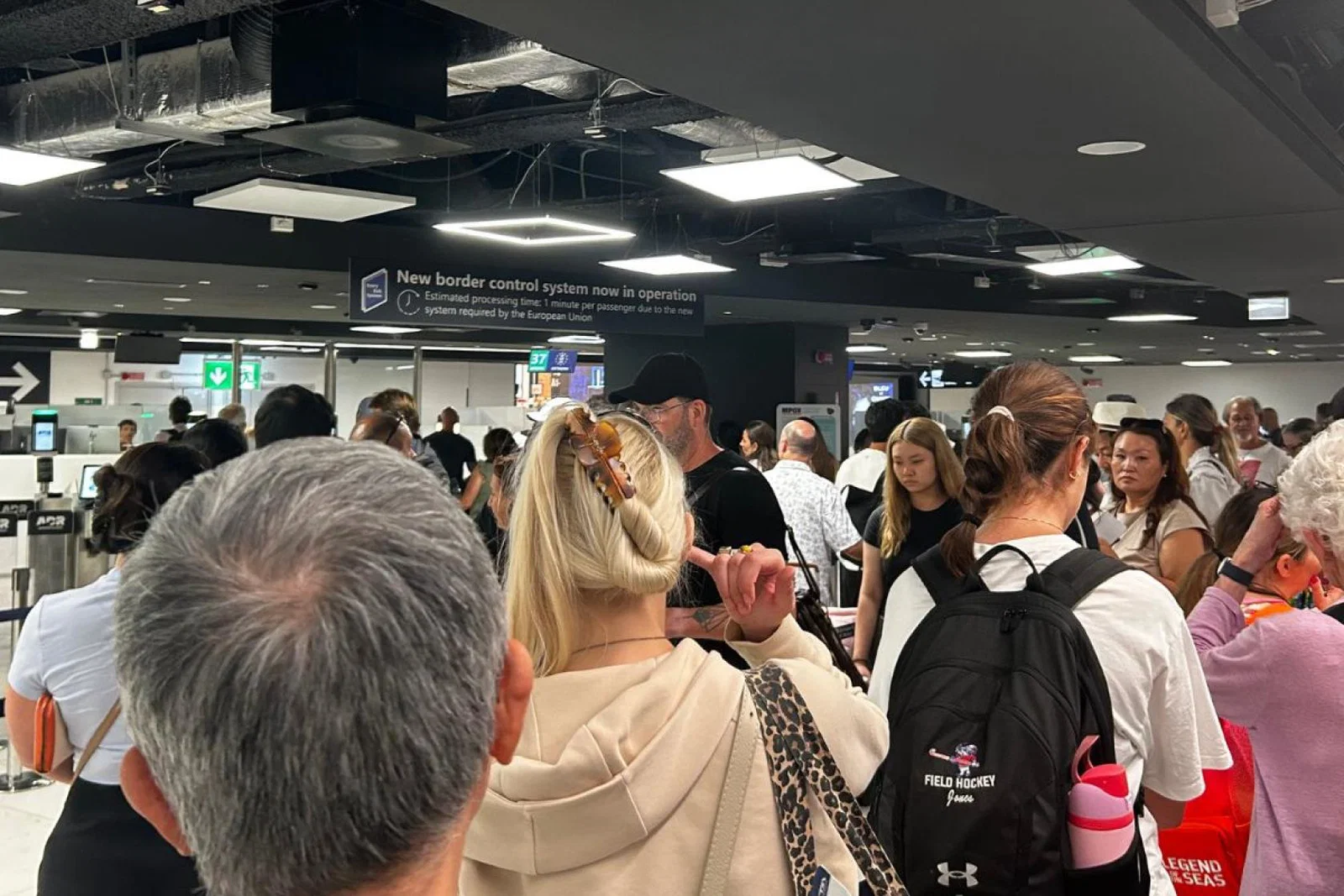
Speaking as the European airport trade body released its latest air traffic report, Jankovec highlighted how geopolitics have shaped air traffic performance.
However, he then said "fixing" EES should be Europe's "immediate priority". "Long, unpredictable and unacceptable waiting times at border control have started acting as a deterrent to travel – and undermine the standing and reputation of Europe as an efficient and welcoming destination," he added.
“Beyond that, the evolution of the war in the Middle East – and its operational as well as macro-economic repercussions – will largely determine the trajectory of European air traffic through the remainder of the year."
Passenger traffic across the European airport network increased by +2.6% in the first half of 2026 compared with the same period last year.
The pace of growth markedly slowed down in Q2 (+1.3%) versus Q1 (+4.3%), reflecting the impact of the Middle East crisis and some airlines cutting capacity in response to higher jet fuel prices, ACI Europe argued.
As a result and for the first time since the recovery from the Covid‑19 pandemic, domestic passenger traffic (+3%) outperformed international passenger traffic (+2.5%) in H1.
"European aviation is definitely operating in a far more volatile environment than in the decade before the pandemic," Jankovec continued.
It comes after EasyJet's Chief Executive Kenton Jarvis called EES "a bit of a mess" and warned flights could only wait so long for passengers to be processed before leaving without them.
Among the largest EU+ markets, according to ACI Europe data, the UK posted a slight increase in passenger traffic (+0.4%) in the first half of 2026.
Heathrow remained the busiest European airport, welcoming a record 40 million passenger – up +0.2% against the first half of 2025.