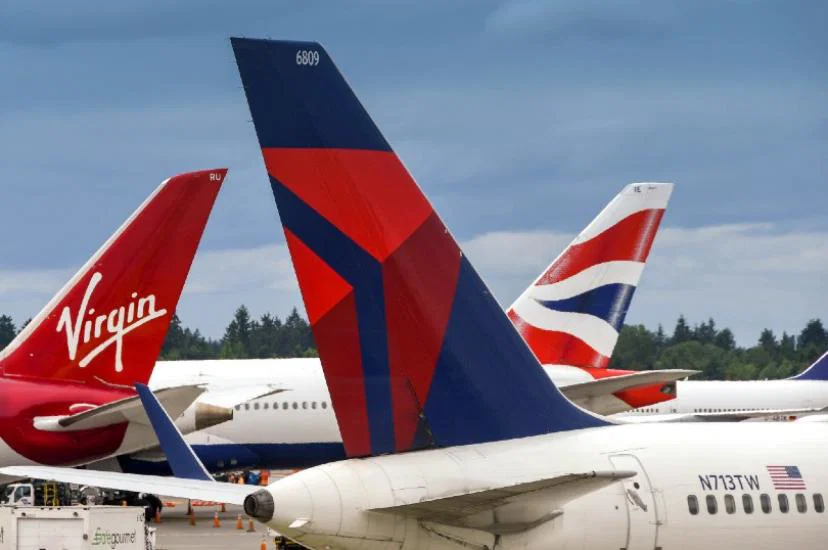
Anyone heading across the Atlantic will be spoilt for choice, with the bulk of routes already reinstated. In fact, some carriers are diverting capacity from parts of the world still affected by the pandemic and looking west instead. Moreover, a handful of start-ups have emerged to add budget options to the mix.
Data from Cirium shows the number of flights operating between Europe and North America was up 22% in March versus February. Cirium said North America was “set fair” for recovery compared with regions like Asia.
UK carriers are storming across the pond. British Airways will fly to 26 US airports this summer, only a few less than at its pre-Covid peak when it operated to Fort Lauderdale and California’s Oakland airport to compete against Norwegian, which withdrew from transatlantic flying during the pandemic.
This summer, BA’s former London-New York frequency of 11 a day will be reinstated, while it launches a new route on 3 June to Portland, as well as resuming flights to Pittsburgh. Virgin Atlantic is also back to full strength – albeit just from Heathrow – and in May launches its first new route for seven years: Austin, a former Norwegian destination.
Together, BA and Virgin’s resurgence means despite Norwegian’s exit, only a handful of US routes have no competition from London this summer.
The US carriers are equally bullish. Delta said it had only a “limited number” of routes that would not return, with most services reinstated, including Heathrow- Salt Lake City from 14 May.
From the regions, there is also an abundance of choice, both direct and indirect. KLM said its US capacity this summer “matches that of 2019” with 12 destinations, including the addition of Austin and the resumption of flights to Salt Lake City.
The closure of Russia’s airspace has meant Finnair, unable to take the shortcut to Asia, is also looking west to utilise its long-haul fleet. It launched a Helsinki-Dallas/Fort Worth service in late March and any fare offers it puts into the market could persuade some to detour.
New blood
While transatlantic carriers will be without competition from Norwegian this summer, they do face four new entrants.
At Manchester, Aer Lingus’s decision to form a UK subsidiary and fly non-stop to New York and Orlando has paid off, with signs of healthy demand. An August economy return to Orlando booked in April showed a fare of almost £1,300, while rates for JFK were around £750.
“Availability is becoming an issue for certain routes at certain times of the year – like the family market to Florida during school holidays,” said Premier Holidays director Mark Godfrey.
But he added: “Due to the high volume of competition, fares to the US are arguably more competitive than many other parts of the world. This is also driven by new carriers and increased frequencies.
"The actual fares themselves are not too dissimilar to fares we saw in 2019. It’s the taxes, including fuel, that are pushing up the total cost. But airfares to parts of the world like Asia and southern Africa are considerably higher. I put this down to strong demand and increased frequencies and competition.”
Another new carrier is New York’s JetBlue, which began flying to JFK from London in August 2021. These will be joined by services to its secondary hub at Boston from Gatwick on 19 July and Heathrow on 22 August. The addition of Boston allows connections to 70 destinations, including most major US cities.
A third new entrant, Iceland’s Play, offers a link to Orlando from Stansted via a layover at Reykjavik, and brings this option to Liverpool from November. Play will not disturb the UK-US market too much, but the final new entrant, Norse Atlantic, has ambitions.
Oslo-based Norse has permission from US authorities to fly to Fort Lauderdale and New York’s Stewart airport, 65 miles north of Manhattan. Both were former Norwegian destinations. But Norse is late to the party; if it goes ahead with its UK launch this summer, it will have a lot of catching up to do.