






Getting rid of windows would make aircraft faster, more fuel-efficient and cheaper to operate.
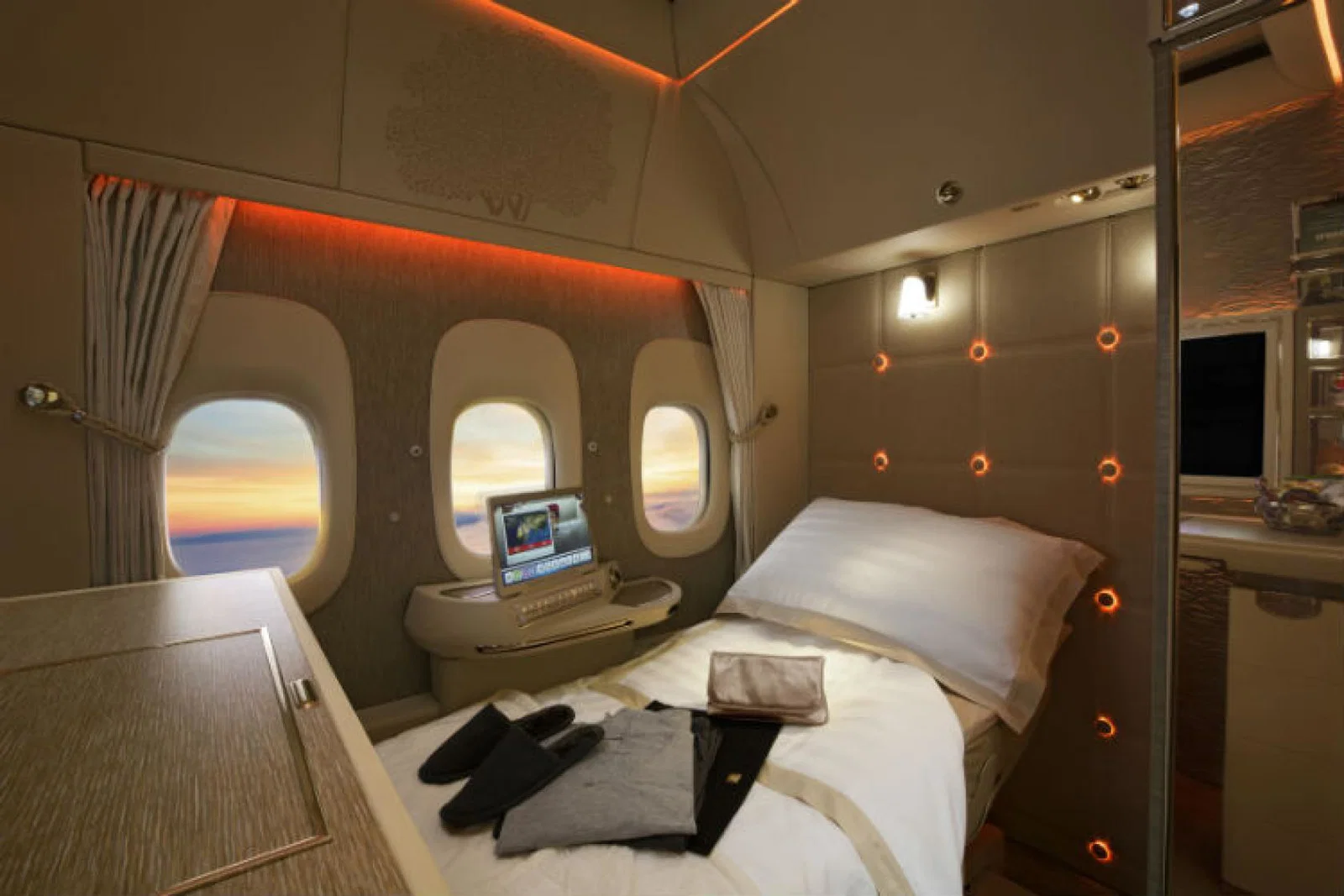
The “virtual windows” work by real-time images being projected onto the inside of the cabin using cameras. They have already been installed in a first class suite on a Boeing 777-300ER, as revealed at Arabian Travel Market in April.
Sir Tim Clark, Emirates chairman, told the BBC: “The aircraft are lighter, the aircraft could fly faster, they’ll burn far less fuel and fly higher.
“Imagine now a fuselage as you’re boarding with no windows, but when you get inside, there are windows.
“Now you have one fuselage which has no structural weaknesses because of windows. The aircraft are lighter, the aircraft could fly faster, they’ll burn far less fuel and fly higher.”
Concerns have been raised about safety by Professor Graham Braithwaite, director of transport systems at Cranfield University, however, who said regulators may not allow the development.
“Being able to see outside the aircraft in an emergency is important, especially if an emergency evacuation has to take place,” he told the BBC.
“Some passengers may object to the idea, he added: “An aircraft could be very claustrophobic and for many, air travel is anxiety-inducing already.”
Many other airlines have innovated to try and bring down the weight of aircraft, including removing in-flight entertainment screens.