






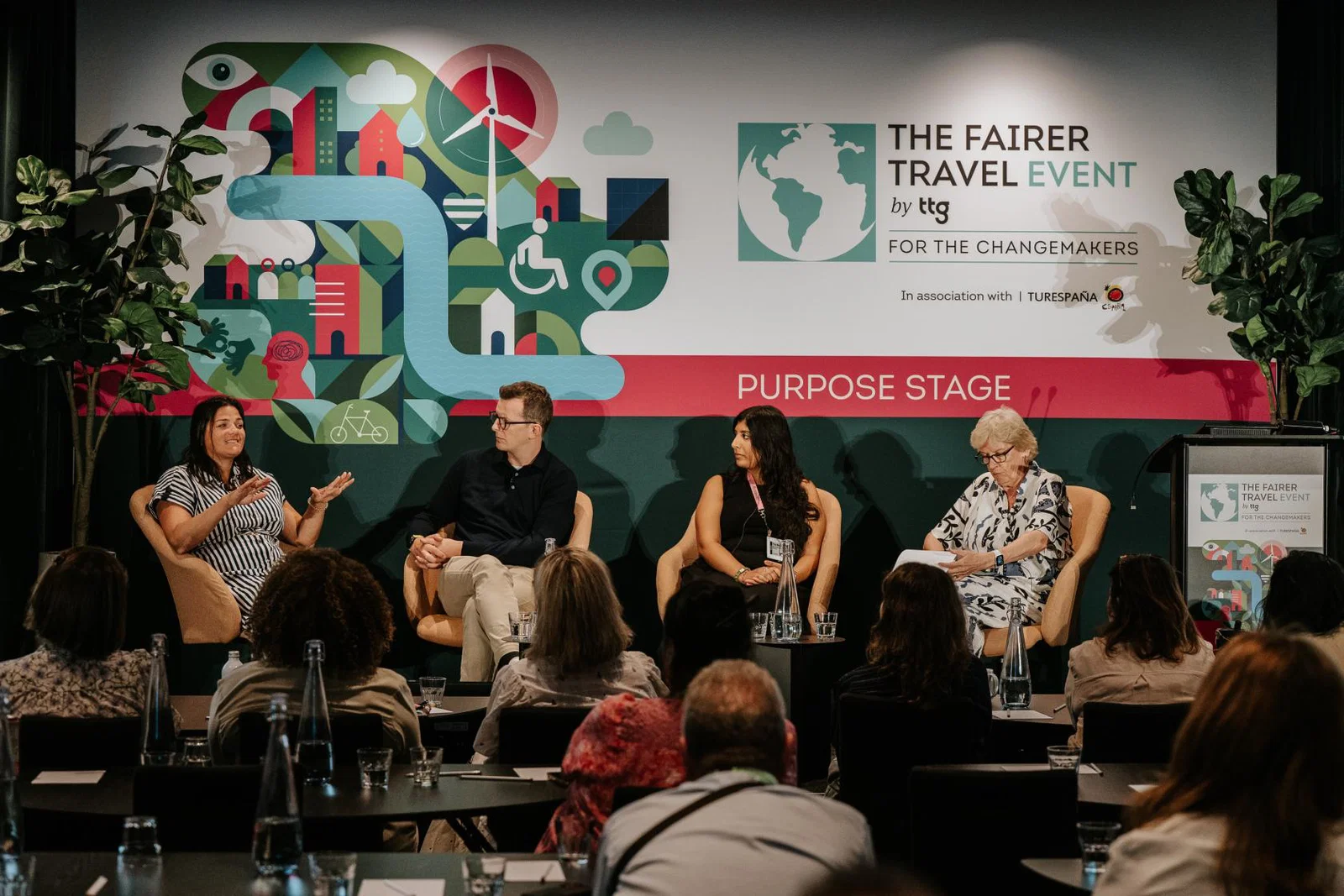
That was the consensus of a high-powered panel of next-generation industry trailblazers speaking on the future of inclusive leadership at TTG’s Fairer Travel Event.
Hosted by Jo Rzymowska MBE, Founder of Jovolution, the session brought together three prominent alumni of the TTG’s 30 Under 30 programme to debate how leadership must adapt to remain relevant in a highly competitive global job market.
The panel sparked a candid debate about whether the travel industry is genuinely walking the talk on inclusion or quietly rolling back post-pandemic progress as businesses face a tougher economic climate.
Tia Ghai, Strategic Account Manager at Attraction World Group, offered a stark warning that the pendulum may be swinging backwards.
"I think inclusivity has become a bit of a buzzword," she admitted. "Inclusivity seems to be this token thing that we keep throwing out there in the boardroom... but how truly inclusive are we being? I don't think staff in general are truly being listened to. The boardroom works really well to show a representational level, but how truly inclusive they are as an organization can be debatable."
Ghai pointed specifically to the post-pandemic mandate forcing employees back into offices full-time. "You see a lot of companies forcing staff back into the office, and in some cases, not really considering the benefits of flexible work and how that can benefit beyond the workplace," she added.
Changing recruitment practices
Meanwhile, Bart Quinton Smith, Sales and Marketing Director for Tui UK and Ireland, shared how Tui had altered its recruitment process to make it fairer for neurodivergent candidates.
"We went through a big internal change recently and we changed some of our recruitment practices in that we pre-shared interview questions with colleagues so that there was a level playing field, and helped colleagues with neurodiverse needs to be able to prepare more effectively," he revealed.
Fairer Travel Event 2026
- Comedian Rosie Jones calls on travel industry to ditch one-size-fits-all approach to accessibility
- Travel at risk of overwhelming customers with its climate messaging, industry warned
- Travel industry told to move beyond 'crude' tourism metrics as calls grow for common ESG standards
- 'Ditch CVs and pre-share interview questions': How to avoid inclusion becoming a 'boardroom buzzword'
- Travel urged to 'stop selling sustainable holidays' and 'make sustainability the default instead'
- Travel brands warned to ditch 'eco-friendly' labels they can't prove, says advertising authority
Turning actions into words: read the full report from the 2026 Fairer Travel Event
He added that Tui had also changed the way it analyses CVs, opting instead for diverse interview panels, and aggressively tracking not just the recruitment numbers of underrepresented groups, but also their long-term retention rates. "It's no good if you’re bringing people in but people from certain groups are leaving at a faster rate," he warned.
Jess Dennison, Co-founder and Director of Latin Routes and Polar Routes, echoed that an approachable, accessible leadership style is what keeps staff from jumping ship. She said she personally blocks out two days a month for "coffee catchups" where anyone from the client care team to senior directors can speak with her directly.
Lifestyle over salary
Dennison also noted that some of their company's top talent were actively choosing lifestyle over baseline salary. "We’ve just hired a Group Finance Director who's coming across from a corporate company and is taking a 15% pay cut so she can get home in time for bedtime," Dennison said. "People are looking for flexibility, hybrid working, remote working... it’s not just salary-based. Good leadership is what makes people stay."
The discussion concluded with a warning regarding the industry's loss of global talent due to the UK's increasingly strict immigration policies.
Ghai noted that travel and tourism university courses often attract double the number of international students compared to standard degrees, but said the sector was suffering a severe "brain drain" as firms are hesitant to navigate visa sponsorships. "We're losing so much international talent after we've trained them up... because of government decisions. We can only be successful as an industry if we represent the global nature of our industry," she argued.
Elsewhere the panel addressed anxieties around Artificial Intelligence and the suggestion it could replace entry-level travel roles, but Dennison reassured delegates the human element of travel remains bulletproof.
"AI is about making efficiencies – it doesn’t replace people," she insisted. "A bot can't create a really bespoke, tailor-made holiday around Latin America in the same way that personal experience and firsthand travel does."
Quinton Smith added that AI instead presented a unique opportunity for "reverse mentoring," noting that he learns directly from a 20-year-old colleague on how to deploy digital tools.
"I'm seeing younger, energised colleagues coming into senior teams to say, 'We need to accelerate faster, this is how you do it.' There is a really good opportunity there," he said.