







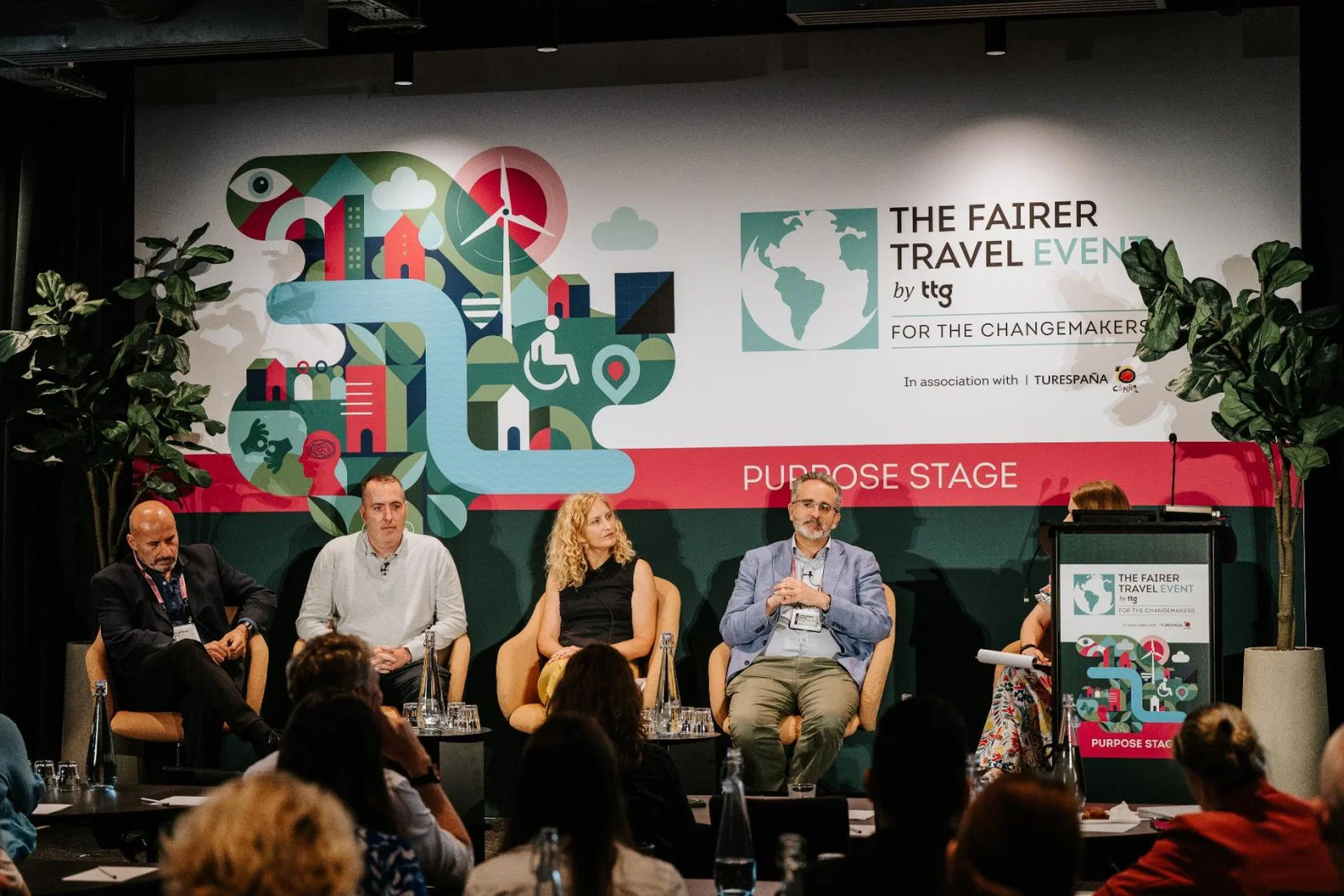
Speaking at TTG's Fairer Travel Event in London on Tuesday (30 June), panellists argued the industry needs a common framework for measuring everything from community benefit and biodiversity to economic impact, as sustainability becomes increasingly embedded in commercial decision-making.
Tom Beagant, Partner at PwC UK, claimed climate "resilience" rather than awareness had become the cornerstone of a successful travel business. "The winner is not the person with the best greenhouse gas emissions report," he said. "The winners are the ones who are protecting their revenue, reputation and resilience."
'We've got to move beyond visitor numbers'
Matt Callaghan, Chief Operating Officer at easyJet holidays, explained the operator has been working with UN Tourism for the past two years on an ESG measurement framework designed to create a common language across tourism businesses.
"We've got to move beyond things like visitor numbers," he said. "The sooner we can set an industry bar that is meaningful, holistic and credible, the sooner we can genuinely drive behavioural change."
Callaghan said sustainability is no longer treated as a standalone initiative at easyJet holidays, with executive bonuses linked not only to financial performance but also to outcomes for destinations alongside customers and employees. "We don’t have a sustainability strategy bolted on – it's core to what we do as an organisation," he added.
Rochelle Turner, Head of Impact EMEA at Intrepid Travel and Co-chair of the Travel by B Corp group, said while carbon accounting has become relatively mature thanks to advanced scientific methodologies, the industry has yet to align around measuring tourism's broader impact.
"We've just tended to all do our own things," she said, calling for common metrics covering economic benefit, biodiversity, gender equity and community outcomes. She added greater transparency would enable travellers to make more informed choices about who they book with.
'The Middle East has not damaged our principles'
The discussion also suggested sustainability initiatives have largely survived the financial downturn triggered by conflict in the Middle East. Abta Chief Executive Mark Tanzer said environmental and social considerations are now firmly embedded across much of the industry.
"There may have been a short-term diversion of potential, owing to financial constraints, but I don’t think the Middle East has damaged the industry's underlying set of principles," he said.
Turner said Intrepid had frozen recruitment, reduced marketing spend and cut staff travel during the recent slowdown, but had deliberately protected investment in its sustainability initiatives. "We've not cut back on purpose because that is fundamental to Intrepid and what we are," she said.
Fairer Travel Event 2026
- Comedian Rosie Jones calls on travel industry to ditch one-size-fits-all approach to accessibility
- Travel at risk of overwhelming customers with its climate messaging, industry warned
- Travel industry told to move beyond 'crude' tourism metrics as calls grow for common ESG standards
- 'Ditch CVs and pre-share interview questions': How to avoid inclusion becoming a 'boardroom buzzword'
- Travel urged to 'stop selling sustainable holidays' and 'make sustainability the default instead'
- Travel brands warned to ditch 'eco-friendly' labels they can't prove, says advertising authority
Turning actions into words: read the full report from the 2026 Fairer Travel Event
The panel also warned that inconsistent sustainability certification continues to create confusion for consumers and the trade.
Callaghan said some hotel certification schemes focus narrowly on environmental building standards while overlooking labour conditions, waste management and local community impact, reinforcing the need for an "industry-wide benchmark".
Artificial intelligence could also help accelerate progress, Tanzer said, highlighting an Abta member that had developed an AI-powered dashboard capable of combining real-time sustainability data with commercial metrics, allowing environmental performance to feed directly into business decisions.
"I think AI has the power to become much more integrated in the way businesses make these decisions," he said.
Climate change causing human rights 'paradox'
On destination management, Pedro Medina Asensio, Deputy Director of the Spanish Tourist Office in the UK, argued Spain's challenge is not visitor numbers, but where and when people travel.
"We don't have a problem of capacity," he insisted. "We have a problem of distribution of demand." He called for greater promotion of lesser-known destinations, off-season travel and more diverse tourism experiences.
Beagant agreed, albeit while adding climate change was actually shifting demand away from traditional summer holidays and causing a "paradox".
"Travelling is a human right, but actually, it's causing some tension when it comes to the rights of locals," he explained. "The shoulder is becoming the new peak, and the same few places are pulling all the people and leading to revolt.
"The social licence to operate is a commercial asset, so how can we avoid these situations?"
Tanzer added that, as a result, the industry has become far more willing to recognise that destinations have limits. "In the past, success was growth in numbers,” he said. “The fact there’s a recognition that there must be capacity constraints is a big step forward."