Night watch
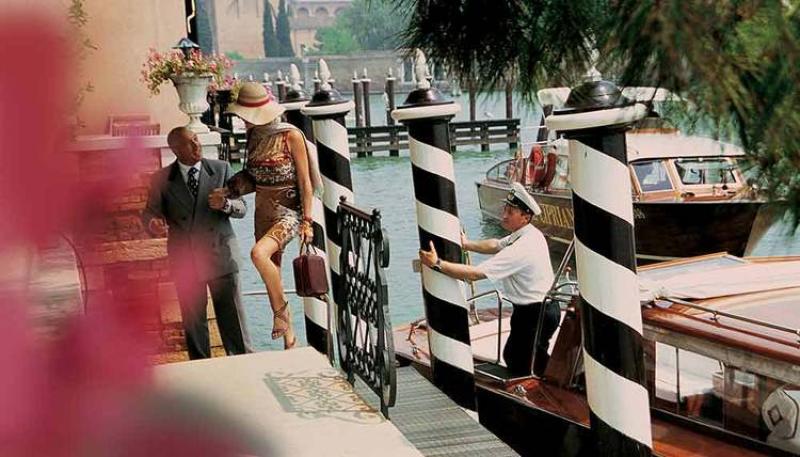
I was spending the night at the Cipriani before joining the Venice Simplon-Orient-Express and being cosseted in such old-world luxury was a good preparation for the train. The Cipriani is located on Giudecca Island, just a 10-minute (free) boat shuttle across the lagoon to St Mark’s Square.
The hotel is home to central Venice’s only swimming pool, over which the terrace of my utterly old-fashioned, yet totally charming suite looked. Restaurant Oro has a more contemporary feel to it and a Michelin-quality that will soon no doubt be recognized. Sadly I didn’t have time to swim in that pool, or wander the hotel garden – nor take one of the hidden vineyard tours the hotel can arrange, or photography tour of the city at night, or its water bike exploration of Venice.
One of my only explorations of Venice was that of the €60 water taxi. It was taking me to the Aman Canal Grande Venice, which bagsied itself the Clooney-Amal nuptials after having been open just a short while. It’s easy to see why, with its discrete entrance on the canal and opulent and romantic rooms and suites inside.
Meanwhile, Venice has also seen the arrival this year of two other big hitters – Marriott, with the opening of the JW Marriott and Starwood under its St Regis brand, although the latter has since parted company with the owner of the 190-room San Clemente Palace Hotel. Instead, Kempinski is now on board, with the island hotel reopening under the new management on March 24.
Starring role
“This is no ordinary train” may be a line from the original film trailer for Murder on the Orient-Express, but it’s a pretty accurate definition of how the real thing is today.
And while it’s 41 years since the film starring most of Hollywood’s hottest talent hit the big screens and 81 years since Agatha Christie’s novel was first published, that remains one of the most common associations for this much-loved, 100-year-old train. The story may also about to be reprised, with Ridley Scott on record as one of the producers for a remake of the film and Kenneth Branagh potentially directing.
But before that – a documentary is on the way. The World's Most Famous Train is set for broadcast on Channel 4 this Monday (November 30 and again on December 4) and sets out to tell the story of how the Venice Simplon-Orient-Express (VSOE) operates and what motivates people to part with £2,000 a night for the privilege of travelling on it.
I was onboard during some of the filming, which gave me a unique chance to ask that very question myself and an opportunity to be privy to some of the stories of the passengers, whether a couple following up on their engagement 30 years ago on the British Pullman with an anniversary trip on the VSOE; a daughter who had long-term nursed, then lost, her mother and was looking to do something magical in her grief; or a man making a marriage proposal in the dining car.
So what’s it like? Of course, it is a series of beautifully restored 1920s carriages with impeccable attention to delicate detail, ornate marquetry, and vintage style that evokes another era while compelling you to slow down and relax away from the fast-paced day-to-day world.
All aboard
On a practical level, there are 12 single cabins and 85 double cabins, each with upper and lower berths, while cabins can also be connected to form suites. Passengers on board are taken care of by 45 staff and my welcome was kicked off with a glass of prosecco while the cabin steward told me all I needed to know about the journey.
I arrived at 11am – and it was already time to think about lunch, with the head waiter coming along to book my slot for the three-course extravaganza. Then it was time to get to know my oak-panelled cabin; my little bag went overhead on the rack, while I also found a little cupboard hiding a hand basin complete with some L’Occitane amenities.
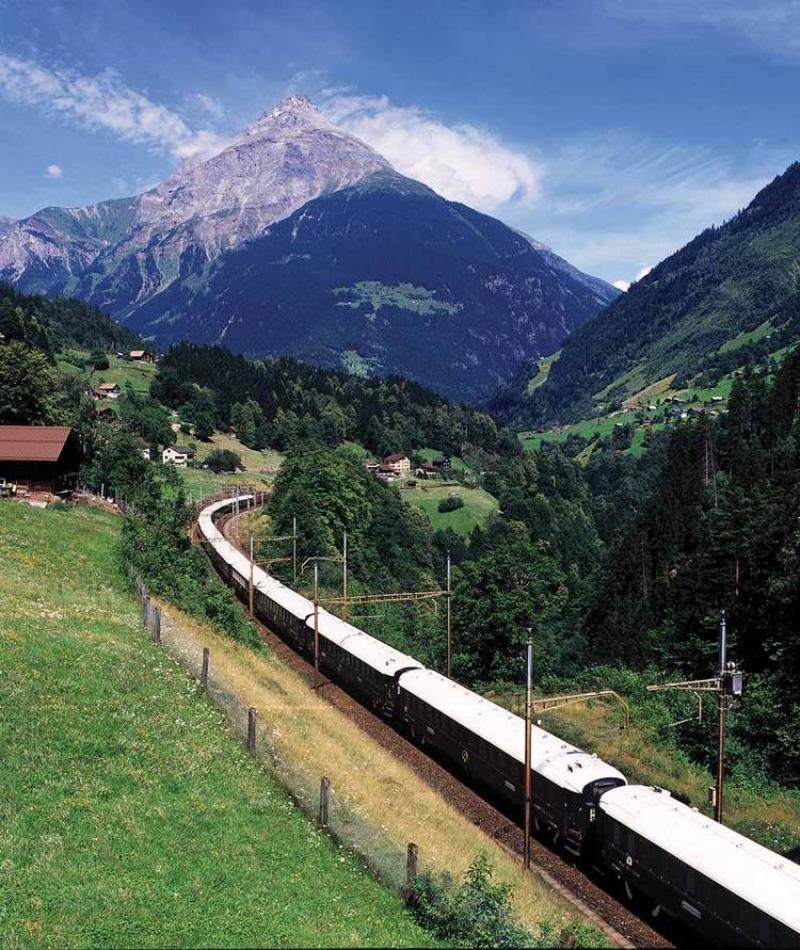
Of course there’s no WiFi and no TV – the only thing to watch is the scenery slipping by the enormous windows, which do open if you want to feel some country air from the vineyards of northern Italy as you head towards the Dolomites. A map is provided so you can track the train’s progress as it makes its way through Europe – after Italy comes Austria, Lichenstein, Switzerland and France on this journey.
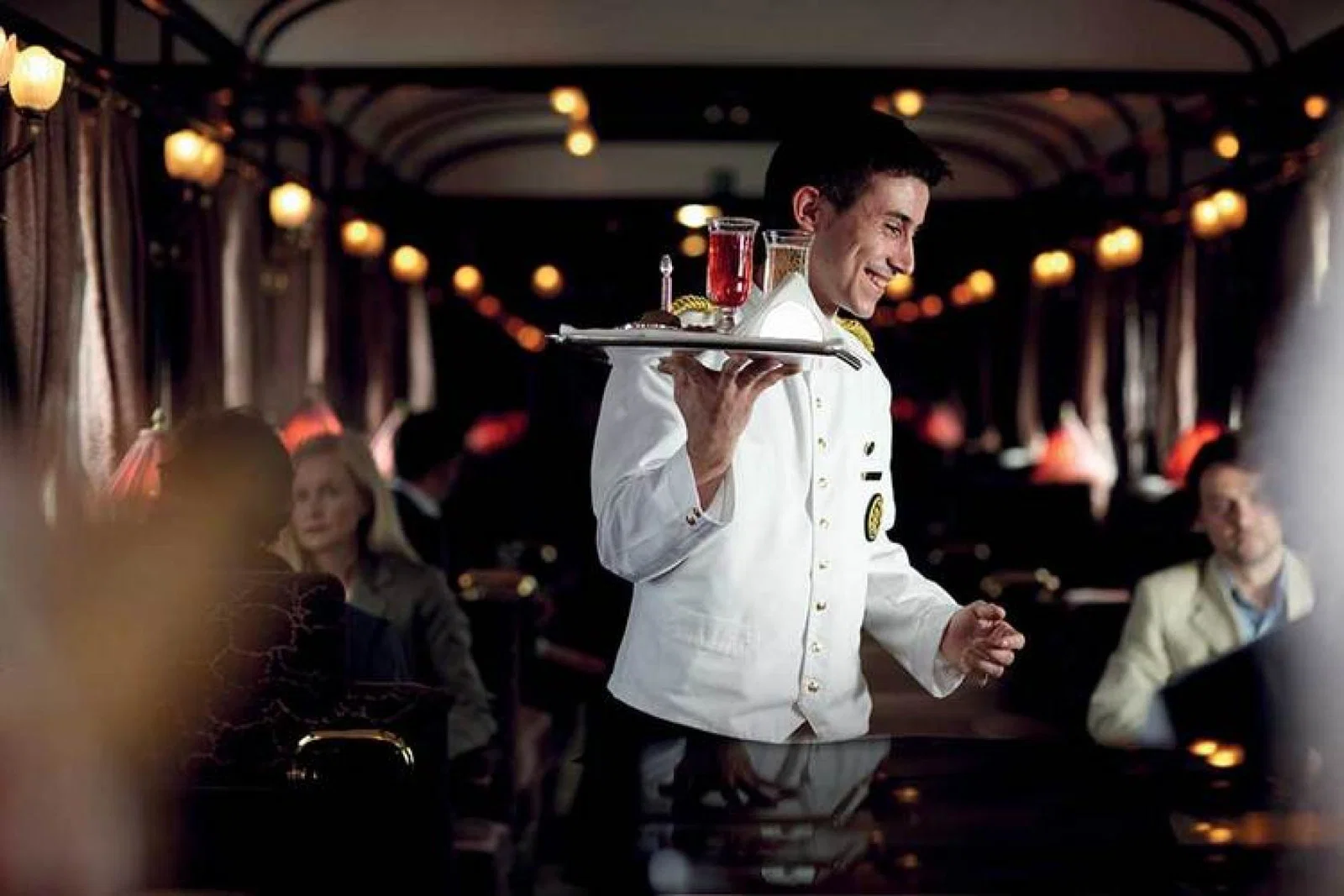
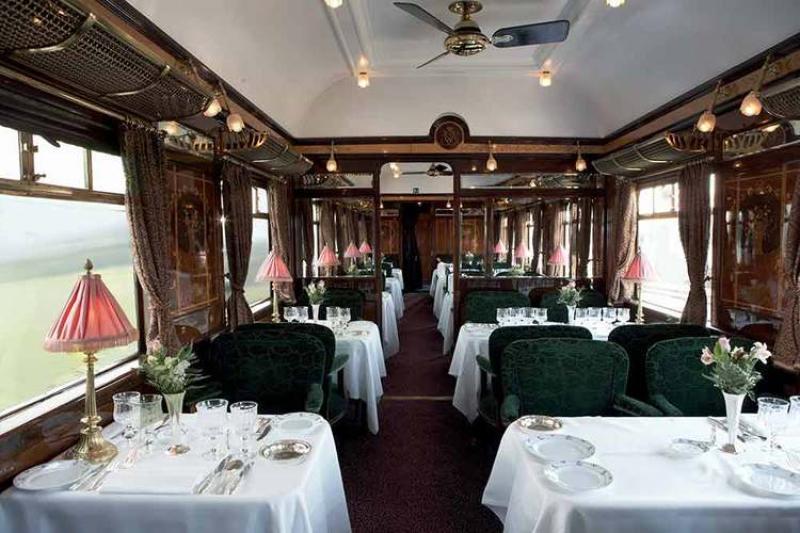
Lunch and dinner are served in one of three restaurant cars. Pretty Côte d’Azur has 34 seats and is decorated with Lalique glass panels; L’Oriental has exotic black lacquer and 36 seats; while Etoile du Nord, waits expectantly for 36 diners amidst wonderful floral marquetry and each has tables set exquisitely with the finest china, crystal and fresh flowers.
For dinner, from the pretty chinoiserie-embossed menu I picked a delicious starter of sea bass on red endives with lentil puree followed up with zucchini and tomato confit, gratinated with creamy mozzarella, along with a potato pancake and steamed sugar peas. I was Christmas-day full after that lot – but who could resist a lemon sorbet with herb vodka?
Going on tour
Having toured the cars with train manager Bruno Jansenns it was amazing to think such incredible food comes from two tiny kitchens on-board, all under the watchful gaze of chef de cuisine Christian Bodiguel, who has worked on the train for 30 years.
There’s also afternoon tea served in the cabin if you have the space for it; and rather divinely, breakfast is served there too upon request, so you can summon it bleary eyed and have crispy pastries, fruit, juice and piping hot coffee within minutes to set you up for the day. I took mine as we arrived in Paris, where the train stops for about 30 minutes to say “hi and bye” to some passengers and take on more supplies and there is a chance to get off and stretch your legs for a bit of exercise.
I mention this to Pascale Deyrolle, the general manager of the train who started as a steward years ago then left to run various hotels around the world and has since returned to the train. Does he feel a gym could be part of any future changes, given the VSOE seems to want to cater to modern travel needs? No, is the short answer, but they are looking at introducing more healthy options onto the menu.
Making changes
The train may seem frozen in time, but changes do take place. Carriages are taken away to be painstakingly refreshed very 7-10 years and subtly redesigned with fresh, new fabrics. New destinations are added – Berlin for 2016 for example, linking the city with London via Paris with an inaugural two-day, one-night departure on June 2.
The Lalique champagne bar has been created since Deyrolle rejoined the train in 2014 and uncovered a forgotten bar. He has since turned it into another little jewel of the train and a social hub – it serves just champagne and champagne cocktails and plays only 1930s jazz. But above all, Deyrolle says the major change on the train has been the service, which he says has just got better and better during his time away.
“The train has to be authentic and always will be, but the service has changed, that has been the main thing I would say,” Deyrolle, conceding that Wi-Fi, duvets and air conditioning are all being considered for the train in the near future. “We had a very hot summer; we know it can be an issue and trust me when I say that everyone up to board level is involved in thinking how we can do this.”
“People do have to manage some of their expectations,” adds Jansenns. “It’s like travelling in a museum; she is a 100-year-old lady.” The first Orient Express left Paris Gare de Strasbourg (today’s Gare de L’Est) bound for Istanbul on October 4, 1883 and everyone from King Ferdinand of Bulgaria to David Suchet and Grace Kelly have been on board since.
Sitting in the Lalique champagne bar makes you feel every bit as glamorous and exciting, especially when you hear that director Wes Anderson is on board too. The maker of The Grand Budapest Hotel and The Darjeeling Limited - in which three brothers travel across India by train – is apparently a huge fan and who knows, could even have been thinking up his next movie...
It doesn’t matter that there’s no baths or showers – everyone scrubs up fabulously anyway. People get to know each other, or rediscover one other. They listen to a pianist as they sit in their dinner jacket as the train speeds through Europe. Yes, it’s a bourgeois bubble, but it’s one that means a heck of a lot to the people who work passionately on-board it and to those who save and splurge to be able to enjoy it or cross it off a bucket list. There may well be no duvets or Wi-Fi - and which luxury hospitality provider would dare to welcome guests without either of those these days – but there is a chance to be a part of history and that is priceless.
The World's Most Famous Train is set for broadcast on Channel 4 on November 30 and again on December 4.