




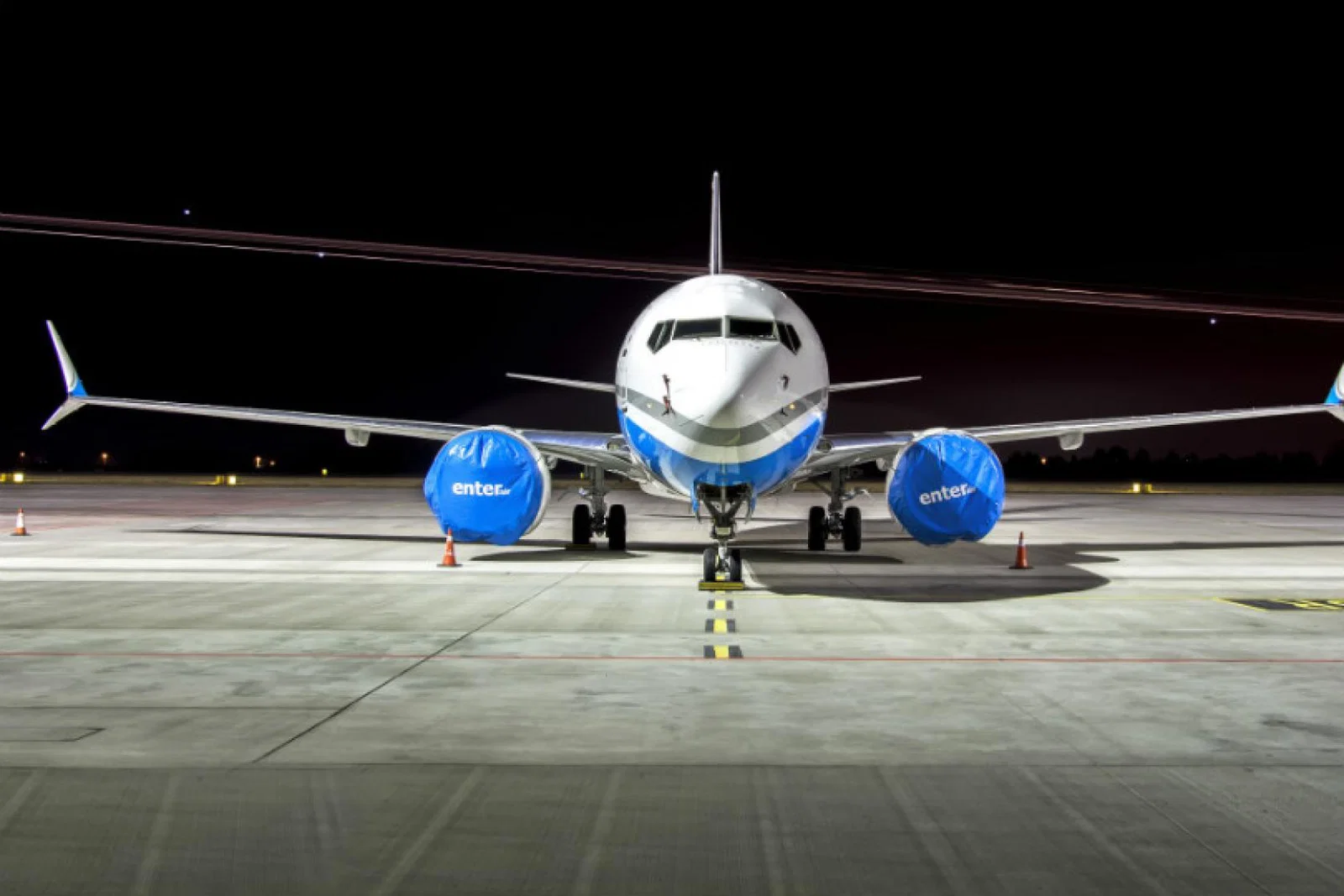
As anniversaries go, it’s one Boeing will have wanted to forget: 10 March marked a year since its 737 Max aircraft was grounded, with no sign it will take to the skies again any time soon.
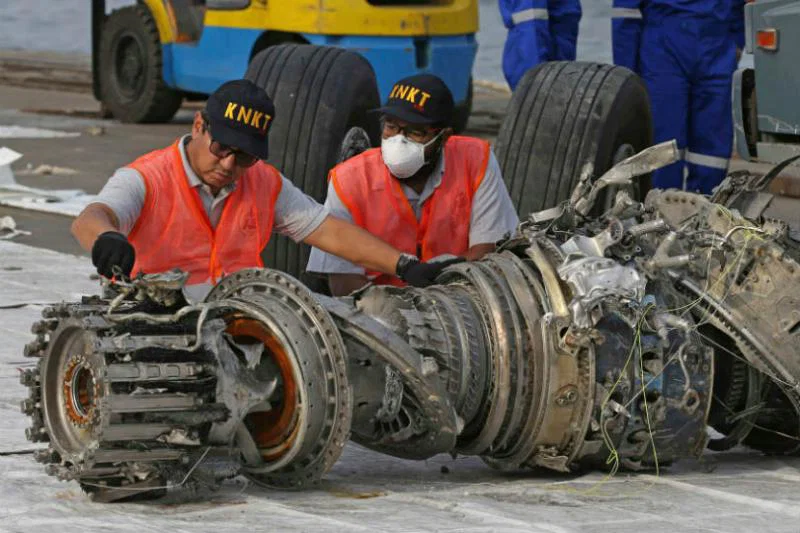
The tragic Max saga is well-documented; fatal crashes in October 2018 and March 2019 involving Indonesia’s Lion Air and Ethiopian Airlines killed 346 people.
Both aircraft plunged to the ground shortly after take-off.
What went wrong is now evident: the Max’s large engines cause it to tip and stall. Software should correct this, but Boeing failed to tell pilots how to use it, and how the Max behaves differently to other 737s.
The Max affair has damaged Boeing substantially; the 737 is the world’s best-selling commercial aircraft, with more than 15,000 manufactured since 1968.
In the UK, it’s the Ford Fiesta of the skies, with the Max consuming 10-15% less fuel than the previous model and carrying around 6% more passengers.
As of January, Boeing had 4,545 unfilled orders, with 387 delivered. Another 418 are stored at Boeing’s factories.
All will need remedial work and will eventually fly, but what does it mean for Boeing, its customers and passengers?
Last month, Boeing reported its first annual loss since 1997 – $636 million – compared with a 2018 profit of $10.5 billion. While Boeing can ride out the disaster, the compensation bills are huge.
The most affected carriers are in China – they had bought 23% of Max aircraft in production as of February. However, US budget carrier Southwest Airlines is the world’s largest Max customer with 280 orders – only 31 of which have been delivered.
It said in December an agreement had been reached with Boeing for part of the $830 million it had to absorb in 2019.
Rising costs
The next biggest customer was Lion Air, with 14 of 251 delivered, and then Ryanair, with 135.
Ryanair had based its 2020 passenger estimates on the eight to 11 more people per flight the Max will carry. None of the aircraft were delivered, but it now optimistically says it will have 50 by summer 2021.
For Norwegian, with 18 grounded and 92 on order, it is yet another headache. Norwegian has battled additional problems with Boeing’s Dreamliner, which meant drafting in replacement long-haul aircraft.
These issues, its ambitious expansion and now coronavirus, saw its share price hit an 11-year low in late February.
Aviation analyst Chris Tarry puts Boeing’s current compensation bill at $10.5 billion, but warned: “It will take a very long time to get the aircraft on the ground back into service. There are also other issues such as repayment of pre-delivery payments and cancellations.”
Tui Airways, which had 15 Maxs in operation and 57 on order, with five in production, has warned costs will reach more than €500 million by the end of May.
However, Tui’s 2019 capacity fell only 1% and it has the consolation its Dreamliner engines are a different type from Norwegian’s and problem-free. Tui has Max replacements in place throughout 2020 too.
Growth Inhibitor
Peter Morris, chief economist at airline consultancy Ascend by Cirium, said there was “a degree of confidence” about the Max’s return in 2020.
He added: “A mid-year deadline seems to be a 50% probability, but any regulator across the world can blackball this.”
He said the Max’s absence had stymied airlines’ expansion.
“The industry has managed without these aircraft and our analysis suggests around 50% of the growth that would have been made by them has been provided by other aircraft while 50% has not been put in [to the market]. Airlines chose not to expand a route or open one.”
When these aircraft return, it will hopefully be as demand picks up following the coronavirus crisis; otherwise it will be a brave airline that adds capacity.
Customer confidence
Then there is the issue of public confidence; Tui and other carriers now refer to the Max as the 737-8, but will this convince passengers it’s safe?
There are previous instances where an aircraft’s design flaw led to hundreds of deaths, but these issues were fixed and confidence recovered.
The world’s first jet airliner, the British-built Comet, is one such example. In the 1950s, three Comets broke up in mid-air, killing all onboard.
Tests found cracks developing around doors and windows, proving the aircraft had literally blown apart at the seams. Better construction and smaller, rounded windows meant later aircraft were safe – the RAF version stayed in service until 2011.
A similar episode cursed one of the first wide-bodies, the DC-10, launched in 1971. Its cargo doors did not latch properly, causing depressurisation.
A Turkish Airlines crash killed 346 before modifications that saw the DC-10 continue to carry passengers until 2014. The freight version still flies.
Avoidable tragedy
Carriers remain upbeat about the Max; IAG bought 200 last June and Turkish Airlines’ reported $225 million compensation deal includes a future spare parts agreement – both votes of confidence.
But passengers will need convincing. Morris said similar episodes in history were altogether different. “That was another world in terms of people’s familiarity with travel risk assessment. There are no barriers to information now.”
He believes it will take a vote of confidence from safety regulators and aircrews worldwide to instil public faith.
“People generally come round to the idea that they are dependent on regulatory bodies. The [US] Federal Aviation Administration has been under the spotlight; I think they will go significantly to the other side of cautious to make sure nothing like this happens again. That will be key to getting the message across.”
The Max situation was certainly an avoidable tragedy and perhaps an example of corporate arrogance. It should not be trivialised, but it makes one UK airline’s purchasing decision look especially canny.
While carriers were scrambling to buy the Max, Jet2.com negotiated “significant discounts” on the $3.3 billion cost of 34 of Boeing’s 737-800s – effectively last year’s model. The last one was delivered in early 2019, marking yet another good strategic move by Jet2.