




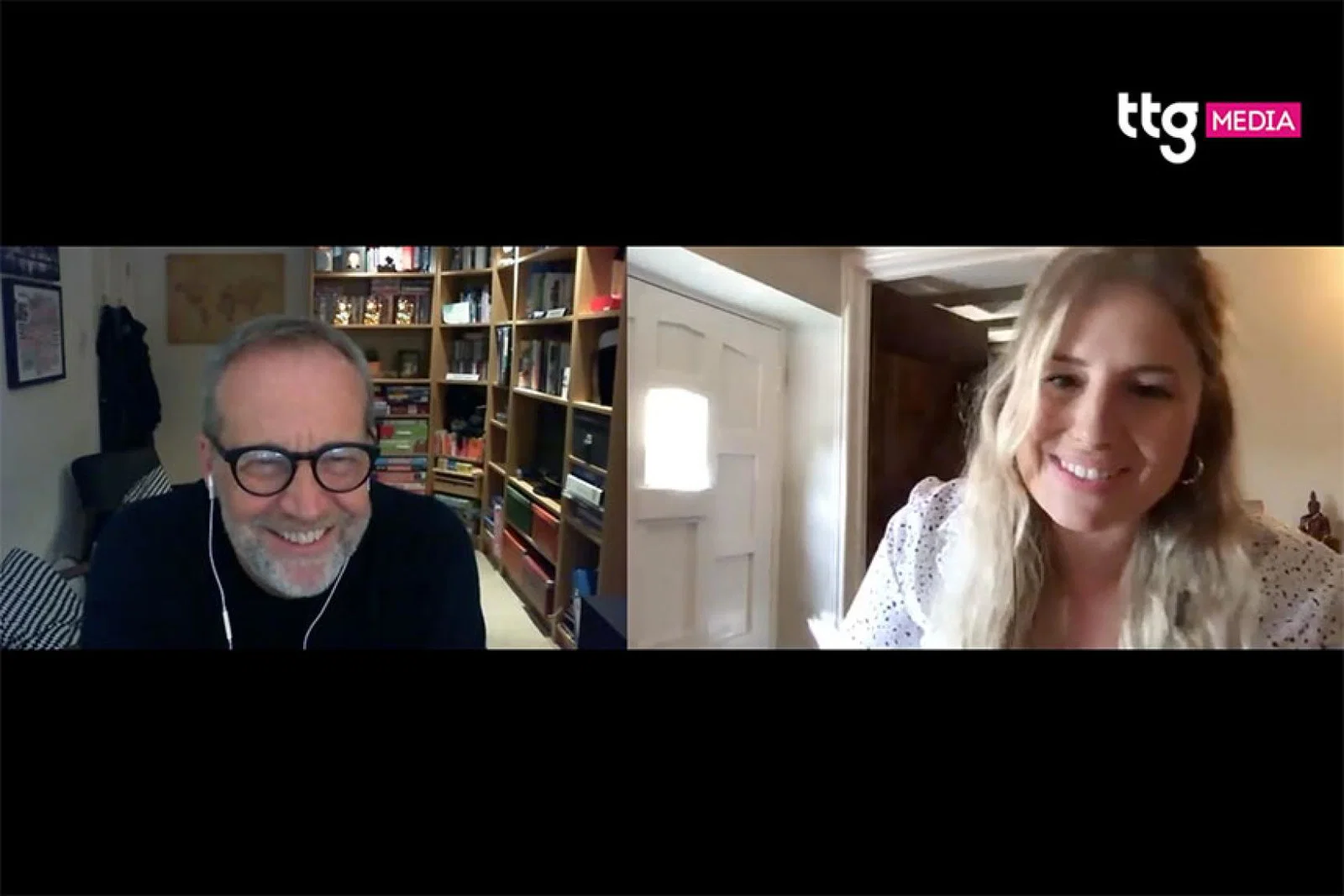
Jones took to Twitter recently to suggest an equivalent to the government’s Eat Out to Help Out restaurant discount scheme for the travel sector.
Speaking during a Face To Face interview, he tells me: “It [the scheme] made me quite angry at the time, because the travel industry is affected just as badly as the hospitality sector; in some ways worse because the hospitality sector can reopen again and they’re not refunding people.”
Jones says the industry was supportive of his comments, but his suggestion drew mainly negative comments from the public.
“They have sympathy that we [travel] are losing jobs. They have no sympathy for the fact they didn’t get a refund for their holiday when they wanted one,” he explains.
“I think we’ve got a real challenge now to regain the trust of our customers.
“I concluded it would be inappropriate as a sector to be calling for government support when we don’t really have the sympathy of the public.”
He continues: “We shouldn’t be coming out of this as the bad guys. In almost every other European country, the government stepped in very quickly to sort out this refunds issue… We just got prevarication.”
He adds: “I do think we could have handled it better as a sector… I think some businesses were too quick to furlough.
“We [Der Touristik UK] calculated how many [staff] we’d need and we dealt with those customers who needed looking after. I have to say that proved to be the best way to avoid giving refunds.”
“My frustration all along is we [travel] could have persuaded an enormously bigger number of customers to rebook than we actually did.
“The battle on refunds didn’t need to be a battle; most customers wouldn’t demand their money back.”
Jones says he’s not criticising other companies, but the net result has been that trust in the sector is lower than it has been for a long time.
“My concern is that when it comes to this reboot, phase one of the blockages [will be] because they [customers] remain unconvinced that if there’s a second spike we’re not all going to do the same as we did the first time and keep hold of their money.
“We’ve got to get over that hurdle or they’re not going to trust us again in the future.”
Elsewhere, Jones says Kuoni will wait until “the time is right” before reopening its high street stores.
He says the operator still “totally believes in the high street” in the longterm, but trading needs to improve further before reopening, revealing the quiet opening of the Guildford shop “sadly confirmed what we were thinking”.
“We’re only doing about a third of the numbers as this time last year.
“We’re not getting anything like the revenue to justify the cost base and logistics we have to go through.”
He adds the current restrictions on retail shops also means Kuoni cannot offer the type of personal experience instore that customers are used to.
“It’s not a transaction that works well through a Perspex screen,” he says. Kuoni is continuing to use video calls with customers, with about 100 conducted per week and conversion rates of 40-50%.
“By not rushing into opening stores, we can keep more people for longer by putting them into a virtual call centre environment. When the time is right, we will be back on the high street with a vengeance.”
Jones adds his “ambition” is to re-employ any staff who end up losing their jobs when trading recovers. “I hope that’s in a short period of time.”