








What I encountered was totally off the scale.
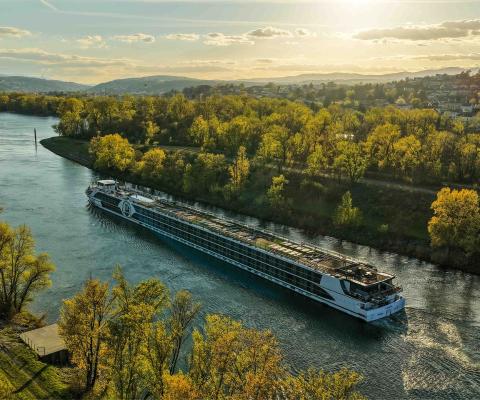
The Godzilla of ships dominated the Southampton skyline and seemed to defy physics, jutting out of the sea, precariously balanced like a bodybuilder who keeps missing leg day. It was a few days before its first trip and final preparations were well under way. On all 17 decks, teams of builders frantically bashed, sanded, drilled and polished, like modern day Noahs finishing their Ark. Fittingly, it was raining heavily.
No doubt Harmony is a big unit in a big industry: cruise ships globally carried 23 million passengers in 2015 and generated $40 billion of revenue globally. Nevertheless, as a subset of travel, cruising is still pretty underrepresented compared with its land-based alternatives.
Take the US cruise market for example. It accounts for well over half of the global cruise passengers - more than 12 million Americans took a cruise in 2015, but that represents only around 3% of the US population. In fact according to Cruise Watch, if you add up all the ocean cruise ships in the world, sailing full for a whole year, you’d still only get half the annual visitors to Las Vegas. It’s a similar story in Europe, with the second biggest market for cruise only accounting for around 2% of its population.
Strangely, despite the low level of penetration, growth rates have also lost the wind from their sales. Having grown through the nineties and noughties as retiring baby-boomers adopted cruises as their official pastime, the growth in passenger numbers has slowed to pedalo speed, and grew only 3% in 2015.
It’s a mature product in both senses of the word as the industry has so far been unable to attract enough youngsters. Despite the investment in family-friendly ships, the world wide average age has remained relatively high (although it has now come down to 49). Given these dynamics, you could be forgiven for questioning the logic of spending $1 billion on building a behemoth like Harmony – an investment that won’t generate a return for at least 10 years. While you’re at it, you could also question the wisdom of building the other 35 new ocean-going ships which are presently scheduled for launch between now and 2020, adding another 80,000 berths to the mix.
The logic lies in the Asia-Pacific region. With growth rates of nearly 15% per year, and over one million annual cruisers already reached in China alone, the region is both a safety valve and a huge opportunity for the global cruise industry.
Confidence abounds that the Chinese market in particular can swallow whatever capacity is thrown at it and could more than compensate for any plateau in Western demand. But more importantly, if the lines can attract the same percentage of the population in China as they’ve achieved in the US, that could be an extra 45 million people wanting cabins. It seems we’re going to need an even bigger boat.
Martin Alcock is director of Travel Trade Consultancy